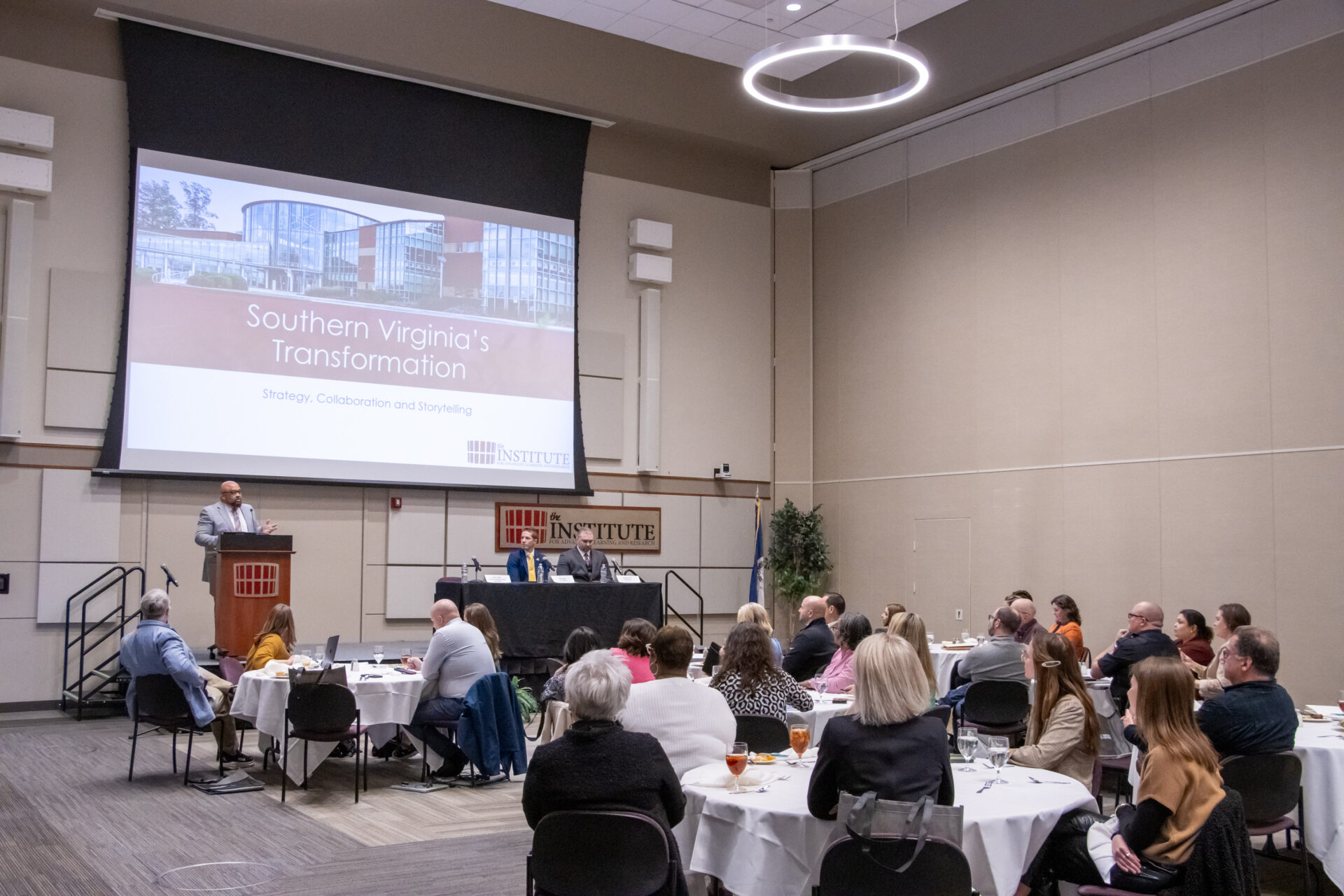
Southern Virginia’s economic resurgence did not happen overnight. And, as speakers emphasized at a recent Public Relations Society of America (PRSA) Blue Ridge luncheon hosted at the Institute for Advanced Learning and Research, neither did the story that helped make it possible.
Held April 9 at IALR’s Danville campus, the event brought communications and public relations professionals to Southern Virginia to examine how intentional PR and community relations have supported long‑term economic transformation. While the chapter traditionally meets in the Roanoke area, organizers intentionally convened in Southern Virginia to reflect the momentum and innovation taking place across the region.
A 20‑year “Overnight Success”
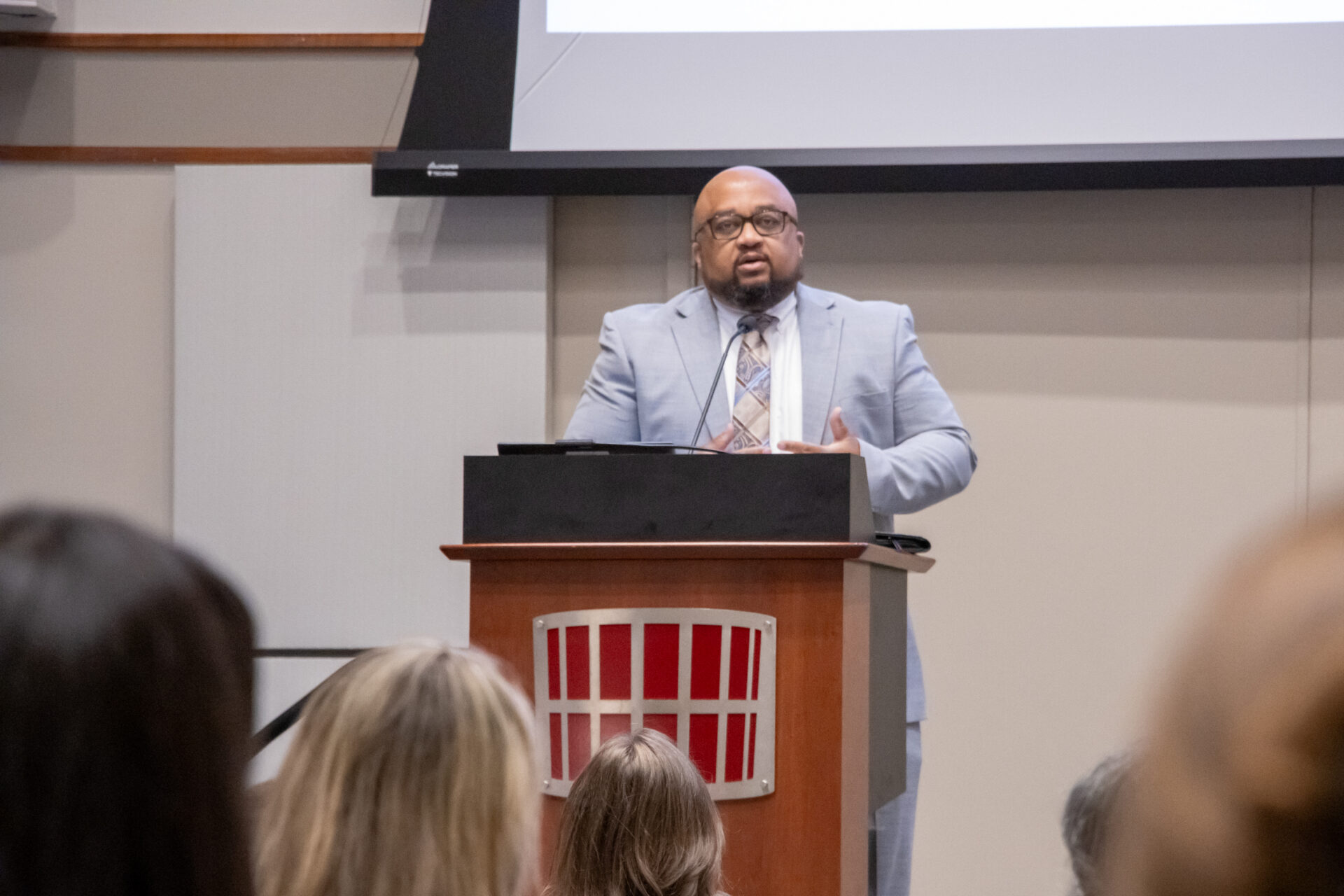
For IALR President Telly Tucker, the narrative surrounding Southern Virginia often misses a critical truth.
“People always ask, ‘How did this happen? It seems like all this is happening overnight,’” Tucker said. “And as many leaders will tell you, if anybody can tell you about an overnight success, they’ll tell you about 20+ or more years that went into helping plan for that.”
That planning began amid significant disruption in the early 2000s, when Southern Virginia faced the collapse of textiles, the decline of tobacco and furniture manufacturing and the resulting loss of jobs and population. Those shifts shaped a narrative defined by what the region had lost. This narrative was common externally and internally.
“Despite the thousands of jobs lost, the families leaving the region, the young people questioning whether they had a future here and whether there was a job here, there were some visionary leaders in this community who refused to accept that as their reality,” Tucker said.
IALR emerged from that moment with a mission centered on long‑term collaboration and economic transformation: bringing together education, industry, workforce, government and community partners around shared challenges.
“We are a catalyst and a convener, a facilitator of what we call creative collisions,” Tucker said.
Communications as strategy, not promotion
As economic development efforts took shape, Tucker said communications moved in parallel, focused first on credibility and trust rather than promotion.
“In 2002 this region had heard big promises before,” he said. “So our communication strategy had to be very careful, had to be thoughtful, had to be grounded in what was actually happening.”
From the beginning, internal audiences were a priority. Clear, consistent communication helped employees understand IALR’s mission and connect their individual roles to long‑term regional outcomes as the organization grew.
That clarity extended outward to the broader community. Messaging emphasized plain language, transparency and honesty about timelines, reinforcing that progress would come in steps rather than immediate wins.
“A strong public relations strategy doesn’t create momentum,” Tucker said. “But it certainly helps people recognize it.”
As IALR has grown, internal communications have become just as important, helping employees connect their individual roles to regional outcomes. Tucker also pointed to leadership storytelling as a long‑term credibility tool, particularly when grounded in consistent, fact‑based narratives around talent development and workforce alignment.
Where the region is now
That long‑term preparation has translated into tangible outcomes, including major investments at the Southern Virginia Megasite at Berry Hill, the successful launch of Caesars Virginia, expansions by companies such as Hitachi Energy, the recently announced arrival of Avio USA and the establishment of Navy and Submarine Industrial Base training programs on the IALR campus.
“They could have put that anywhere in the country,” Tucker said of federal training programs. “But they chose to put it in Southern Virginia based on the confidence, the trust and the demonstration of investment in strategic leadership that this region had made.”
For communicators, Tucker framed the work ahead as both ongoing and consequential.
“The progress in Southern Virginia is real,” he said. “And how we continue to tell this story will help define what comes next.”
Partner perspectives
That message was reinforced by two partner organizations whose investments intersect with the region’s broader transformation.
Sean Logue, Vice President of Marketing for Caesars Virginia, shared how education, transparency and consistent community engagement shaped public understanding during the casino’s development in Danville.
“PR really earned us time in the beginning,” Logue said, adding that credibility ultimately came from measurable outcomes.
Ryland Clark, Senior Corporate Real Estate Facilities and Capital Project Manager for Hitachi Energy, highlighted the significant impact of community and employee relations within the company’s overall public relations efforts. He also stressed the importance of grounding long-term growth in a clear sense of place and history as the company continues expanding its presence in the region.
“Before you know where you’re going, you have to know where you come from,” Clark said.
Those interested in learning more about PRSA events or membership may contact Blue Ridge Chapter President-Elect Allison Moore at allison.moore@ialr.org.
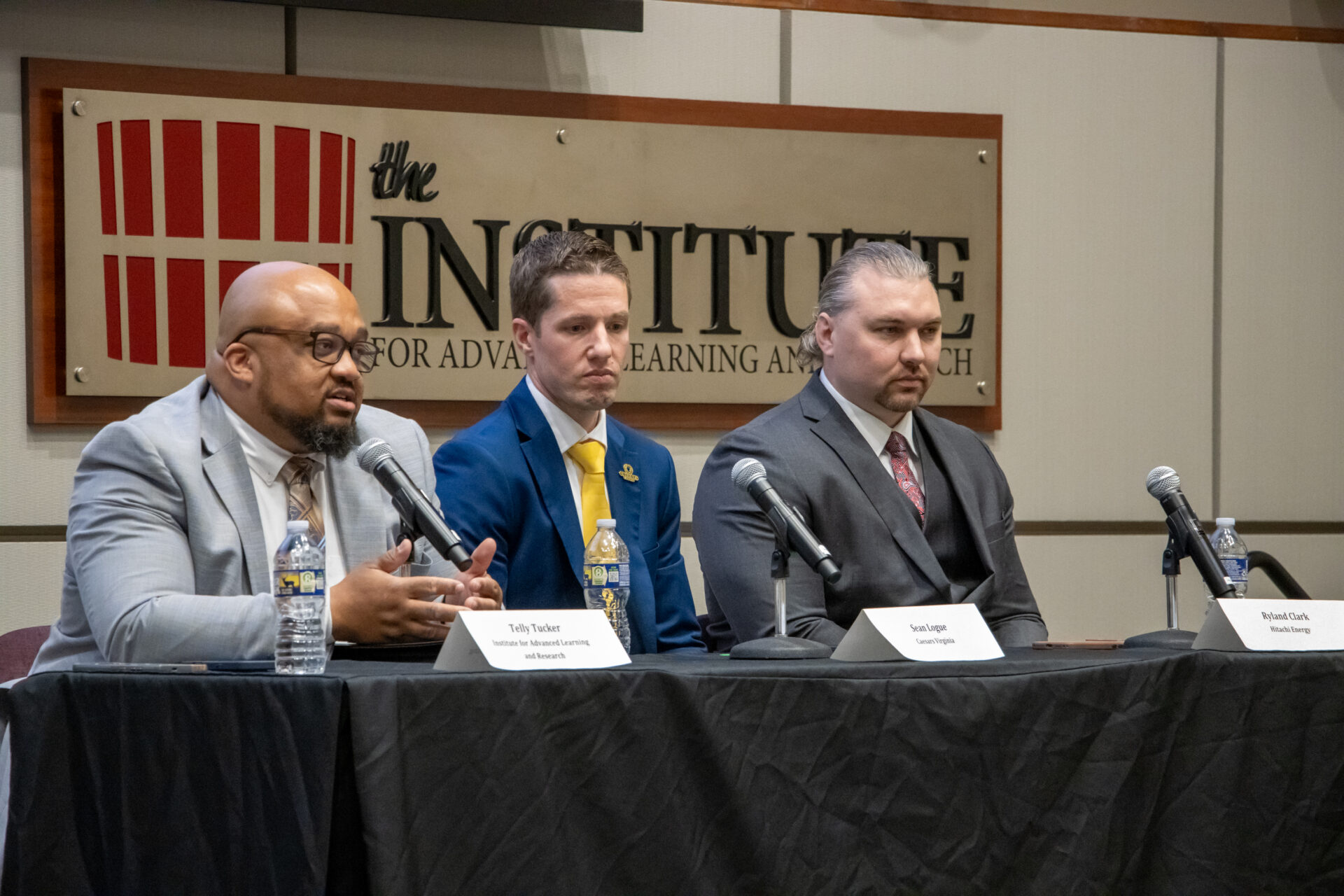
Telly Tucker, President, IALR; Sean Logue, Vice President of Marketing, Caesars Virginia; Ryland Clark Senior Corporate Real Estate Facilities and Capital Project Manager for Hitachi Energy
