The Institute for Advanced Learning and Research (IALR) is pleased to announce a new study published in HortScience examining how potassium concentration, fertilizer source and nutrient solution chemistry influence lettuce growth in controlled environment agriculture systems. The findings provide practical guidance for hydroponic growers while highlighting the importance of considering electrical conductivity alongside nutrient concentrations.
The Study
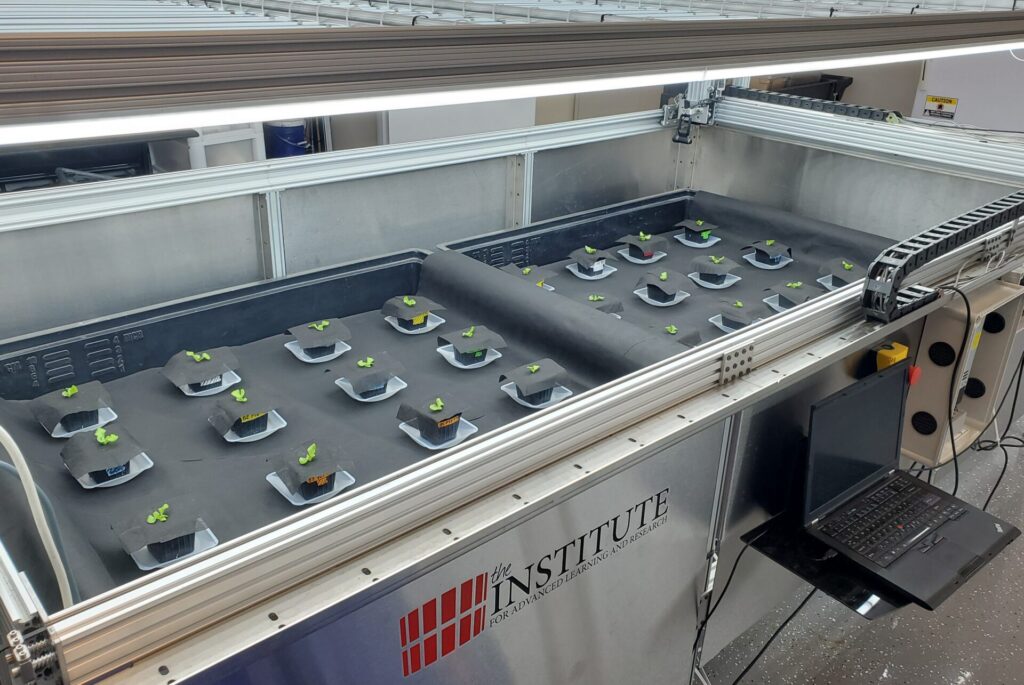
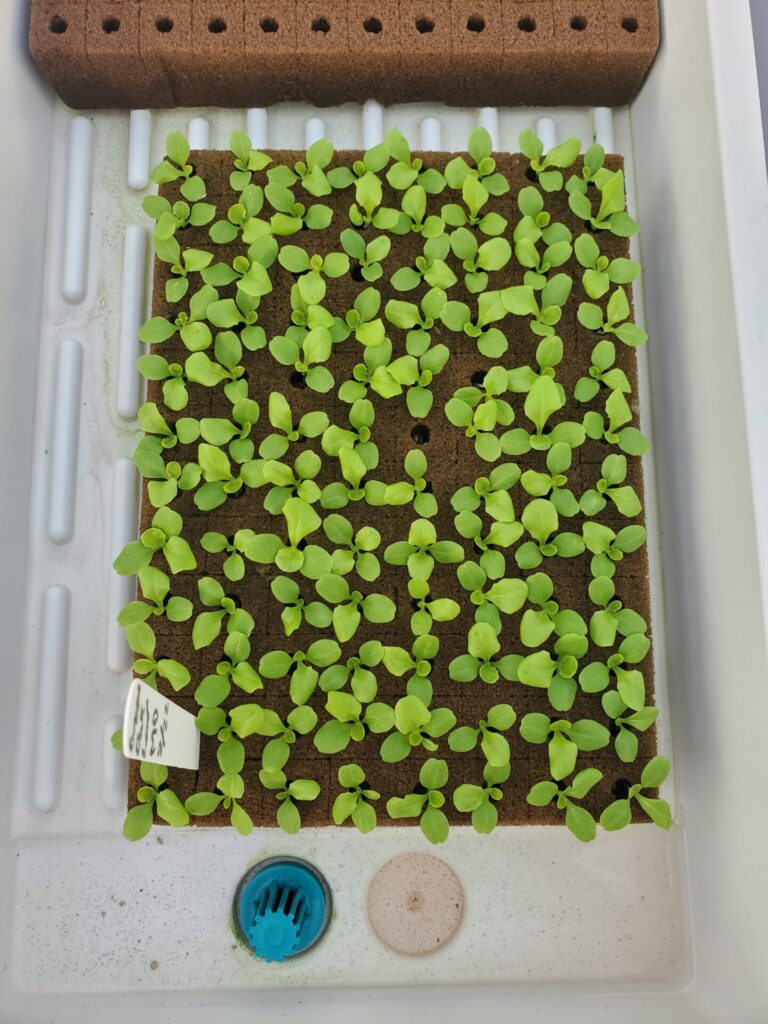
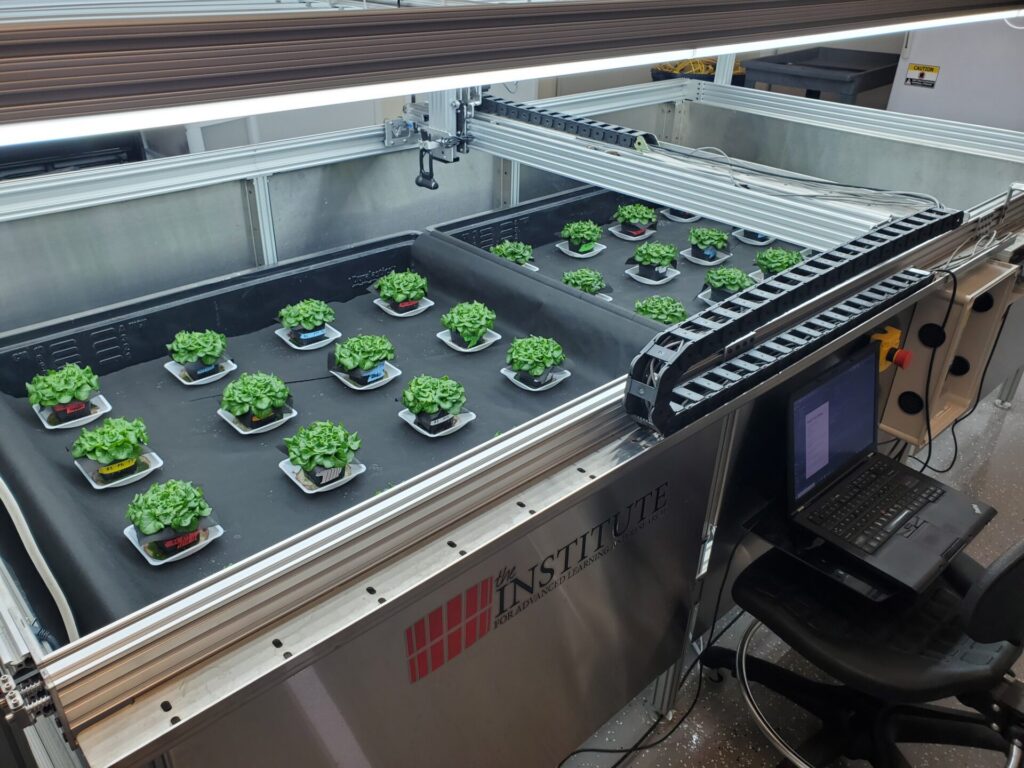
Researchers from IALR and Virginia Tech evaluated the effects of increasing potassium concentrations on lettuce grown under controlled environment conditions using IALR’s Spatially and Mechanically Accurate Robotic Table (SMART) Platforms. The research compared potassium supplied from potassium chloride (KCl) and potassium sulfate (K₂SO₄) while accounting for differences in electrical conductivity (EC).
The study sought to answer an important question for hydroponic production: are growth reductions caused by potassium itself or by the changes in nutrient solution chemistry that occur when potassium levels increase?
“This study shows the interplay between electrical conductivity and nutrient concentrations in hydroponic lettuce production. This research also proves the effectiveness of the SMART Platforms in evaluating plant growth and conditions over time in a non-destructive manner.” – Mitchell Doss, Value Chain Coordinator, IALR

Key Findings
- Potassium concentration alone did not reduce growth. Lettuce maintained strong growth across a wide range of potassium concentrations when potassium was supplied as potassium sulfate.
- High concentrations of potassium supplied as potassium chloride reduced plant growth. Plants receiving the highest KCl treatment exhibited lower growth indices and reduced shoot fresh and dry weight.
- Electrical conductivity was the primary factor affecting plant performance. Additional testing showed that elevated EC, rather than potassium concentration itself, was responsible for the observed growth reductions.
- SMART Platform imaging detected growth differences during production. Automated imaging data showed that growth differences became apparent approximately 15 days into the growing cycle and increased over time.
- Fertilizer source matters. The findings demonstrate that nutrient source selection can influence crop performance independently of nutrient concentration.
Why it matters
Hydroponic lettuce production depends on precise nutrient management. The study demonstrates that growers should evaluate overall nutrient solution chemistry, including electrical conductivity, rather than focusing solely on individual nutrient concentrations.
The research also highlights the value of IALR’s SMART Platforms, which capture plant images throughout the production cycle and convert them into actionable growth data. These systems allow researchers to monitor crop responses over time.
This work contributes to ongoing research within the CEA Innovation Center, a partnership between IALR and Virginia Tech focused on advancing controlled environment agriculture through research, industry partnerships and workforce development.
The research team
- Mitchell C. Doss, Value Chain Coordinator, IALR
- Scott Lowman, Ph.D., Vice President, Applied Research, IALR and Co-Director of the CEA Innovation Center
- Kaylee A. South, Ph.D., Assistant Professor of Controlled Environment Agriculture, Virginia Tech
- Michael R. Evans, Ph.D., Professor, Virginia Tech and Co-Director of the CEA Innovation Center