Few people get to see an active, fully assembled submarine.
Many more, but still a very small percentage of the population, get to see even parts of a decommissioned or under-construction submarine.
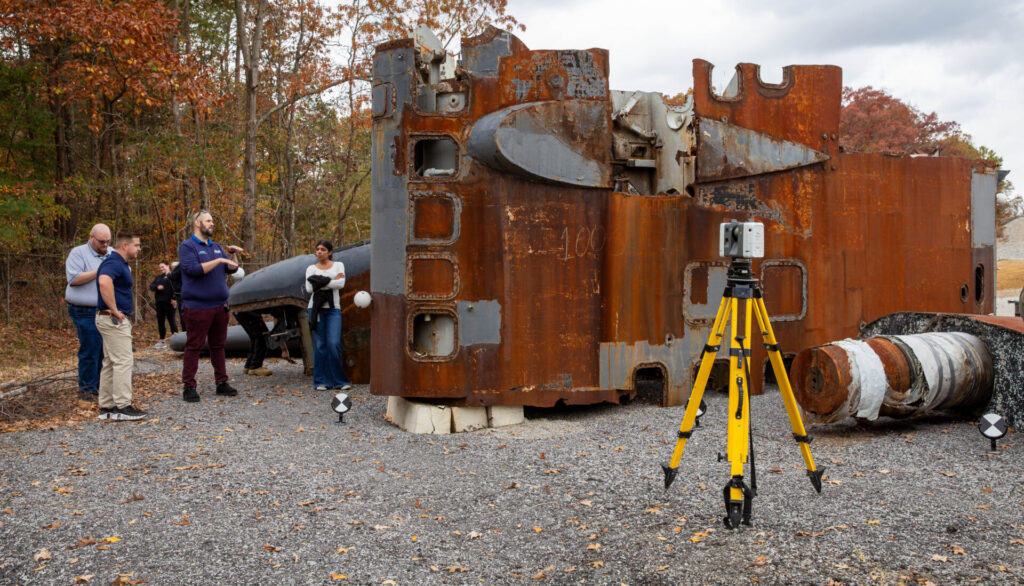
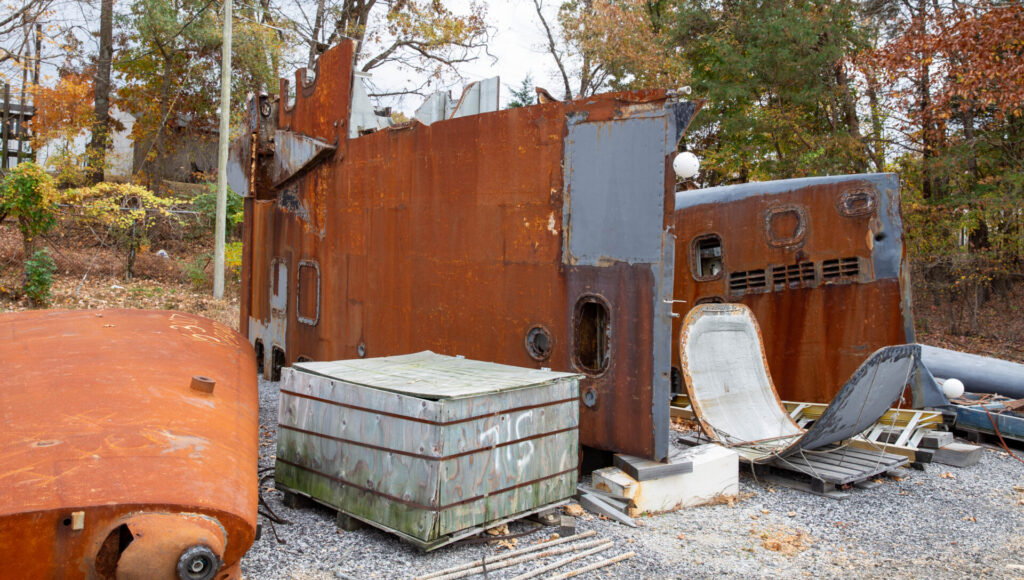
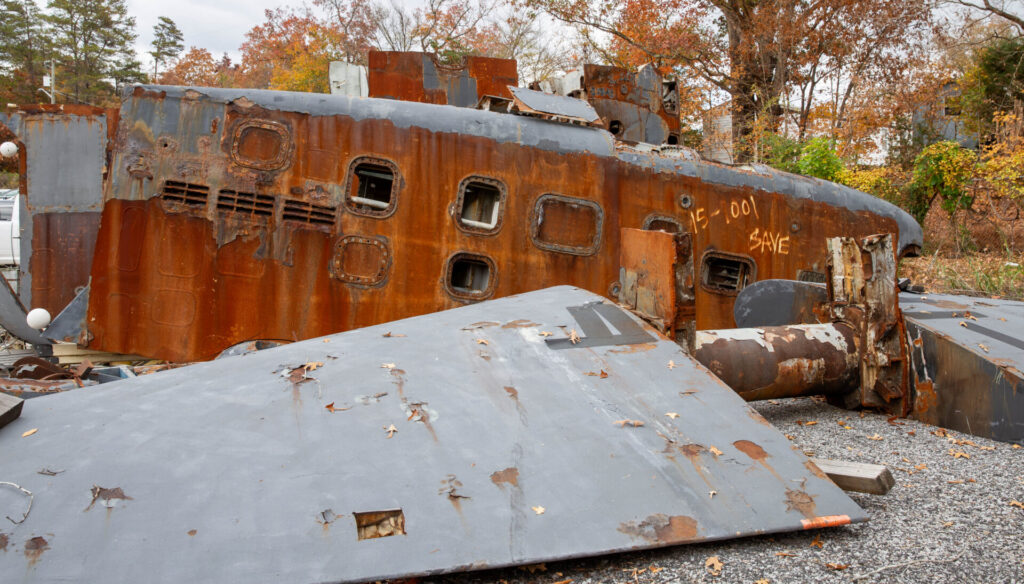
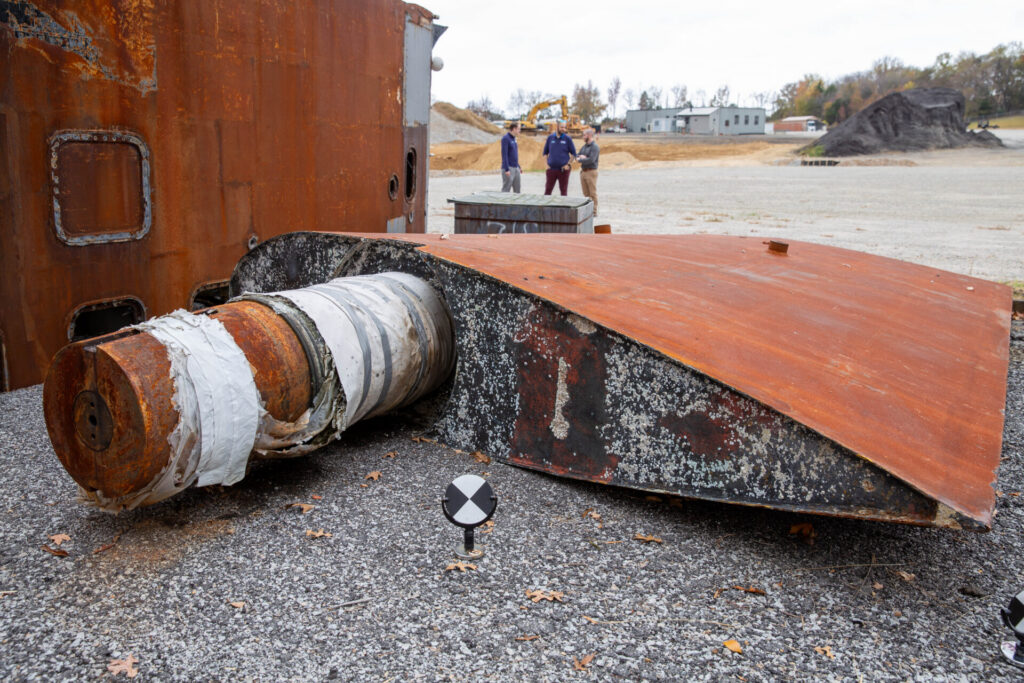
Now, on the campus of the Institute for Advanced Learning and Research (IALR) in Danville, Virginia, about 220 miles from the closest beach, major parts of decorated, decommissioned Los Angeles-Class nuclear-powered attack submarines are displayed for everyone to see.
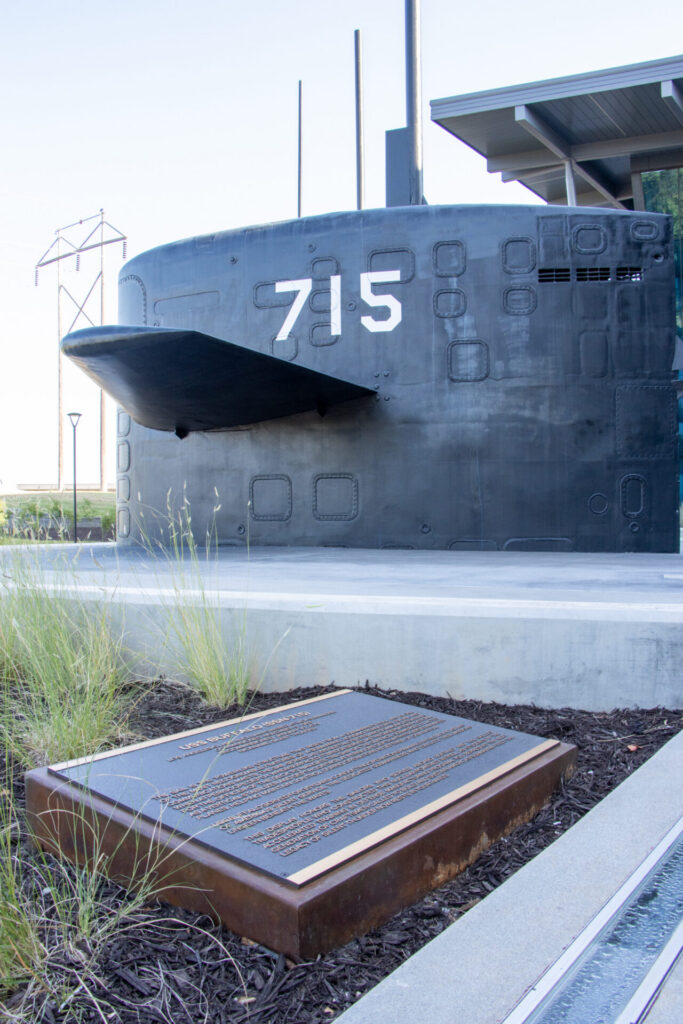
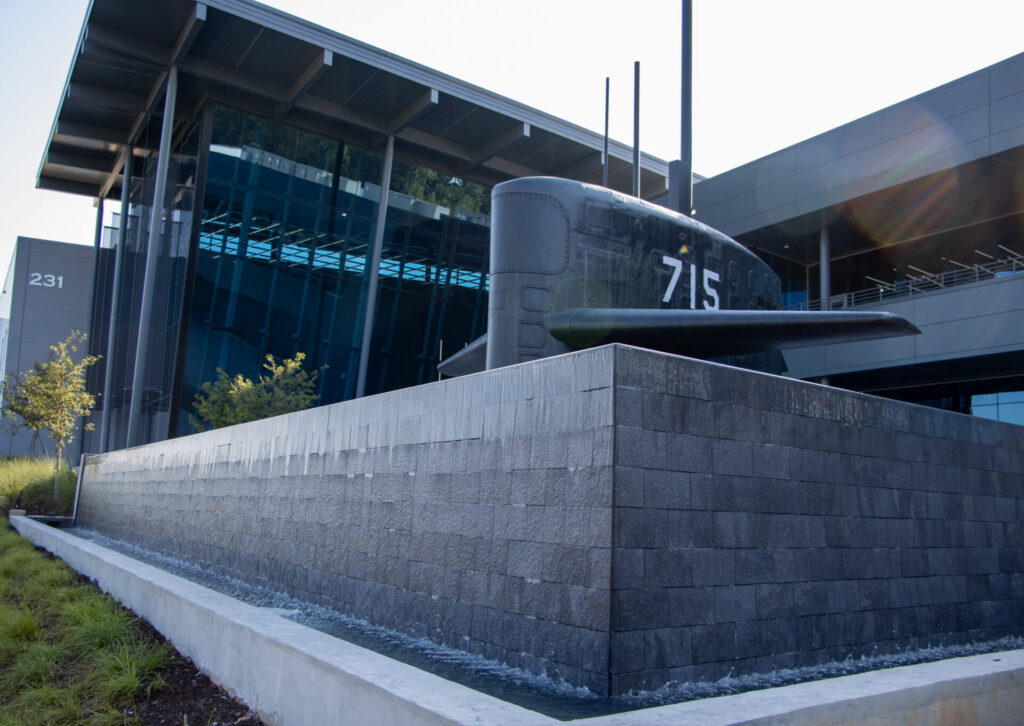
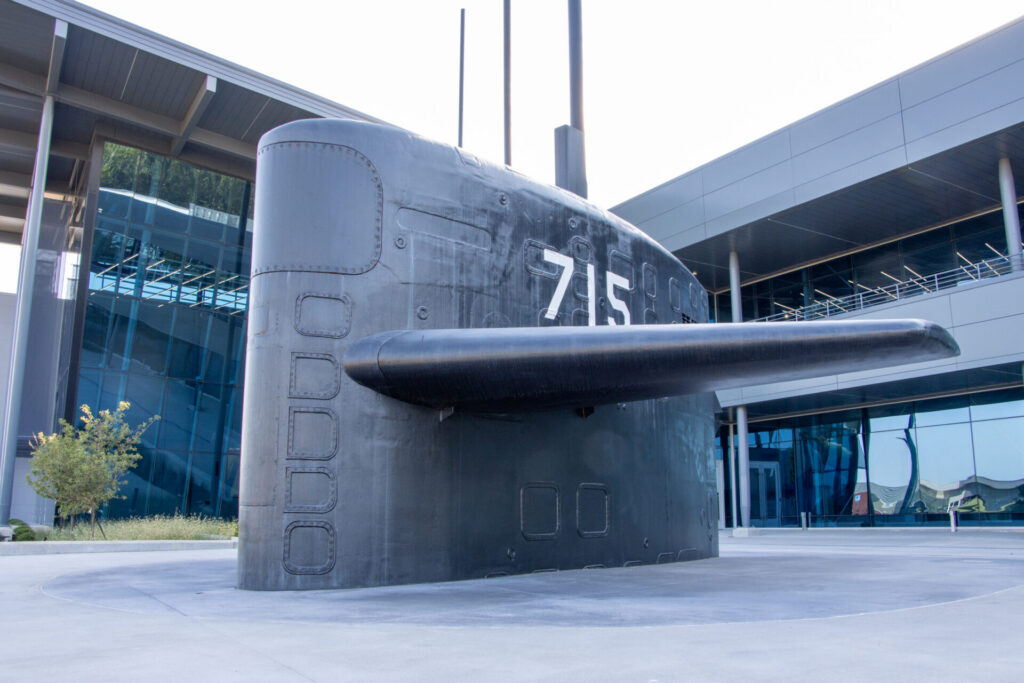
The sail of the ex-Buffalo (SSN 715) stands in the middle of a fountain feature outside the ATDM Maritime Training Center. This submarine sail is located at 231 Slayton Avenue.
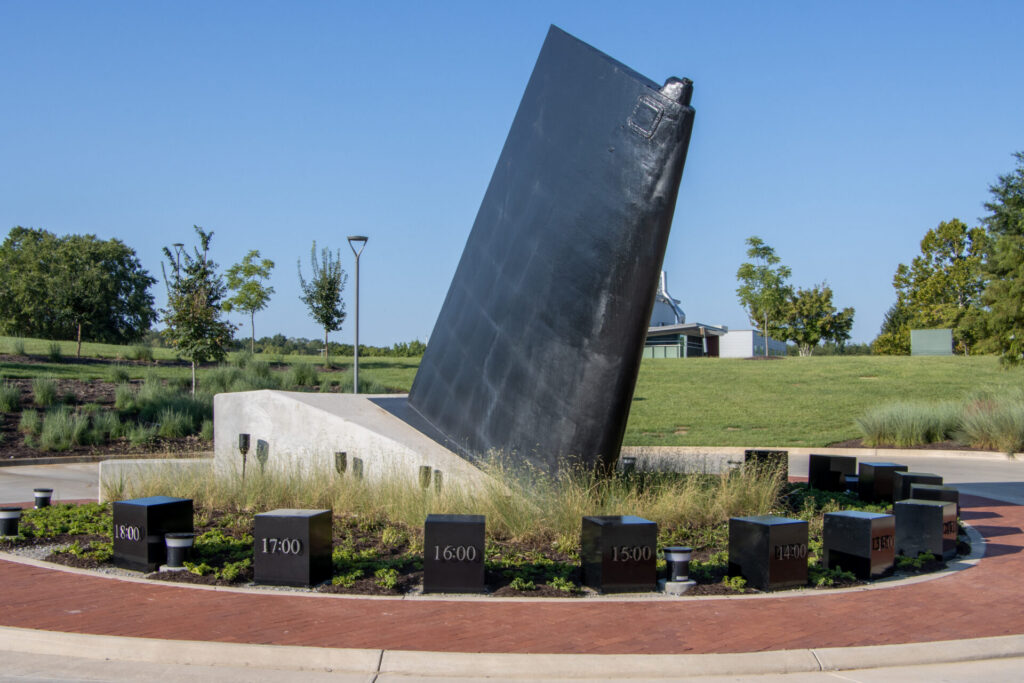
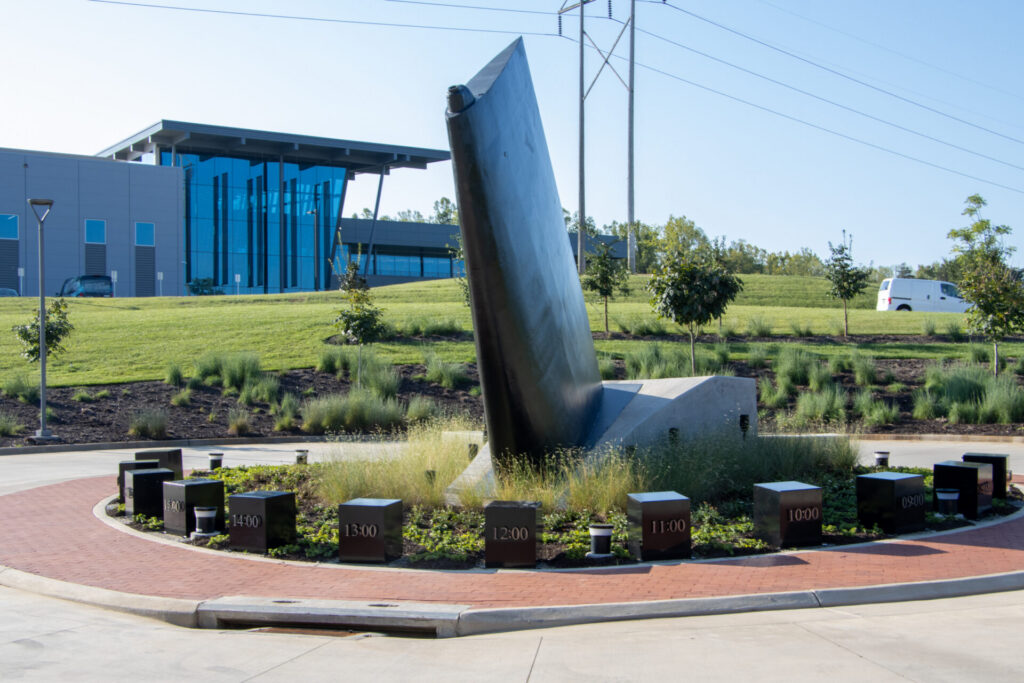
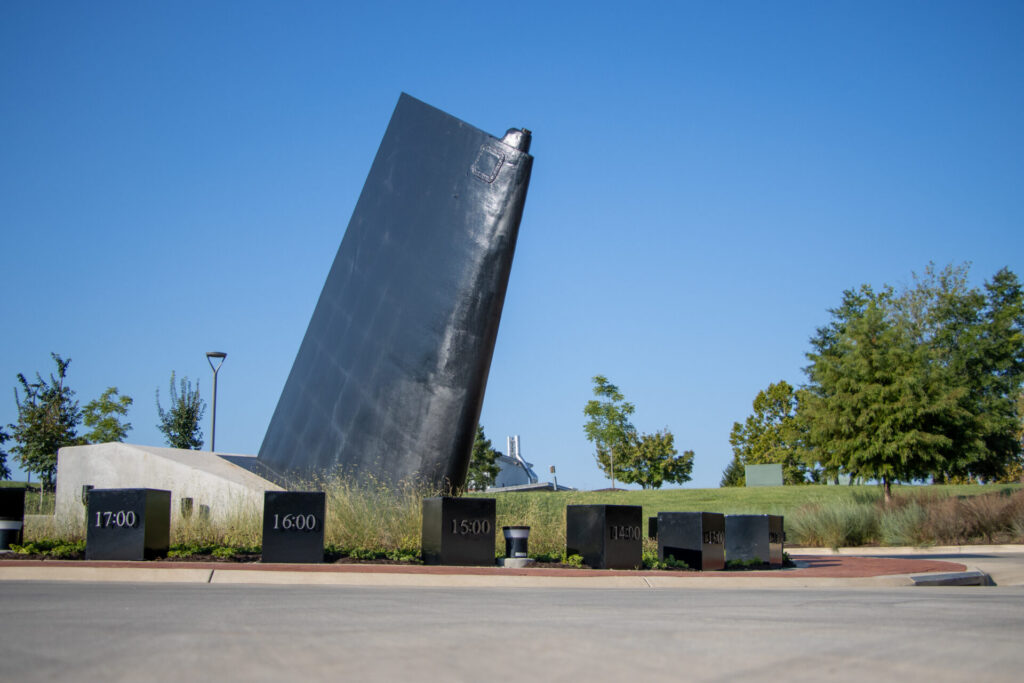
The rudder of the ex-Providence (SSN 719) is part of a sundial in front of the Center for Manufacturing Advancement (CMA). This submarine rudder is located at 211 Slayton Avenue.
Over the last six years, IALR has developed a deep connection with the U.S. Navy, supporting the construction and sustainment of naval vessels (including submarines and surface ships) through workforce training and technology validation. The submarine artifacts are physical symbols of IALR’s role in strengthening the nation’s submarine industrial base, reminding the larger team, every student and every visitor of this critical mission.
“The sail and rudder are much more than artifacts. They represent the connection between the day-to-day work on our campus and the broader mission to strengthen America’s submarine industrial base. They provide a visible reminder that the students we train and the technologies we help advance support critical national security priorities.” – Telly Tucker, President, IALR
The Role of Submarines
Submarines have played a critical role in international conflict and relations for more than a century.
The idea of vehicles that could travel beneath the ocean’s surface captivated inventors for hundreds of years. The first documented effort to use a submersible in combat occurred during the American Revolution, with the “Turtle,” a small submersible that the Americans attempted to use to attach time bombs to British warships. About 90 years later, a Confederate submarine sank the USS Housatonic outside Charleston, South Carolina, marking the first time that a submarine sank an enemy warship in combat.
Throughout World War I, submarines established themselves as versatile and critical military technologies by destroying ships, gathering intelligence, conducting reconnaissance missions and performing other missions.
In the 1950s, the successful development of nuclear propulsion transformed submarine operations by allowing vessels to travel thousands of miles and remain submerged for months rather than days. With the introduction of ballistic-missile submarines at the beginning of the following decade, submarines became a central element of U.S. strategic deterrence.
Today, the U.S. Navy operates a fleet of 53 fast attack submarines, 14 ballistic-missile submarines and four guided-missile submarines. But many of those submarines — as well as aircraft carriers and other surface ships — are getting older. The Navy is working to increase submarine production and sustainment capacity to meet fleet requirements as older submarines reach the end of their service lives.
Tens of thousands of workers are needed across the submarine industrial base, or the system of companies across the United States that manufacture parts for the production and sustainment of submarines, to meet an aggressive 1+2 schedule. That’s one Columbia-class submarine and two Virginia-class submarines per year.
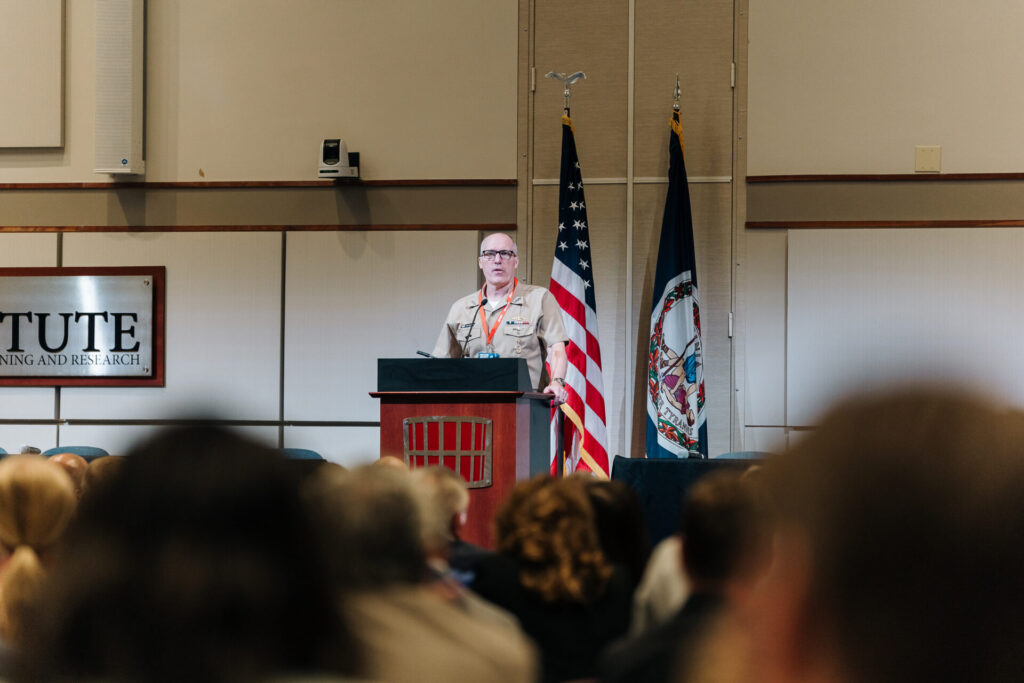
“The strategic environment we face today is more complex, more volatile and more contested than any time since the height of the Cold War,” Vice Admiral Robert Gaucher, Director of Submarine Programs, said during the recent ATDM Maritime Workforce Forum at IALR. “Our oceans are a contested battleground where our global security is being decided.”
Meeting those ambitious production goals requires more than shipyards and suppliers. It requires a steady pipeline of highly trained workers and new manufacturing approaches that increase capacity and reduce production bottlenecks.
Training the Workforce
Submarines are massive, with many extending more than 300 feet long and weighing more than 6,000 tons. They include a variety of complex systems that enable them to generate their own power, oxygen and freshwater.
And each component within these giant underwater machines must be manufactured and assembled exactly right, holding to extremely tight tolerances. The people who work in these roles across the submarine industrial base are retiring faster than new skilled tradespeople can replace them. Yet demand for submarines and submarine maintenance continues to grow. That’s why aggressive and innovative methods are required to meet the U.S. Navy’s workforce demands and fulfill the 1+2 schedule.
“For years, the submarine industrial base has faced a critical bottleneck, a shortage of skilled tradespeople,” Gaucher said.
To help prepare skilled tradespeople for these important roles in the submarine industrial base, the four-month Accelerated Training in Defense Manufacturing (ATDM) program was created by IALR and partners. A pilot program that is scaling to graduate 1,000 students annually by 2027, ATDM prepares adult learners for careers in skilled trades — such as additive manufacturing, CNC machining, non-destructive testing, welding and metrology — that are desperately needed by suppliers and in the shipyards.
With scholarships covering tuition and housing for the rapid training program, adult learners come from across the United States to gain skills. Graduates are placed in roles with suppliers and shipbuilders across the country. Students come from diverse educational and career backgrounds, ranging from 18-year-olds fresh out of college to adults with decades of experience in other fields.
ATDM By The Numbers
Now, outside the ATDM Maritime Training Center, the sail of the ex-Buffalo (SSN 715) serves as a reminder of the critical roles these students will step into. Weighing approximately 75 tons, the submarine sail was installed in multiple sections in March of this year.
As one of the most recognizable features of a submarine (because it’s one of the few parts that frequently rises above the water’s surface in photos), the sail houses a submarine’s periscopes and radar, serves as a vertical stabilizer underwater and ultimately functions as a submarine’s eyes and ears.
For ATDM students preparing for careers in manufacturing, the sail provides a tangible connection to the vessels they may someday help build, maintain or modernize. But the Buffalo’s sail is not just a random relic; it also has a deeper connection to the ATDM program itself.
Throughout its 35-year service life, the submarine (nicknamed Silent Thunder) served on many missions and operations, primarily in the Pacific. And one of the commanding officers of the Buffalo was Vice Adm. Scott Pappano, USN (ret.), who now serves as principal deputy administrator of the National Nuclear Security Administration. An early advocate for investing in the skilled workforce needed to expand submarine production and maintenance, Pappano helped elevate the need to attract, train and retain the talent required to support a growing submarine industrial base. This challenge ultimately led to the creation of the ATDM program.
Now thousands of students will walk by the sail of the submarine that one of ATDM’s biggest supporters commanded.
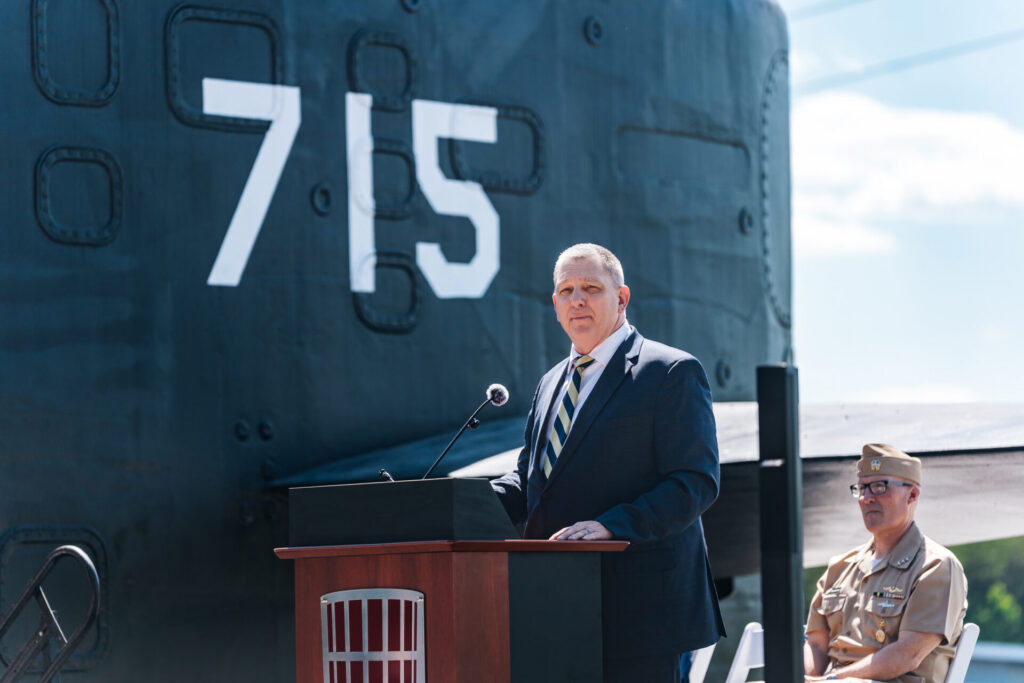
“I thought it was important to make sure people had a chance to visually see what they were working for, to be part of something bigger than themselves,” Pappano said at the recent ATDM Maritime Workforce Forum, where the sail was dedicated.
Validating the Technology
While tens of thousands of skilled tradespeople are needed to step into these roles, the U.S. Navy is not just investing in training. Improved technology, processes and methods are needed.
“We must also recognize we cannot meet today’s defense demands by adding more people to old processes,” Gaucher said. “We must fundamentally change how we build. By deeply integrating technologies like additive manufacturing into our industrial base, we can actively attack critical vulnerabilities in our supply chain.”
One of the biggest strategic priorities for the U.S. Navy is determining how to effectively use additive manufacturing, a subset of manufacturing in which an object is built “from the ground up” based on a 3D model. These methods can be used for both the rapid production of individual parts and for serial production.
Much of that exploration is happening on the IALR campus in the Additive Manufacturing Center of Excellence, a collaborative project that develops world-leading additive manufacturing technical data packages, or “manufacturing recipes,” for the development of parts needed by the United States military. The AM CoE is hosted inside IALR’s Center for Manufacturing Advancement (CMA), which provides manufacturing optimization and technology deployment support to manufacturers.
And it’s outside the CMA that a massive submarine rudder juts 18 feet into the air as part of a sundial. The rudder comes from the USS Providence (SSN-719), another Los-Angeles Class nuclear-powered attack submarine that was decommissioned in 2022 after 37 years in service. Through hydraulic systems, the rudder gives submariners control of the submarine’s steering, a central capability to mission success and crew safety.
It was during a meeting over a year ago with IALR staff, architects and the construction team when the question came up: how can we use the rudder on the campus?
The concept of having the sail involved in a water feature had been established as part of the ATDM Maritime Training Center’s original design; a rudder, though, posed a bigger challenge. Massive, imposing and not nearly as recognizable as the sail, it left the team wondering how such a unique submarine artifact could be incorporated into the campus.
“What about a sundial?” asked Larry Hasson, a Dewberry architect who has helped design five buildings on the IALR campus, surprising the rest of the room.
He and the team figured out the structure and design, which includes 13 metal time boxes created by the ATDM Fabrication Welding instructional staff with support from students.
“I was very excited when I heard about the collaboration for the sundial project planned for the USS Providence’s rudder. It is an awesome way to continue honoring the vessel and a great visual reminder for everyone who comes what the work we do is all about. I am glad I had a hand in the project.” – Matthew Walker, ATDM Fabrication Welding Instructor
To ensure that the shadows fell at the correct times, the submarine’s rudder had to be cocked back at a 19-degree angle.
Like the Buffalo sail outside the ATDM Maritime Training Center, the Providence rudder serves as both a conversation piece and a symbol of the work taking place nearby.
A decorated submarine with 37 years in service, the USS Providence was the first fast-attack submarine to be equipped with a vertical launching system for Tomahawk cruise missiles and went on missions across the globe. It even received the nickname “The Big Dog of the Red Sea” during Operation Iraqi Freedom for launching the most missiles during 2003.
The vessel was one of the stealthiest submarines in the world, capable of operating at depths greater than 800 feet and at speeds exceeding 25 nautical miles per hour.
Relics that Inspire
Having these massive, genuine pieces of submarine history stationed outside the doors of both buildings serves as a reminder of the significance of the work happening inside. For those who are training in ATDM to contribute to submarine construction and for those in the AM CoE who are developing the next manufacturing methods that will aid submarine construction and sustainment, these submarines are tangible reminders of the missions, sailors and national security priorities their work ultimately supports.
“It’s easy to get focused on the day-to-day work inside a classroom, laboratory or manufacturing facility. These artifacts help remind us that the skills being developed and the technologies being advanced here ultimately support sailors, missions and national security. They provide a physical connection between the work happening in Danville and its impact around the world.” – Jason Wells, Executive Vice President, Manufacturing Advancement, IALR
Through workforce development programs like ATDM and manufacturing innovation initiatives like the AM CoE, IALR is helping address two of the submarine industrial base’s most pressing challenges: developing enough skilled workers and advancing the technologies needed to build faster, smarter and more efficiently.
“Our asymmetric advantage, our ultimate guarantor of peace and freedom in the domain where adversaries still fear us, is our United States submarine force,” Gaucher said.
Hundreds of miles from the nearest ocean, two submarine components now stand as reminders of the importance of the work taking place every day at IALR. For students preparing to join the submarine industrial base and innovators advancing additive manufacturing production methods, the sail and rudder connect today’s efforts with the vessels, missions and national security needs they ultimately support.