Skip to content
  • About
  • News
  • Events
  • Staff
  • Careers
  • Advanced Learning
    • All Programs and Services
    • GO TEC
    • Connecting Students to Careers
    • STEM Programming
    • Service and Lifelong Learning
  • Applied Research
    • Contract Research and Testing
    • Partnerships and Space
    • Controlled Environment Agriculture Innovation Center
    • Plant Endophyte Research Center
    • Research Focus Areas
  • Manufacturing Advancement
    • Center for Manufacturing Advancement
    • ATDM
    • Training Programs
    • Industry Solutions
    • Building the Pipeline
  • Economic Development
    • Southern Virginia Regional Alliance
    • Marketing the Region
    • Conducting Research
    • Recruiting Prospects
    • Accelerating Industry
  • Conference Center
    • Meeting Spaces
    • Services and Amenities
    • Food and Beverage
    • Request A Quote
    • Megabytes cafe
  • About
  • News
  • Events
  • Staff
  • Careers

Institute for Advanced Learning and Research

Driving Economic Transformation

  • Advanced Learning
    • All Programs and Services
    • GO TEC
    • Connecting Students to Careers
    • STEM Programming
    • Service and Lifelong Learning
  • Applied Research
    • Contract Research and Testing
    • Partnerships and Space
    • Controlled Environment Agriculture Innovation Center
    • Plant Endophyte Research Center
    • Research Focus Areas
  • Manufacturing Advancement
    • Center for Manufacturing Advancement
    • ATDM
    • Training Programs
    • Industry Solutions
    • Building the Pipeline
  • Economic Development
    • Southern Virginia Regional Alliance
    • Marketing the Region
    • Conducting Research
    • Recruiting Prospects
    • Accelerating Industry
  • Conference Center
    • Meeting Spaces
    • Services and Amenities
    • Food and Beverage
    • Request A Quote
    • Megabytes cafe

Categories

  • Advanced Learning
  • ATDM
  • Conference Center
  • Economic Development
  • Featured
  • GO TEC
  • IALR
  • Manufacturing Advancement
  • Newsletters
  • Research
  • Uncategorized
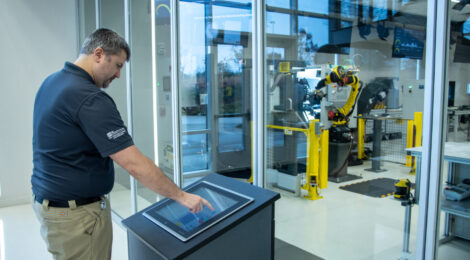
Industry 4.0 Lab Introduces Kiosk for Customizable Manufacturing Scenarios

November 21, 2025

Industry 4.0 Lab Introduces Kiosk for Customizable Manufacturing Scenarios

ATDM Students Tackle Real-World Projects

March 27, 2025

ATDM Students Tackle Real-World Projects

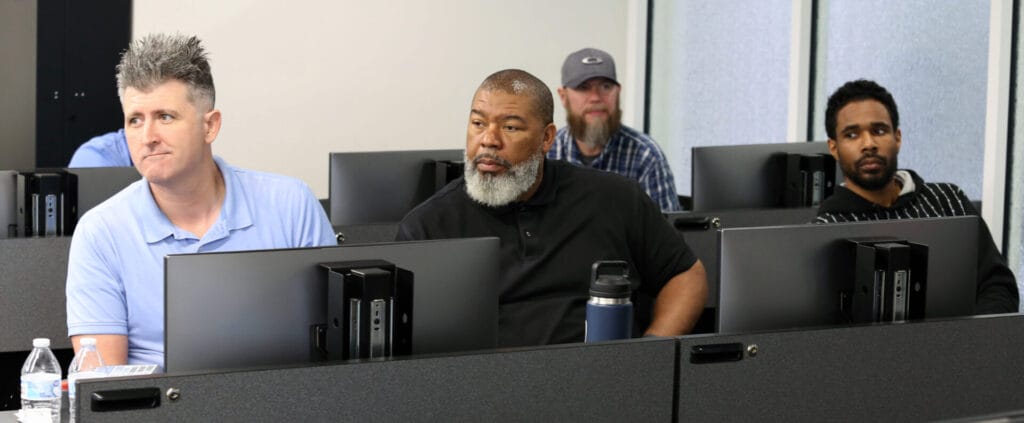
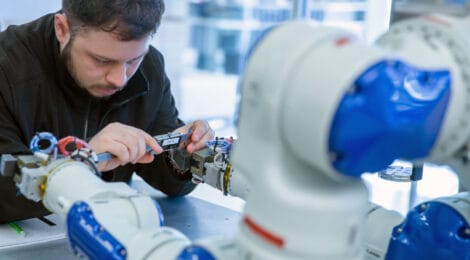
Inside the Institute for Advanced Learning and Research (IALR) Industry 4.0 Integration Lab, students from the Accelerated Training in Defense Manufacturing (ATDM) program and their instructor examine the robots, fixtures, work areas and CNC machines. They take detailed measurements and ask questions.

Butch Kendrick, IALR’s Director of Digital Manufacturing, has explained several “problems” he’s encountered in the lab. He asks these students to develop creative solutions using additive manufacturing to design and print different fixtures; the goal is to better support the Industry 4.0 Integration Lab’s mission of demonstrating and teaching Industry 4.0 concepts.

During the four-month program that prepares adult learners to work in the Maritime Industrial Base (MIB), ATDM students don’t just learn theory; they tackle real-world problems.

“Working on real projects while in the ATDM program significantly enhances the students’ readiness and confidence as they enter the workforce.” – Cheryl Terry, Director of ATDM Training and Technology, IALR

ATDM: Rapid Training for Meaningful Careers

The Accelerated Training in Defense Manufacturing program at IALR is a hands-on training initiative designed to address the MIB workforce needs.

Currently, ATDM offers tracks in welding, additive manufacturing, CNC machining, quality control inspection (metrology) and non-destructive testing (NDT). Students benefit from tuition-free training, supportive services and guaranteed opportunities to earn industry-recognized qualifications.

ATDM’s emphasis on real-world, hands-on learning ensures that students gain practical skills directly applicable to manufacturing challenges.

“We get so much more buy-in from our students when they work on real-world situations. They get more gratification from fixing problems than just doing their homework.” – Tim Holland, ATDM Additive Manufacturing Instructor, IALR

Student-Driven Fixture Design Project

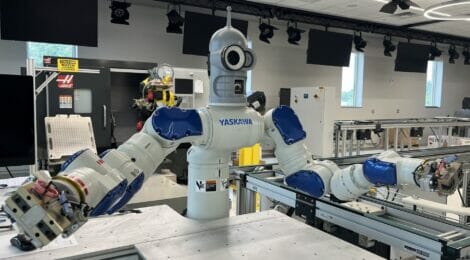
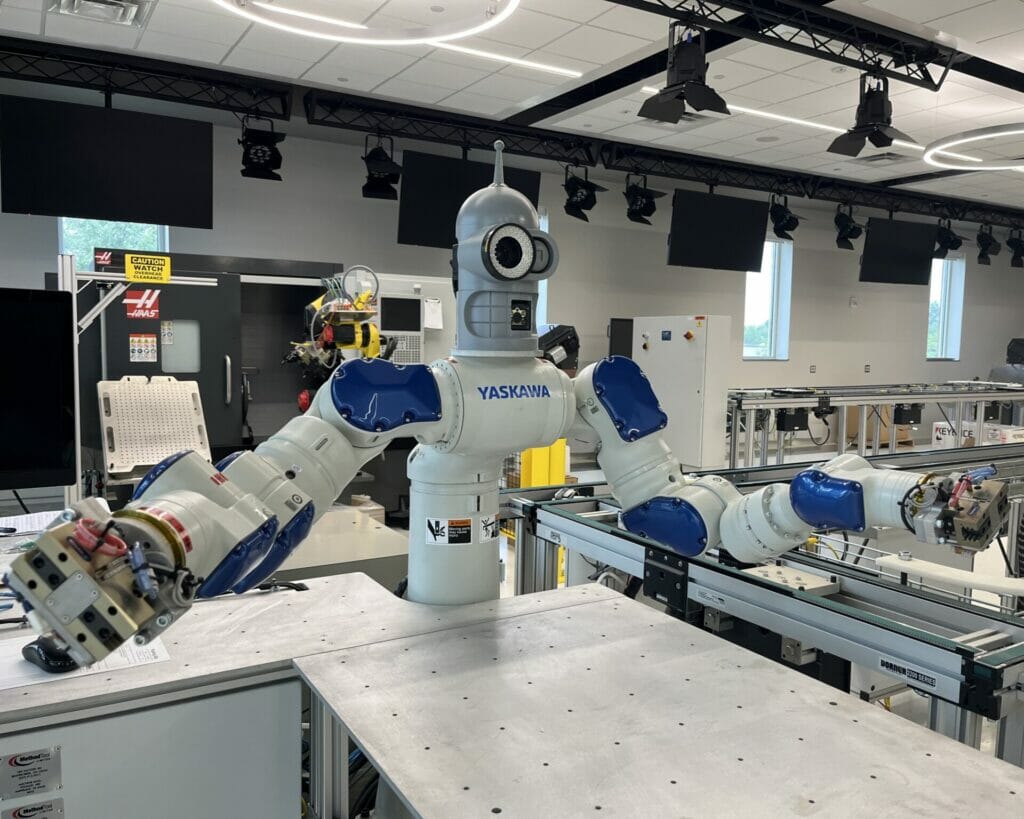
To date, every cohort of additive manufacturing students has worked on a project in the Industry 4.0 Integration Lab. One of the first cohorts actually 3D printed the head of Rosie, one of the lab robots. The robot was designed to look like Bender from Futurama and eventually got the name Rosie from a Facebook naming poll.

Aaron Jacob Garcia with Rosie

“I make sure that the students understand the purpose of what they’re doing and how it all connects,” Kendrick said. “Once we do the initial session with them, the lab is open to them coming back and taking measurements and doing whatever they need to do.”

This cohort tackled four projects, including refining an existing fixture to ensure better robotic interaction and stability. Students fully managed their designs, from taking precise measurements to ensuring the fixture would securely interface with multiple table configurations.

“There is a problem, and they have to figure out how to fix it, but there’s no instruction list on how to do it,” Holland said.

Recent graduate Aaron Jacob Garcia said the experience taught him about the potential of additive manufacturing, the need for detailed, reliable measurements and the importance of understanding the end use.

“I learned that sometimes you have to make changes to make a part work for what it will be used for,” he said.

The Natural Partnership with Industry 4.0 Integration Lab

Allowing additive manufacturing students the opportunity to contribute to the Industry 4.0 Integration Lab is mutually beneficial.

“I think it’s a great opportunity for students to come out of the classroom into a real-life situation that isn’t too high pressure,” said Kendrick. “It gives them a chance to take what they’ve learned, mix it with their imagination and see what they can come up with.”

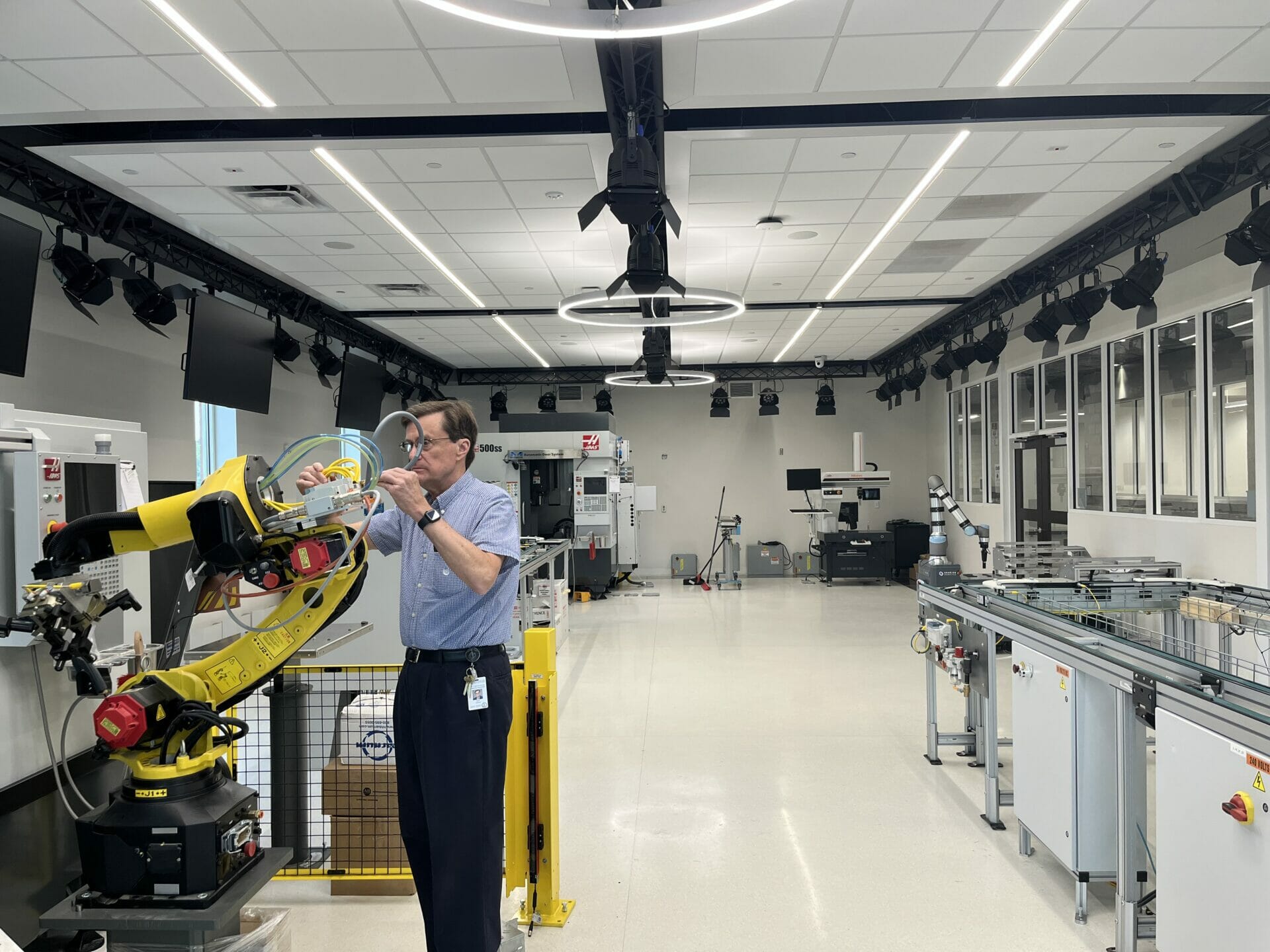
The Industry 4.0 Integration Lab provides an autonomous manufacturing environment featuring advanced robotics, automation and digital technologies. This focus makes it an ideal platform for training future manufacturing professionals, demonstrating real-world Industry 4.0 principles, and creating tangible outcomes for students and industry partners.

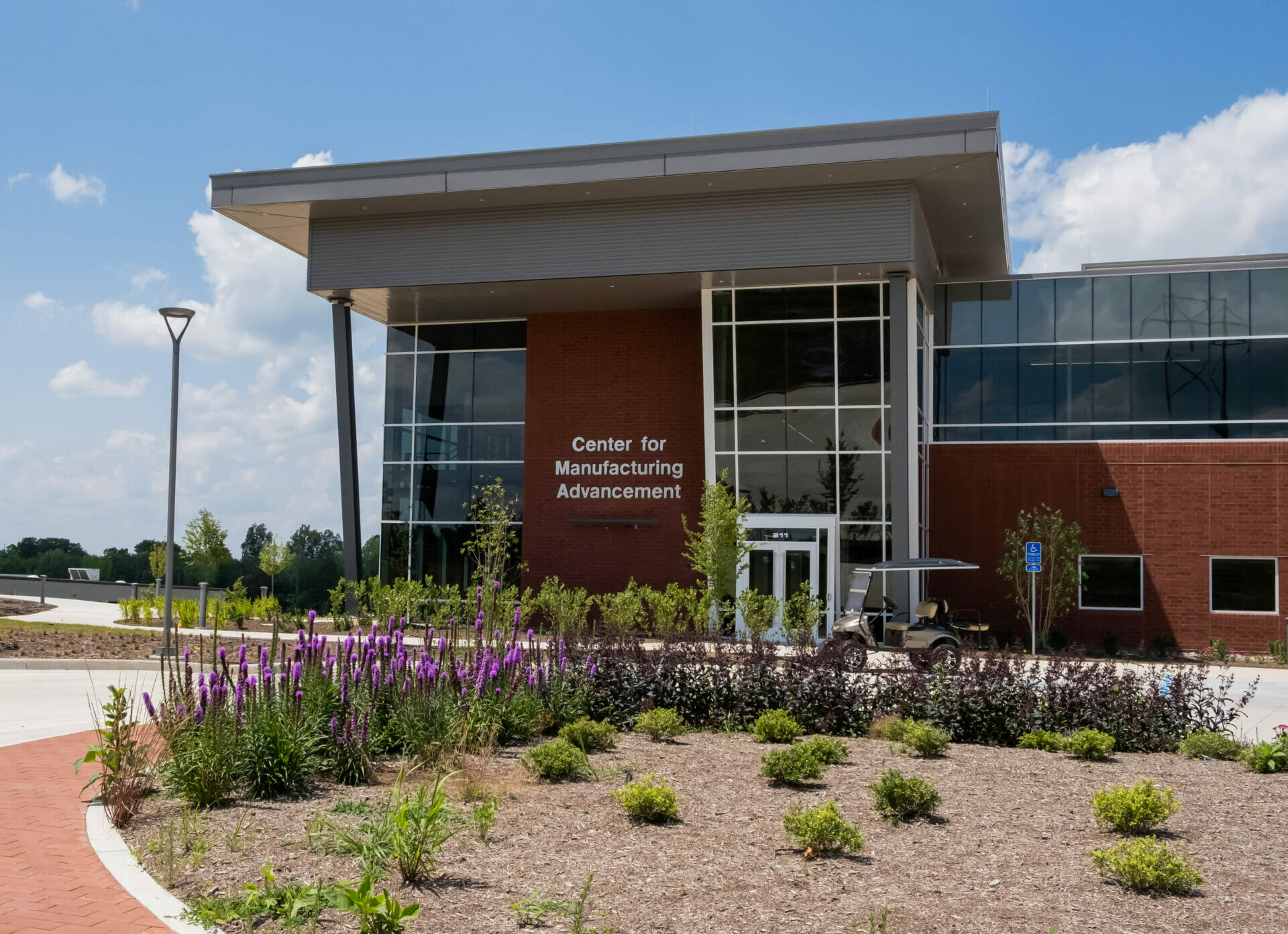
The Lab is housed within the Center for Manufacturing Advancement (CMA) on the IALR campus. The CMA equips manufacturers to be globally competitive by supporting the seamless integration of emerging technology into manufacturing processes.

“Allowing students to participate in these types of real-world, hands-on projects is mutually beneficial for everybody involved and furthers the mission of both the ATDM program and the CMA.” – Jason Wells, Executive Vice President, Manufacturing Advancement, IALR
Robotic Simulation Software Training Hosted at CMA

May 1, 2024

Robotic Simulation Software Training Hosted at CMA

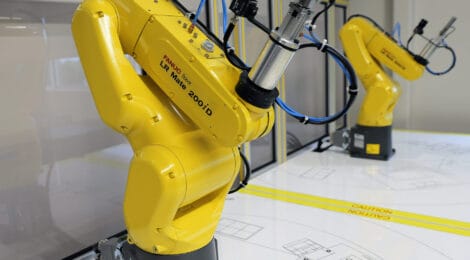
The Institute for Advanced Learning and Research (IALR) hosted a three-day robotic simulation class on April 16-18, providing regional community college and high school instructors with needed training for FANUC ROBOGUIDE simulation software. This was the first external training opportunity provided in the Center for Manufacturing Advancement (CMA).

A total of 15 instructors participated in the three-day course, which was taught by Butch Kendrick, IALR’s Director of Digital Manufacturing, at the CMA and sponsored by Amtek Company – the FANUC educational representative for Virginia and several other southern states.

“This workshop helped these instructors understand the possibilities and capabilities of this software and how to better integrate that knowledge into their courses. We are happy to utilize the CMA as a hub for technical training and information for industry and educators alike.” – Butch Kendrick, Director of Digital Manufacturing, IALR

Participants came from a variety of educational institutions, including Patrick & Henry Community College, New River Community College, the Southern Virginia Higher Education Center, the Pittsylvania County Career and Technical Center and a technical college in West Virginia. The hands-on, three-day workshop allowed participants to learn the operations and functionality of the FANUC ROBOGUIDE software. Fanuc is a leading supplier of robotics and automation solutions for industry.

This workshop was designed specifically for teachers working to obtain their FANUC Certified Robot Operator I certification.

“We wanted to hold a local class for our teachers in Virginia and West Virginia to highlight how to use the ROBOGUIDE software, prepping them for the certification exam and helping them better teach this program in their classrooms.” – Gary Daniels, Sales Consultant Amtek Company

Percy Pass, Instructor of the Automation and Robotics Course at the Pittsylvania County Career and Technical Center, has 10 of these robots in his classroom, and this training will help him and his students have a better experience working with them.

“This will allow the students to become familiar with the controls and overall operations of the robot, both the physical version and the simulator.” – Percy Pass, Instructor, Pittsylvania County Career and Technical Center

While no future workshops are currently on the schedule, staff in the CMA plan to offer additional training opportunities and operational workshops on the operation of different robots.

Housed on the campus of IALR, the CMA serves as the destination of choice for innovative manufacturers ready to optimize their operations and scale. The CMA features an Industry 4.0 Integration Lab focused on automation and robotics, a CNC Machining Innovation Lab that helps businesses to evaluate processes and incorporate efficiencies, and a Metrology Lab with integrated inspection capabilities required to validate product quality. The CMA is also home to the Navy’s Additive Manufacturing Center of Excellence.

Inside IALR Podcast: Industry 4.0: Robots, Automation and Efficiency

January 29, 2024

Inside IALR Podcast: Industry 4.0: Robots, Automation and Efficiency

What is Industry 4.0? It involves interconnected machines and data analysis capabilities, and it’s what allows three robots to utilize two CNC machines and several other tools and processes to convert a piece of raw material into a finished packaged product without any human involvement inside IALR’s Industry 4.0 Integration Lab.

The “Inside IALR” team is on location inside the Center for Manufacturing Advancement (CMA) with Butch Kendrick, Director of Digital Manufacturing, to outline the goals and capabilities of the Industry 4.0 Integration Lab (0:33), discuss the main principles of Industry 4.0 (1:47), and explain the processes and technologies inside the lab (12:03). Butch describes some of the challenges in designing and implementing the Industry 4.0 Integration lab (17:38) and highlights additional technologies and processes that he hopes to add to the lab in the future (21:13).

LISTEN ON SPOTIFY

LISTEN ON APPLE PODCASTS

LISTEN ON IALR’S SITE

“Automagic:” Robots and Automated Manufacturing

July 26, 2023

“Automagic:” Robots and Automated Manufacturing

Three robots and two large manufacturing machines communicating, collaborating and accomplishing tasks, all without human direction or involvement. Together, they take a piece of aluminum and, through several processes, convert it into a finished and packaged product.

It sounds like something out of a science fiction movie.

However, it will soon be a reality as part of the Industry 4.0 Lab in the Institute for Advanced Learning and Research’s (IALR) Center for Manufacturing Advancement (CMA). IALR staffers have designed and are building an autonomous manufacturing work cell where robots and manufacturing machines communicate via wireless signals. The work cell should be fully operational around December.

With the ability to tweak the process for different scenarios, this Industry 4.0 Lab will serve as a demonstration site, showing manufacturing companies what is possible. Enclosed in a glass room, the Industry 4.0 Lab will also be visible during tours of IALR.

“It’s a demonstration lab to show local industries what new technologies are out there and what might be able to benefit them,” said Butch Kendrick, Director of Digital Manufacturing IALR “We call it automagic.”

Robots and Machines Communicating, Working Together and Directing Each Other

Throughout the automated process, three robots and two different computer numerical controlled (CNC) machines will communicate with each other about the process and what each one needs from the others. All these communications – and the requests and information they share – have been pre-programmed and are managed by a software called a manufacturing execution system (MES).

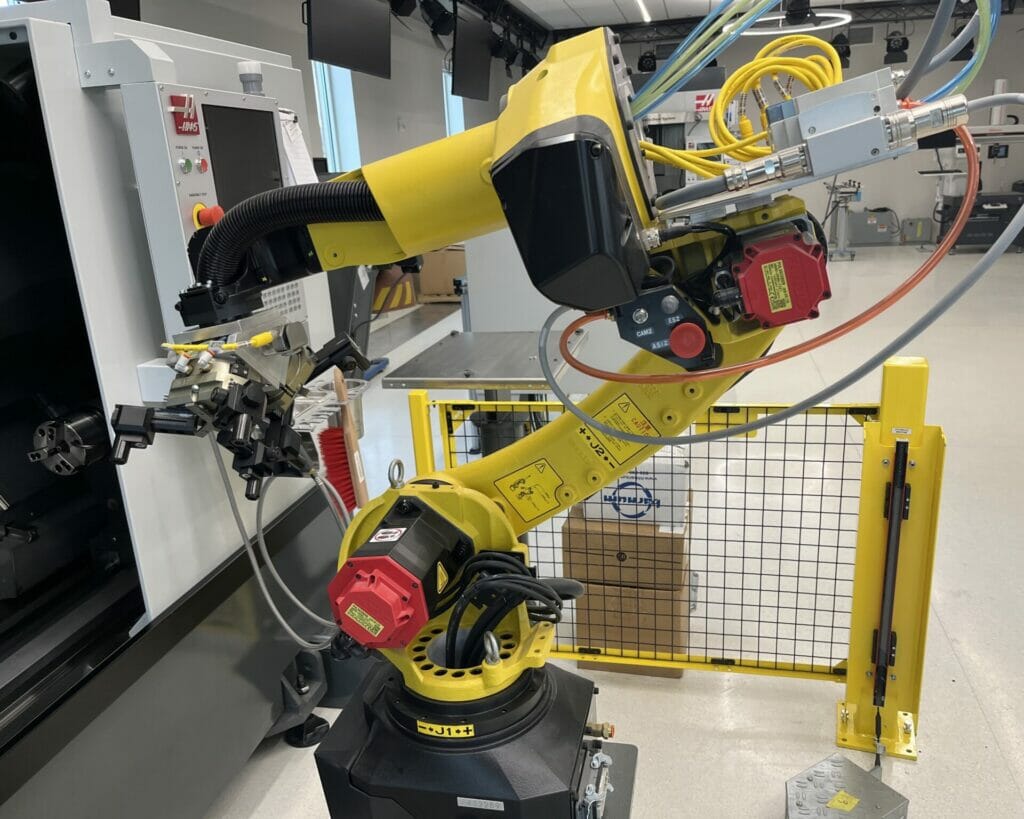
With no name yet, this robot has one job: tend operations of the CNC machines using its compound gripper.

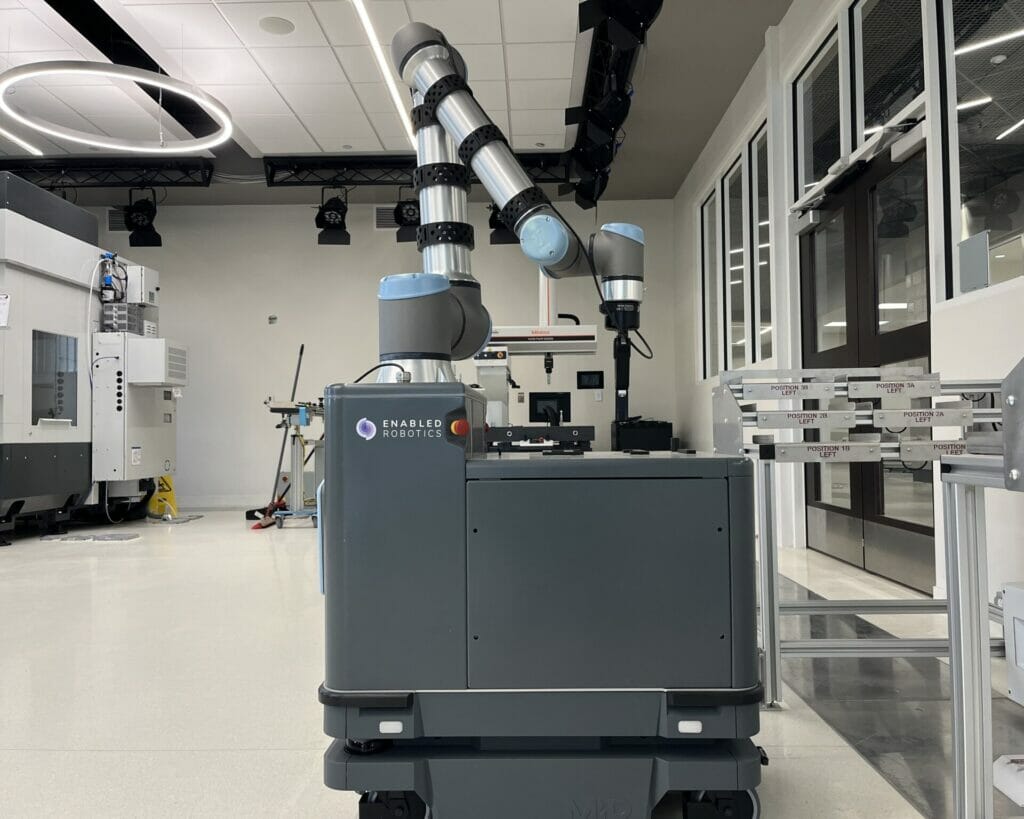
An autonomous mobile robot (AMR), Ralph consists of a mobile robotic cart and a universal robotic arm with seven joints.

Rosie completes the final inspection of finished products before packaging and preparing them for shipment.

“The actual machines are integrated with the robots,” Yeatts explained. “The machine calls when it needs to be tended by the mobile robot. The only human interaction was the programming. No one’s actually guiding the robot. The robots know the process and complete their jobs as needed.”

There will be alternative steps and workflows depending on the application, but the basic process will go something like this:

  • Under orders from the MES, the tending robot will pick up and load a piece of aluminum into the first CNC machine. With the material firmly in place, the machine will cut a shape. The robot will then take the part out of the machine and place it on a table.
  • Under a request from the tending robot, Ralph will retrieve the part and conduct pre-established inspections with engravers and scanners on the inspection island.
  • After the inspections, Ralph will drive to the CNC milling machine. Ralph will be responsible for tending the machine, putting the part inside and telling the machine to begin the operation before leaving to complete another task.
  • Once complete, Ralph will retrieve the part and take it to the coordinate measuring machine or back to the inspection table, depending on the predetermined workflow. Those that fail inspections or tests at either location would go onto a rejection conveyer belt – an event that would trigger a text or email notification to a human supervisor.
  • If it passes all relevant tests, Ralph will bring the module to Rosie – who received that name after a recent Facebook naming contest. Rosie will complete a final inspection, package the part and set it on a conveyor belt.
  • When Rosie says she has completed her task, Ralph will collect the packaged product and place it in the retrieval area.

The Challenge of an Autonomous Mobile Robot

Two primary challenges came with creating this type of integrated, automated manufacturing workflow.

How precise could the autonomous mobile robot be?

Disbelief and doubt. That is what Kendrick heard from organizations around the country while presenting the idea of an autonomous mobile robot as part of an automated manufacturing process. They said the robot would not be able to leave one post, go to another and then return to the exact same spot.

Butch Kendrick, Director of Digital Manufacturing, works with one of the robots in the Industry 4.0 Lab in the Center for Manufacturing Advancement.

Precision and repeatability are critical in these processes. The cart holding the automated robotic arm must pull up to the exact location every time. The robot arm must be able to reach the exact same spot in space repeatedly.

Kendrick and the Manufacturing Advancement team have developed a robot with extreme locational, three-dimensional precision. Prior to occupying the new CMA, they repeatedly demonstrated this concept in the Gene Haas Center for Integrated Machining, which houses the Integrated Machining Technology program. Once the AMR identifies a point in space and selects it as a reference point, it can return to almost that exact location even after traveling around the room to complete other tasks.

(The robot always came within 0.0015 inches of the point in space. That’s slightly larger than the diameter of a human hair.)

How could each of the robots and machines involved effectively communicate with each other?

What makes this workflow unique is how all the machines and robots communicate with each other through the MES in real time. Throughout the development of a single widget in this workflow, dozens of messages flow between the machines and robots. Some of the examples of messages the robots and machines share:

  • “I’m done with this process. Now you can collect this part.”
  • “The widget is positioned correctly. You can close the door and begin the operation now.”
  • “I am ready to complete another process.”

Traditionally, robots and machines that communicate with each other write files of information and put them in mutually accessible folders. This also requires extensive hardwiring and infrastructure.

“Working in the industry for 35+ years, one thing that disappointed me was working with automation. You had these two pieces of equipment that needed to exchange control information, but it was done in a very archaic way. It was done with technology used in the 1960s and 1970s. I knew there had to be a better way.” – Butch Kendrick, Director of Digital Manufacturing, IALR 

But what if that communication could happen in real time? Each machine and robot has its own language. The key to allowing real-time communication, Kendrick said, has been creating proper protocols, which function as a sort of universal language between the technology and the MES. One of the focus areas of Industry 4.0 is creating the ability for different machines to communicate wirelessly without delay, which creates flexibility and reliability.

The Impact on Southern Virginia and Beyond

The Industry 4.0 Lab fits into the overarching mission of the CMA: to serve as the destination of choice for innovative manufacturers ready to optimize their operations and scale and facilitate the expansion of the advanced manufacturing sector. But the interplay between robots, machines and manufacturing processes is just one of the appeals of the CMA. Other features include:

  • Rapid-launch high bays can provide a temporary home for companies developing their own facility, expediting operational start-up time.
  • A CNC machining innovation lab enables new and existing businesses to evaluate their processes, build out improvements and incorporate efficiencies.
  • An ISO-certified metrology lab provides the integrated inspection capabilities required to validate product quality and includes one of the largest coordinate measuring machines on the East Coast.

The CMA is positioned next to the future Regional Training Center for the Accelerated Training in Defense Manufacturing program and other manufacturing training programs from IALR and Danville Community College. With the potential to host some classes and have students learn robotics and automation in the Industry 4.0 Lab, the CMA will also help prepare the workforce for advanced manufacturing jobs.

“Even with the rapid development of automation and technology, manufacturing jobs are not going anywhere. They are simply evolving to require more skills in areas like coding, engineering and math. Much of our focus at IALR is preparing the workforce for the future by teaching those needed skills in programs across all age and experience levels.” – Todd Yeatts, Executive Vice President, Manufacturing Advancement, IALR

The Center for Manufacturing Advancement provides state-of-the-art facility space, technology and equipment as well as leading expertise to position Southern Virginia as the destination of choice for advanced manufacturers.

Both existing manufacturers in the region looking to expand and manufacturers looking to enter Southern Virginia with a new site location are already benefiting. The United States Navy also established its Additive Manufacturing Center of Excellence (AM CoE) within the facility. The AM CoE will develop manufacturing “recipes” (technical data packages) that other organizations around the country can utilize to create parts and components. Several industrial manufacturing partners located in Southern Virginia for the first time due to the AM CoE.

“Today’s manufacturing and workforce challenges require comprehensive and innovative approaches to the way industry collaborates, along with significant investments in infrastructure, equipment and people. The CMA fosters each of these obligations in a way that will benefit the region, the Commonwealth and the country.” – IALR President Telly Tucker

These goals will remain the same in the Industry 4.0 Lab and the entire CMA, even as the equipment and processes evolve.

“I’m hoping everybody will be using this technology, this equipment and these processes five years from now,” Kendrick said. “Integrated automation and robotics will be commonplace, and our team will be looking at newer technologies and processes.”

Our Story

  • About Us
  • Our Focus
  • Campus
  • History
  • Annual Reports

Leadership

  • Leadership Team
  • Board of Trustees
  • Strategic Plan

Connect with IALR

  • Social Media
  • Newsletters
  • Podcast
  • Tours
  • IALR Foundation
  • Contact Us

Quick Links

  • Megabytes Cafe
  • Make a Payment
  • FOIA
  • Current Bids & Proposals
  • Accessibility
  • Privacy Policy
150 Slayton Avenue
Danville, VA 24540
[javascript protected email address]
(434) 766-6700
Copyright © 2026 The Institute For Advanced Learning And Research. All rights reserved.