Click to read full interactive newsletter
Institute for Advanced Learning and Research
Driving Economic Transformation
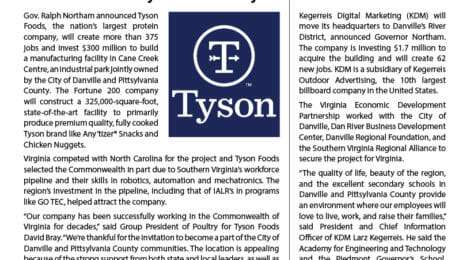
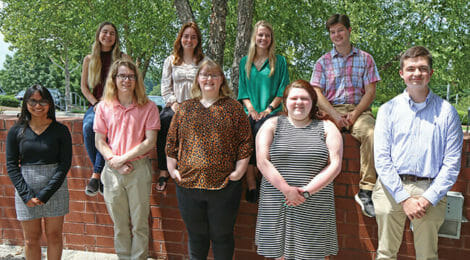
The Institute for Advanced Learning and Research (IALR) welcomed nine interns for the 2021 summer session. Benefits of this internship include gaining on-the-job training and real-world leadership development experience valuable to future careers.
Each intern worked on projects pertaining to the focus of their assigned department. Megan Pollok, Graydon Smith and Samuel Hedrick assisted Dr. Lowman and the Research team. Pollok worked on a lettuce growing project she said would help determine “if beneficial plant bacteria can help improve heat tolerance in cool weather horticultural crops.” Hedrick worked with the SMART table, a precision imaging platform for plant research. He programmed a camera to take and file images, created a Graphical User Interface to set parameters, like the number of plants on the table and intervals at which the table should run, and used image analysis tools to gather data from the photos. Smith helped test the disease-fighting capabilities of IALR’s library of more than 2,000 beneficial bacterial plant endophytes. He inoculated test subject wheat seedlings and seeds with strains of the Fusarium fungus, a common plant disease.
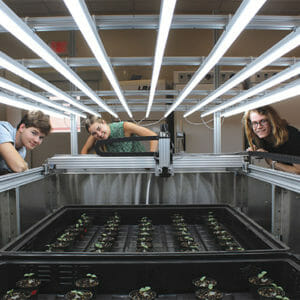
Research interns Smith, Pollok and Hedrick use the SMART table, a precision imaging platform, to record and track plant growth in the Controlled Environment Agriculture Innovation Center.
Cassandra Wade aided Human Resources by creating a performance-based bonus system for IALR employees, modernizing new hire orientation presentations, and creating a visual chart that shows lines of command in IALR staff throughout various divisions. Katherine Clatterbuck organized a Women in STEM panel, in which a board of women in STEM fields converse with students about their future career interests. Benjamin Boles helped the IT department arrange equipment for webinars, update computers with new software and aid IALR staff with technological inquiries.
Kaitlyn Davis and Jahna Waters produced communications like this newsletter story, developed social media content, captured photos of events, and more. Emily Ebalo worked in the Economic Development department where she conducted research on the region’s assets and resources; supported housing studies; assisted with site, industry and leader photo and drone shoots; and helped coordinate economic development announcements in the region.
All interns were hard at work during this program, which culminated with a presentation showcasing their projects. To view more photos, visit bit.ly/IALRinterns21
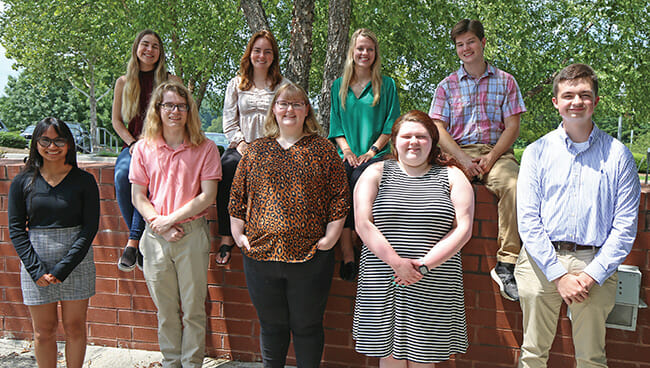
IALR’s summer Interns include (left to right): front row – Emily Ebalo (William and Mary), Samuel Hedrick (University of Virginia), Kaitlyn Davis (William and Mary), Cassandra Wade (Liberty University) and Benjamin Boles (Virginia Tech); back row – Megan Pollok (Virginia Tech), Jahna Waters (Averett University), Katherine Clatterbuck (Roanoke College), and Graydon Smith (University of Virginia).
The Institute for Advanced Learning and Research (IALR) is pleased to announce and accept applications for the 2021 Summer Internship Program. The program will place up to 11 interns in meaningful, on-the-job training experiences at IALR in various areas ranging from coding/precision agriculture to talent development. All health and safety guidelines will be followed to ensure a safe work environment. While the internship experiences are intended to take place at IALR, mentors are developing hybrid (blend of on-site and telework) options.
“We look forward to preparing our region’s students for successful career opportunities with real-world, work-based learning experiences,” said Dr. Julie Brown, IALR’s Director of Advanced Learning. “Our internship opportunities provide students with significant leadership development, networking, resume and skill-building activities and projects.”
To be considered for the eight-week, paid project, candidates must be one of the following: (1) a high school graduate with plans to attend college in the fall of 2021, (2) an undergraduate or graduate level college student or (3) a recent college graduate who completed a college degree within the last 12 months. The internship will begin in June and must be completed by August 13.
Available internship opportunities include:
Interns will receive a stipend of $2,925 paid semi-monthly. The anticipated weekly time commitment is 28 hours, and the IALR mentor will set the work schedule during the intern orientation.
Applications are due by 4 p.m. (EST), Monday, March 22, 2021. The internship application, other information and detailed project descriptions are available at www.ialr.org/internships. For more information, please contact Brown at julie.brown@ialr.org or 434.766.6711, or Elaine Ratcliffe, IALR’s Human Resources Manager, at elaine.ratcliffe@ialr.org or 434.766.6747.
The Institute for Advanced Learning and Research serves Virginia as a regional catalyst for economic transformation with applied research, advanced learning, advanced manufacturing, conference center services and economic development efforts. The Institute’s major footprint focuses within Southern Virginia, including the counties of Patrick, Henry, Franklin, Pittsylvania, Halifax and Mecklenburg along with the cities of Martinsville and Danville.
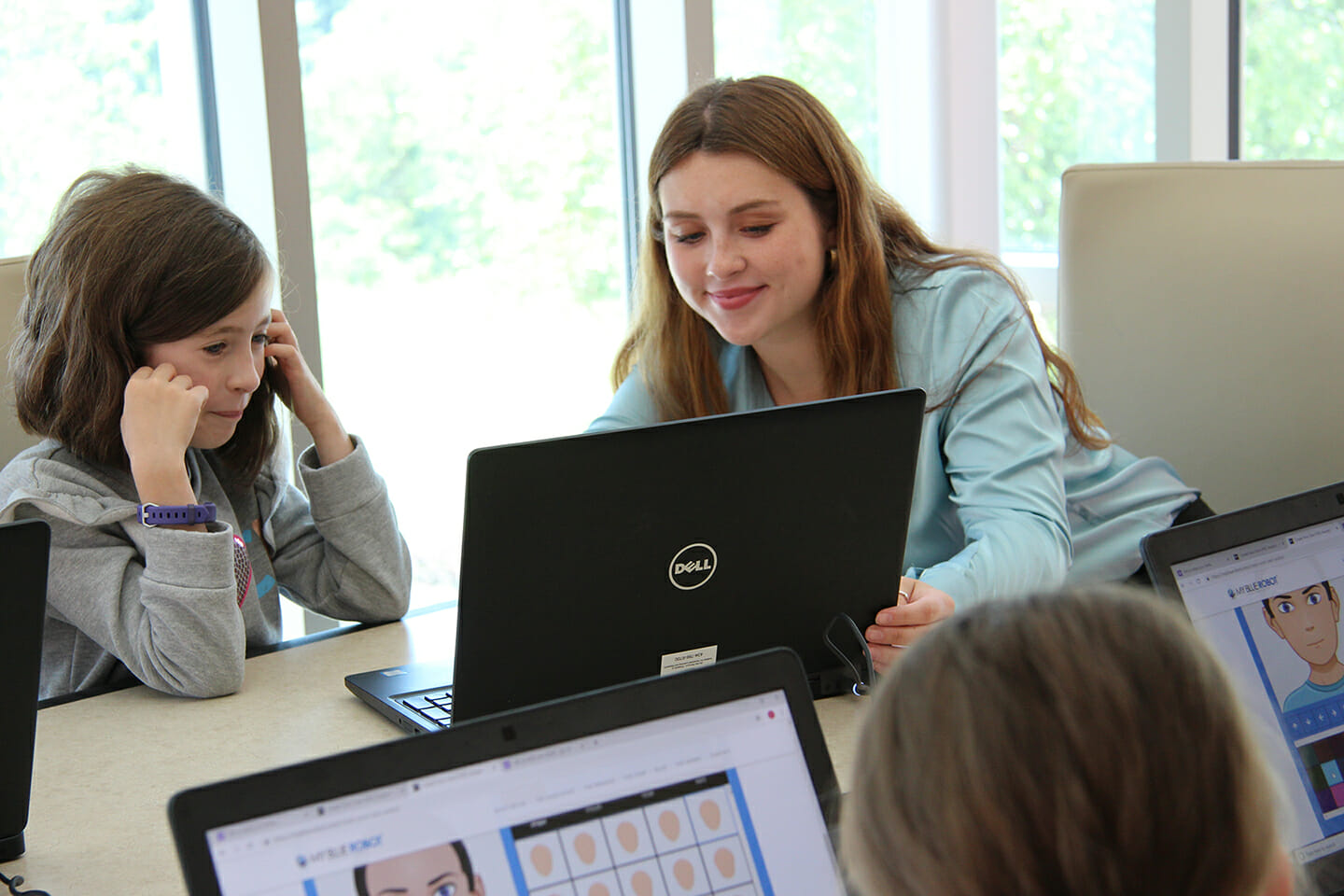
Anna Brooks, a 2019 IALR summer intern, worked with fellow intern Kaitlyn Lipscomb and IALR’s Dr. Julie Brown on a talent development project to promote advanced manufacturing and engineering career fields to women. Brooks and Lipscomb conducted focus group sessions and activities with groups of students as part of their work.
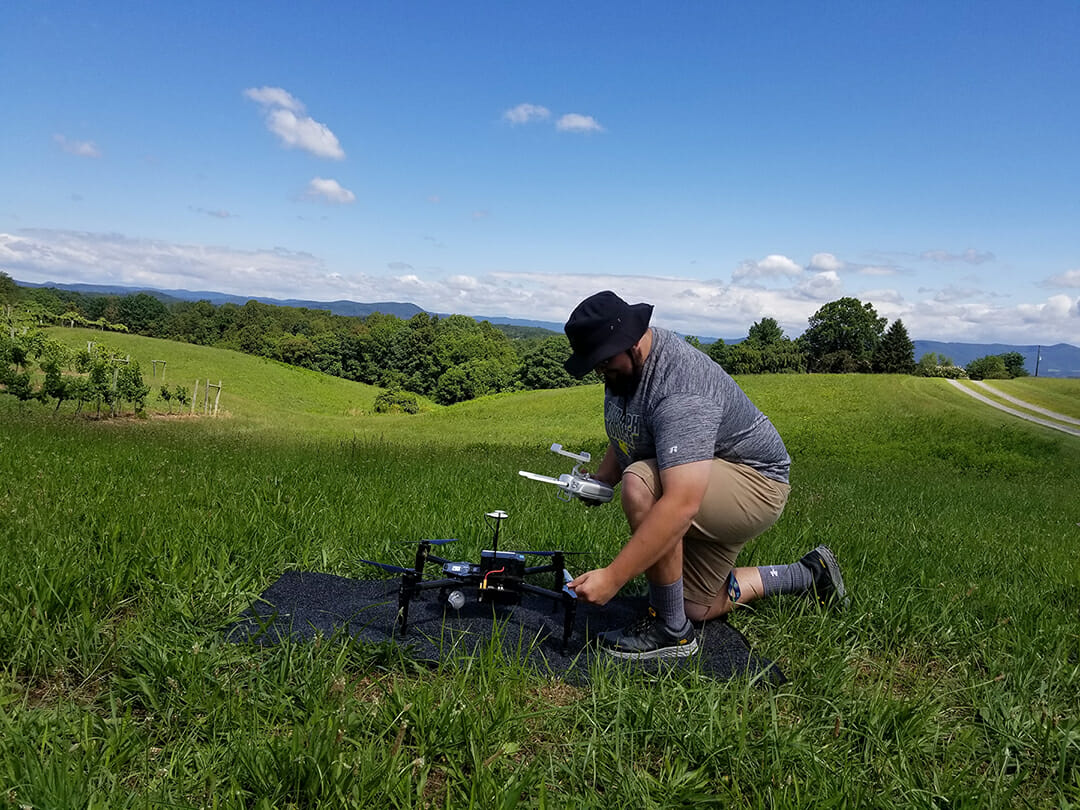
Mitchell Doss, a 2019 IALR summer intern, assisted IALR’s Samantha Smith-Herndon with the precision agriculture drone project. He helped deploy the technology at a regional farm to capture and analyze imagery for more efficient monitoring of crop health and detection of potential problem areas.