The April 2026 edition of IALR at a Glance is packed with exciting news and updates! Learn more about…
- Register for Summer STEM Camps
- IALR Recognized as Top Employer for Interns
- Watch updates from IALR
- Much more!
Institute for Advanced Learning and Research
Driving Economic Transformation

The April 2026 edition of IALR at a Glance is packed with exciting news and updates! Learn more about…
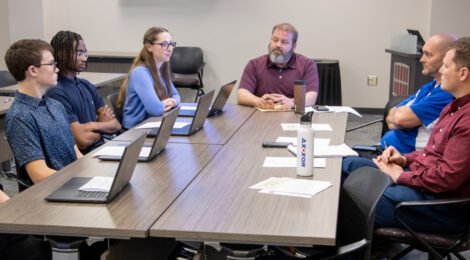
Local businesses and organizations across Southern Virginia are once again turning to high school students for fresh perspectives on complex workplace challenges through the Next generation Of Work (NOW) Teamship program.
Administered by IALR’s Advanced Learning division, the NOW program connects students with employers to solve real, open-ended challenges, preparing students for the realities of today’s evolving workplace while delivering tangible value to participating businesses and nonprofits.
“The NOW Teamship experience helps students learn to work across differences, navigate uncertainty and collaborate to deliver real value,” said Jessie Vernon, Director of Employer Engagement and Experiential Learning at IALR. “The solution is important, but the process is what stays with them long after the project ends.”
The foundation of Teamship by College Board is simple and intentionally flexible: a business or organization presents an open-ended challenge, and teams of students work collaboratively, with guidance from trained coaches, to clarify the problem, gather context and propose actionable solutions.
Rather than jumping directly to answers, students learn to interview stakeholders, conduct research and analyze data to understand the root of the problem fully. That emphasis on process reflects the realities of modern work, where ambiguity is common and solutions are rarely clear-cut.
In an economy that is increasingly influenced by artificial intelligence, Teamship equips students with important skills like critical thinking, collaboration, communication and adaptability.
Students from the Academy for Engineering & Technology (AET) worked with a nonprofit environmental education organization and a regional manufacturer.
Teamship Benefits for Businesses CTA BAR
Krista Hodges, Director of Environmental Education for the Dan River Basin Association, challenged students to help streamline her team’s volunteer educator scheduling. As participation in programs has grown, coordinating dozens of volunteers, many with varying levels of comfort with technology, has become increasingly time-consuming.
“I asked the students to come up with solutions that would cut down on the amount of time I’m spending managing all this information and reduce errors from manual input,” Hodges said.
“I:\Communications\IALR PICTURES\Pictures 2026\NOW\IMG_7346.jpg” That’s Hodges
While Hodges initially worried students might propose overly technical or costly solutions, she said the teams exceeded her expectations by prioritizing usability, accessibility and cost.
“My expectations were exceeded as far as what I thought they were going to come up with,” she said. “They did a lot of research into realistic options, especially given the amount of time they had.”
Students presented multiple solutions, ranging from enhanced use of Microsoft Forms to evaluating user-friendly scheduling tools already being adopted by similar nonprofits. Hodges said she plans to implement one of the proposed approaches.
“It was definitely worth my time investment,” she said. “They offered solutions that I’m seriously considering.”
Manufacturing firm Axxor asked students to help improve awareness and engagement around a financial wellness benefit available to employees.
Matthew Carragher of Axxor said the students approached the challenge with creativity and rigor.
“They exceeded our expectations, delivering well-researched solutions with a clear understanding of the problem and how to address it,” Carragher said.
“I:\Communications\IALR PICTURES\Pictures 2026\NOW\IMG_6732.jpg” that’s Carragher
Student teams proposed a three-part strategy focused on incentives, expanded education campaigns and improving overall awareness of the program.
“Yes, we plan to implement some of the ideas the students presented,” Carragher said. “The experience delivered a positive return on investment for our organization.”
In addition to producing solutions, the NOW Teamship experience emphasizes teamwork and shared leadership. Students rotate facilitation roles, design agendas and use structured tools to guide discussion and decision-making.
Hanna Daubert, a junior at Gretna High School, said the experience pushed her outside her comfort zone.
“I had never had any work-related experience trying to figure out problems and solutions for a company before,” Daubert said. “At first it was kind of scary, but breaking the timeline into chunks really helped.”
“I:\Communications\IALR PICTURES\Pictures 2026\NOW\IMG_7354.jpg” the girl here is Daubert.
Daubert said the team’s collaborative approach strengthened her confidence as a leader.
“I learned that I’m a better leader than I thought I was,” she said.
For Chatham High School student Colin Soyars, the biggest takeaway was learning to listen and build on others’ ideas.
“We collaborated really well and built off each other,” Soyars said. “I definitely learned how to work in a group and communicate better.”
“I:\Communications\IALR PICTURES\Pictures 2026\NOW\IMG_7336.jpg” the boy here is Soyars
That emphasis on collaboration is intentional, according to educators involved in the program.
“These problem-solving and collaboration skills aren’t specific to engineering,” said John Hatchett, Engineering Instructor and Program Coordinator for AET. “Students are learning how to slow down, listen to different perspectives and work through ambiguity. They’ll need these skills no matter where they go.”
As work continues to change, the NOW Teamship program reflects a broader shift in how students are prepared for careers. Today’s employers value the ability to navigate uncertainty, work across differences and solve open-ended problems. These skills can’t be learned solely through lectures.
“Work is changing, and students need opportunities to practice solving messy, complex problems with different people,” Vernon said. “NOW gives them those experiences in a real-world setting.”
NOW Teamship is a key part of IALR’s systematic approach to connecting students with careers and employers throughout Southern Virginia.
Organizations interested in participating in the NOW Teamship program during the 2026–2027 academic year can contact Jessie Vernon for more information.
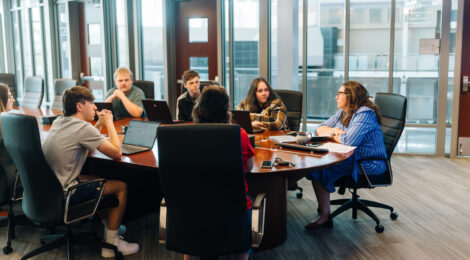

Alan Pearce, the CEO of Danville-based metal additive manufacturing company FasTech, wanted fresh perspectives on improving the company’s standing as a great place to work.
Who did he turn to for those insights?
A bunch of high school juniors from the Academy for Engineering and Technology (AET).
Through the Next generation Of Work (NOW) teamship program, three teams of high school juniors collaborated with coaches and Pearce to get to the root of the issue and identify possible solutions. As part of the 2024 cohort of the NOW teamship program, 17 students worked with two organizations—FasTech and the Virginia Talent + Opportunity Partnership (V-TOP).
Pearce was amazed by the professionalism, data and knowledge these students shared. His company is trying to recruit two of them to work as interns over the summer, allowing them to execute some of their ideas.
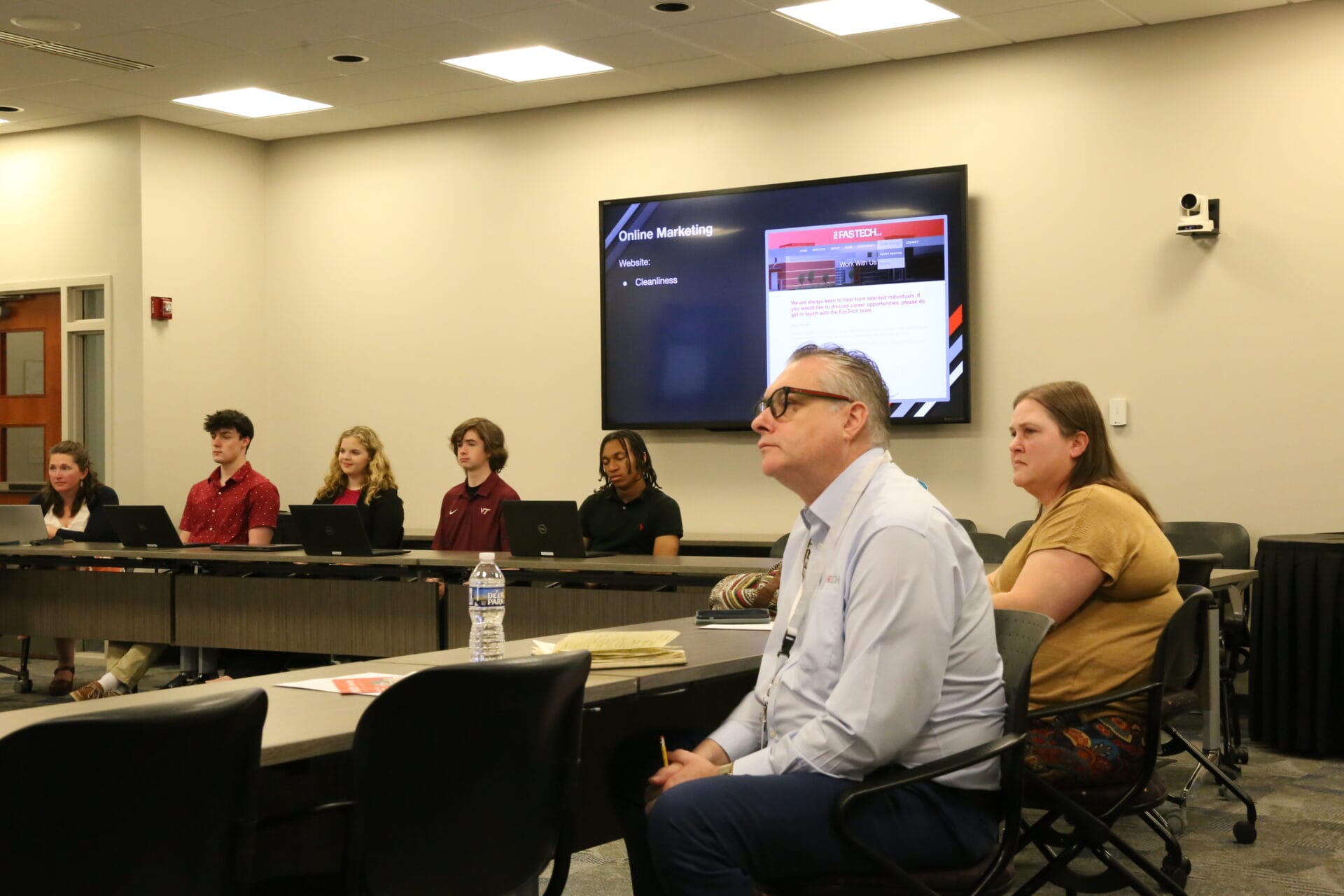
Alan Pearce, CEO of FasTech LLC, listens to a presentation from high school juniors from the Academy for Engineering and Technology as part of the Next generation Of Work (NOW) teamship program.
“When they made their presentation, my biggest regret was that I didn’t bring my management team with me. It was a great professional presentation with some strong data.” – Alan Pearce, CEO, FasTech LLC
This is the fourth year AET students have participated in the teamship model, which is spreading across other Southern Virginia localities. IALR also supported a teamship program for college students in the Hampton Roads region.
“This is an excellent thing to connect schools and business, for both sides,” Pearce said. “The businesses get to start younger, and maybe we can help steer these students.”
The teamship model is straightforward: a business presents an open-ended problem to a group of students who, with guidance from a coach, work together to provide solutions.
Past problems have focused on issues such as new product adoption, staffing difficulties and environmental regulations.
“The NOW teamship program provides our AET students with a memorable, impactful work-based learning experience. They learn critical thinking and collaboration skills while providing valuable insights to a business.” – Dana Silicki, IALR, Advanced Learning Program Manager
The primary objective of the teamship experience is to provide the student participants with two essential skills: effective collaboration and problem-solving. Through interview sessions with the businesses, research and data analysis, students figure out the problem and its full context—a critical step in offering potential solutions.
District C, a North Carolina-based nonprofit, developed this framework and is spreading the model throughout the United States.
The model, which was designed to provide value to businesses and benefit the student participants, is part of IALR’s work-based learning system that connects students to careers. With just a five-hour time commitment, companies can gain fresh perspectives on complex problems at no cost, all while helping develop future talent. Students learn to utilize four critical career mindsets—analytical, design, collective and self-aware—not just to solve the problem but to understand it in full.
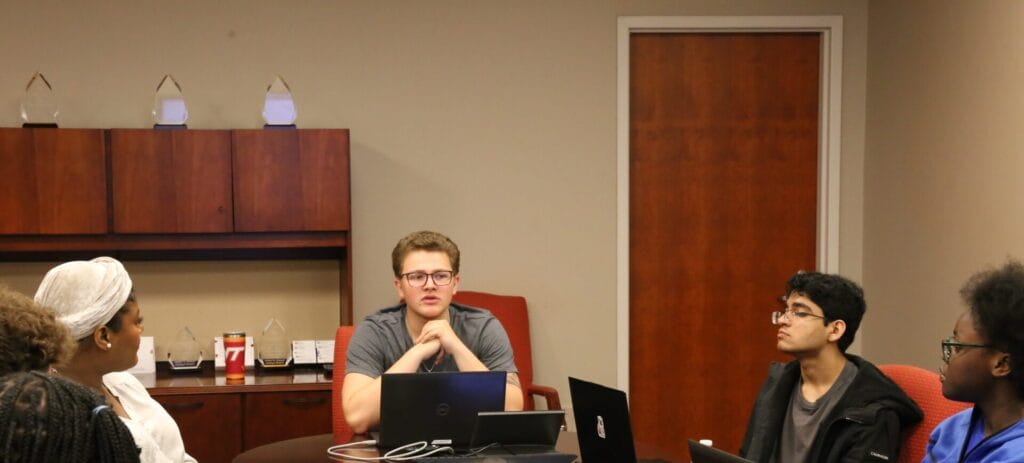
Gavin Shields (middle), a junior in the AET program who participated in the teamship program, learned the importance of collaborating with people who have different ideas.
The framework can be customized. For instance, the AET students typically complete the experience in about a month while other organizations may facilitate a more intensive process in just a week.
The other organization that offered a problem for AET students to solve was the Virginia Talent + Opportunity Partnership, which aims to improve the internship readiness of Virginia students, institutions and employers. (IALR leads the V-TOP innovative internship effort in GO Virginia Region 3, serving 15 localities across Southern Virginia.)
The main question these students tackled was: How can V-TOP increase student engagement and awareness? V-TOP needs secondary and postsecondary students to place in internships.
Two student teams took two approaches. One focused on improving digital marketing, while the other looked at grassroots efforts. Their recommendations were simple and actionable.
“I was very impressed with the level of detail they went into, trying to make sure they knew exactly what the problem was and understanding what we are already doing. I thought their insights were very, very valuable.” – Kiana Dillard, IALR Work-Based Learning Coordinator, V-TOP Region 3 Program Coordinator
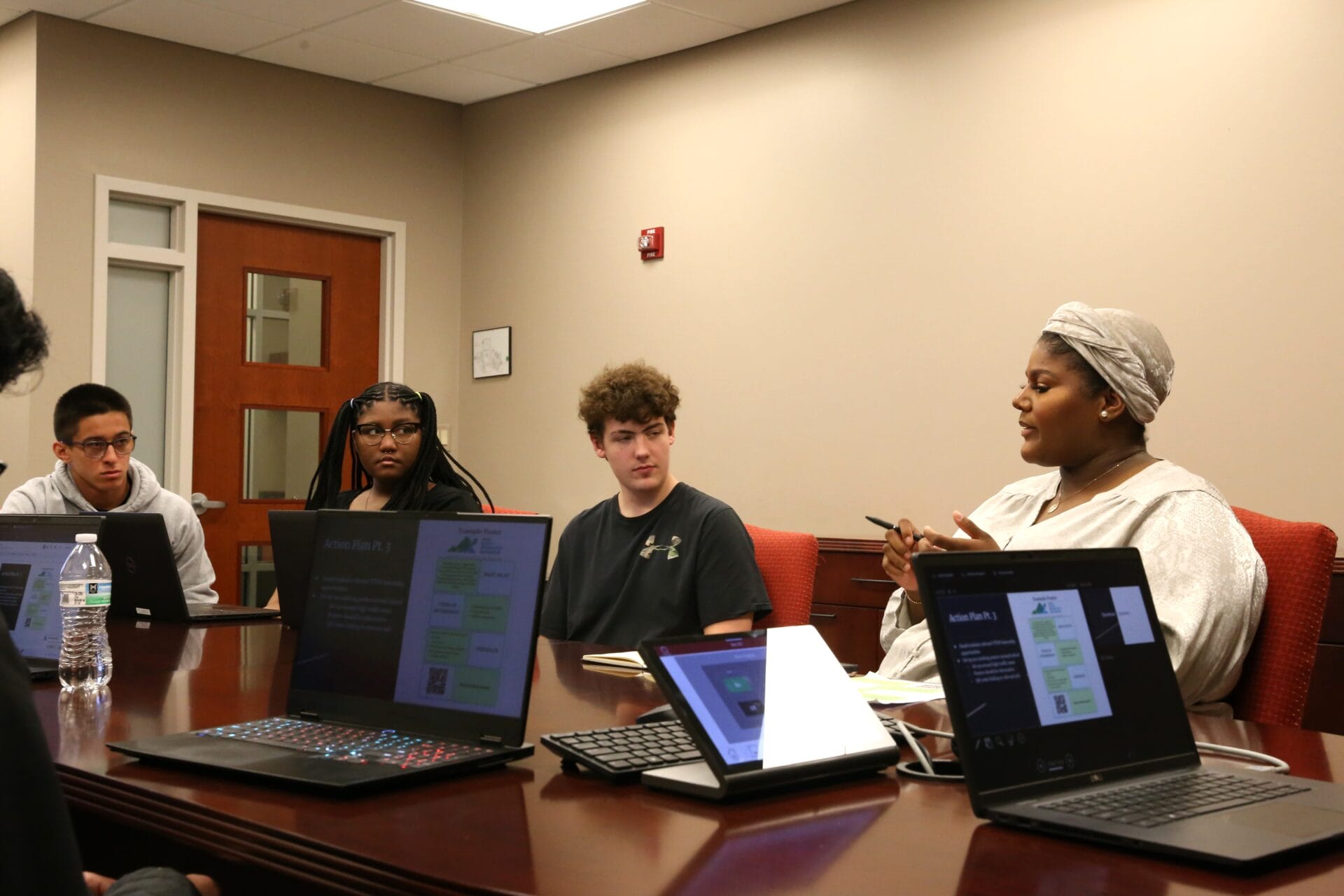
Kiana Dillard (right), Work-Based Learning Coordinator and V-TOP Region 3 Program Coordinator, discusses the next steps offered by a group of high school juniors through the NOW teamship program.
Gavin Shields, a junior in the AET program who focused on the digital marketing side, learned the importance of collaborating with people who have different ideas.
“We got to solve a real-world business problem, and it felt cool because we were doing something that meant something in school. And we found the root of the problem like we were supposed to. We contributed a lot of new knowledge and ideas.” – Gavin Shields, AET Junior
Dillard will soon join three other IALR staffers – Advanced Learning Program Managers Jessie Vernon and Dana Silicki and John Hatchett, AET Coordinator who is employed by Danville Community College – as a certified coach with District C.,
“I’m seeing this model from all ends,” Dillard said. “It’s just great, and I look forward to coaching students through this process in the future.”
IALR and AET were the first Virginia-adopters and piloted the District C teamship program with students from AET, which has led to the model spreading across Southern Virginia. Chatham High School Teacher Tara Stafford has run cohorts in the past two years, focusing on problems from the Danville Otterbots and The Bee and Holbrook Hotels.
Teachers from Halifax and Brunswick have been certified, with Lunenburg planning to implement teamship soon.
On the eastern side of the state, Michelle Simmons, V-TOP Project Manager for Region 5 covering the Hampton Roads area, worked directly with District C to get certified as a teamship coach. Simmons and the Teamship Committee decided to implement a week-long intensive experience for college students with both a virtual and in-person option.
“VTOP regional leadership wanted to provide a unique, internship opportunity to students in the region. We hope that sharing our experience with implementing this program will encourage school districts, institutions, and employers to adopt Teamship in their respective spaces.” – Michelle Simmons, V-TOP Region 5 Project Manager
Simmons wanted someone experienced in facilitating teamship programs to provide support, which led her to IALR Advanced Learning Program Manager Jessie Vernon, who led the virtual option for seven students.
“I was so excited when Michelle said they were implementing the teamship model this summer! One of the beautiful things about teamship is its versatility. We utilize the model as a part of the AET junior seminar class over a one-month period. The Hampton Roads program was a one-week intensive, completely outside a class. We haven’t run a virtual teamship program since 2020; the Hampton Roads program had both an in-person and virtual option. As secondary and postsecondary schools try to connect more students with high quality work-based learning experiences, teamship is a great option.” – Jessie Vernon, Advanced Learning Program Manager, IALR
A rising junior at Norfolk State University with a major in Business Marketing and a minor in Mass Communications, McKensi Rice was one of the virtual participants in the teamship opportunity.
“When I saw that we would be working with a real company, this is the experience I need for my future career. And it fit well with my schedule.” – McKensi Rice, Norfolk State University
Rice and the other students worked with the 757 Collab, an innovation network serving the greater Hampton Roads area, on discovering key metrics to measure success and ways to incentivize innovation and improve the company’s culture.
“This experience was eye-opening and very positive,” Rice said. “It was only five days, but I learned a lot about myself and how to work with others.”
IALR is looking for businesses as well as educators that would be interested in participating in the NOW teamship program. Those who are interested should contact Jessie Vernon, Advanced Learning Program Manager at IALR.

The Institute for Advanced Learning and Research (IALR) is seeking employers and businesses across Southern Virginia to partner and participate in work-based learning programs.
“We encourage employers across Southern Virginia to participate in our programs, which help employers grow the regional workforce and allow students to connect and learn about quality career opportunities in the region.” – Jessie Vernon, Advanced Learning Program Manager, IALR
Each of the programs below is part of IALR’s EmPOWER framework, an employer-driven system to empower and connect students to careers. Through career awareness, engagement and experience IALR builds pipelines of students whose skillsets align with current employer needs and economic development interests.

IALR is looking for volunteers to participate as mock interviewers or session presenters at AspHIRE mock interview days across Southern Virginia. The mock interview days allow high school seniors – as well as some juniors – to hone their interview skills with a local professional. Students take part in a formal business lunch and several work-readiness sessions.
The AspHIRE Mock Interview Days will take place at the following locations and times:
The minimum volunteer commitment is 1.5 hours, but business professionals and employers who would like to invest more time are welcome. Sponsorship opportunities are also available.

IALR is looking for businesses that can host a high school or college intern this summer. Companies will receive assistance in navigating the logistics of creating an internship program and finding talent. IALR also connects employers with available resources – including matching funds and mentor training – from partners like the Virginia Talent + Opportunity Partnership (Virginia TOP).
More than 25,000 students across Southern Virginia have access to MajorClarity, a work-based learning platform where all internships will be posted. This gives businesses access to the best and brightest students across the region. Internship duration and hours are customizable and companies may be eligible for matching funds for the cost of the intern.
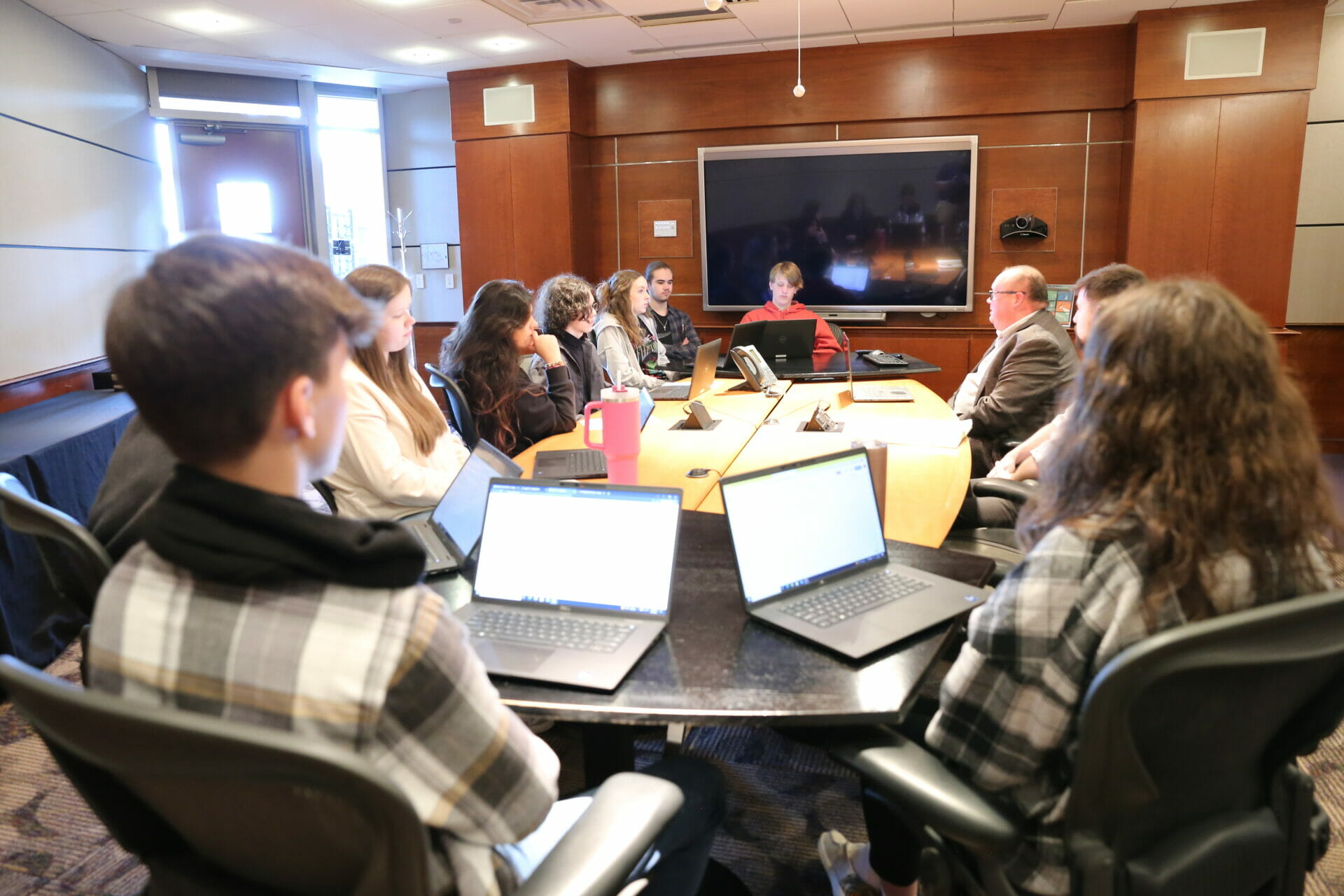
IALR is looking for businesses interested in having teams of students tackle a pressing business problem – a process that provides benefits for students and benefits for employers. The time commitment for businesses participating in NOW is just five hours; students are supported by a District C-certified coach.
Past business participants have posed problems such as staffing difficulties, EPA regulations, and the adoption of new technology.
Businesses meet with the students three times during the Teamship process and receive real solutions to their problems. The next cohort of NOW-Teamshp will begin April 8. Businesses that are interested in participating should contact Jessie Vernon no later than March 11.
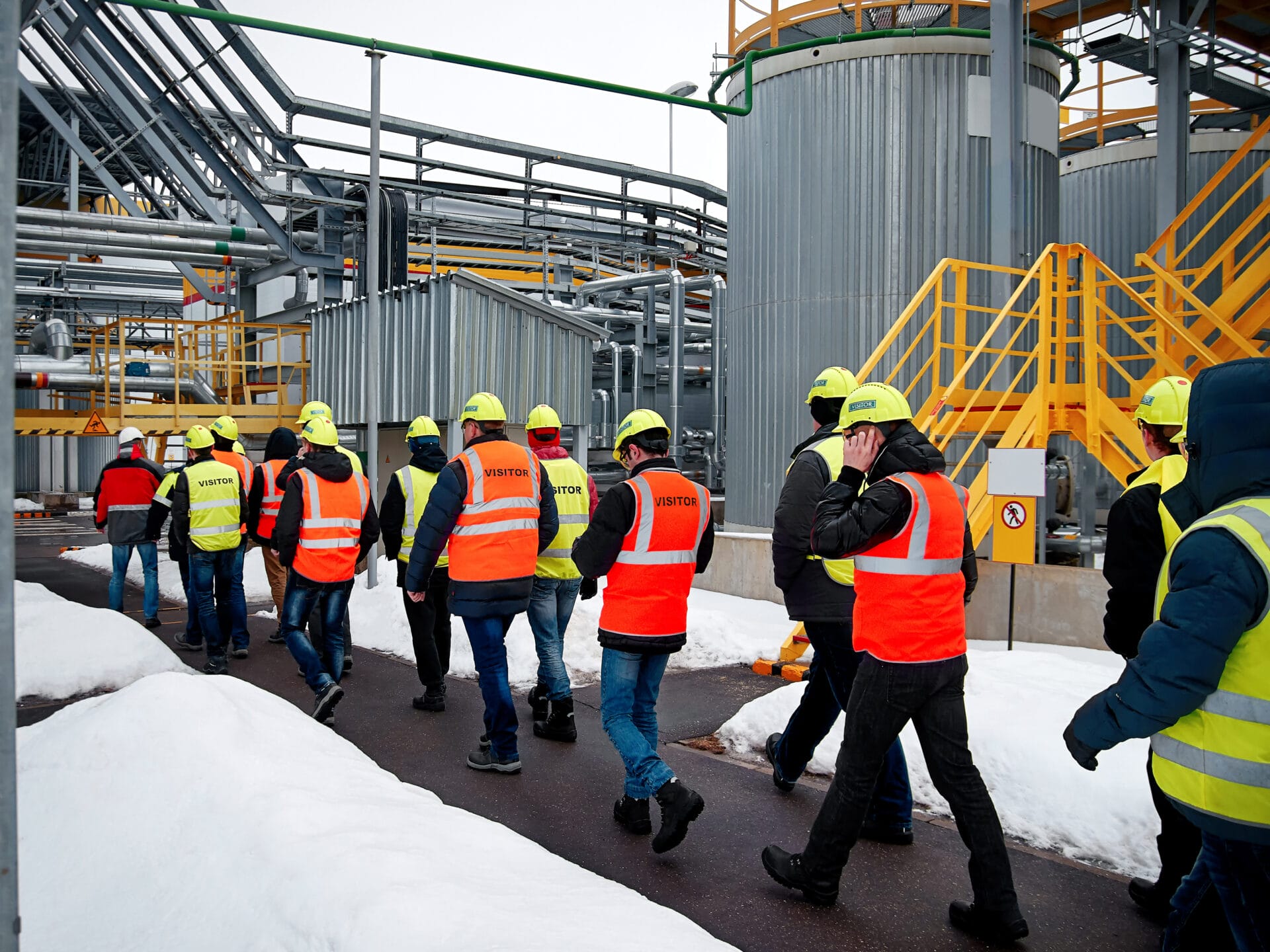
IALR is looking for businesses to host teachers or school counselors through Exploring Careers through Industry Teacher Externships (EXCITE), a professional development program for educators across 15 counties in Virginia. This teacher externship program connects the classroom to the workplace. Teachers can use their experiences to design and implement classroom activities, projects and work-based learning opportunities that will add relevance and meaning to students’ classroom learning.
Participating businesses commit between one and three days during the summer to host educators. There is no financial commitment associated with this program.
Businesses interested in hosting an educator this summer can contact Kiana Dillard. The deadline to sign up to host an educator is May 3.
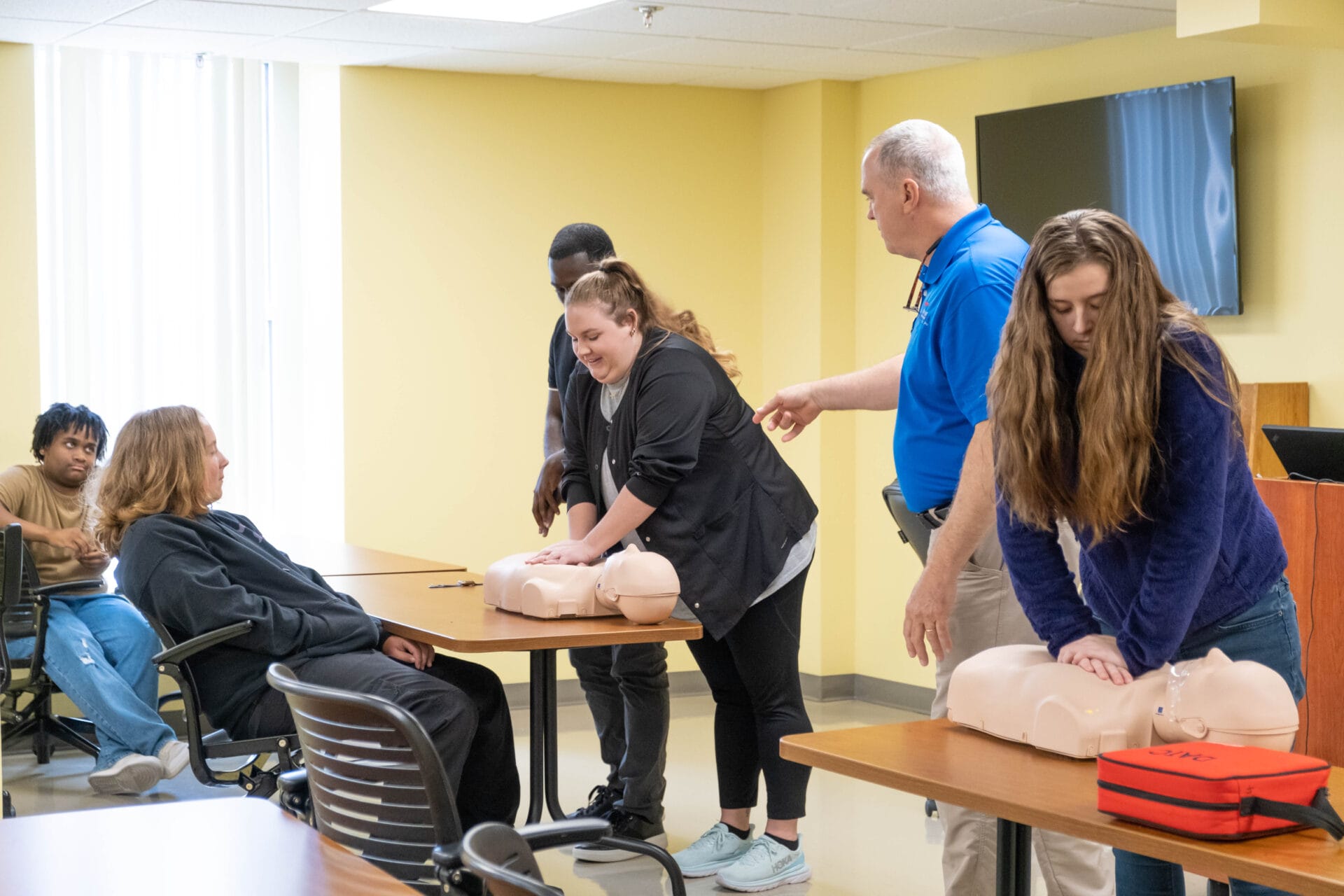
In addition to summer STEM camps hosted at IALR, IALR works with local employers to develop and implement sector-focused camps. These camps, which can range from a single day to a whole week, provide an opportunity to introduce students to targeted industries – and help them discover career paths to enter these fields.
Past sector-focused camps have focused on industries like local government, healthcare and construction.
Businesses that are interested in hosting student tours, serving as guest speakers/instructors, or sponsoring a sector-focused camp should contact Jessie Vernon.
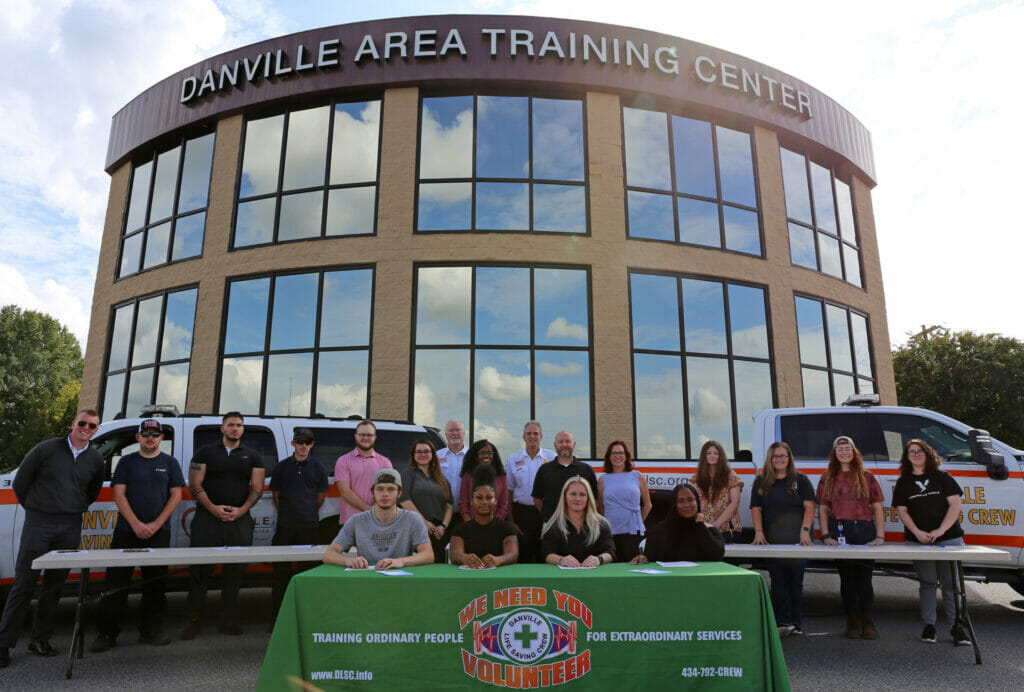
In partnership with IALR, the Danville Life Saving Crew – the primary Emergency Medical Services provider for the City of Danville – signed 13 individuals as Virginia’s first Emergency Medical Technician (EMT) registered apprentices during an October ceremony.
IALR also supports the development and implementation of successful registered apprenticeship programs for employers across Southern Virginia through the Expanding Talent through Registered Apprenticeship (ExTRA) program. Registered apprenticeship is an industry-driven workforce training strategy that combines on-the-job training and classroom instruction to develop highly skilled employees in a particular occupation
State Registered Apprenticeship is ideal for various sectors like construction, healthcare, early childhood education, manufacturing and information technology.
Through ExTRA, IALR provides technical assistance in the creation of apprenticeship programs, grant funding, connections to employers and talent, and more.
Employers that are interested in apprenticeships should contact Natori Neal.
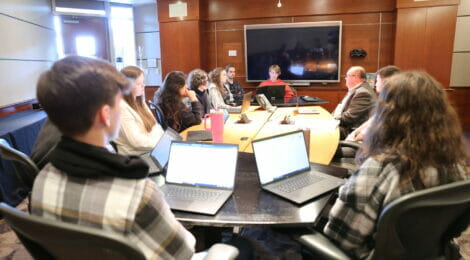
After a month of research and ideating, students present their solutions regarding the adoption of smog-eating billboards to Kegerreis Digital Marketing as part of the NOW teamship program in early April of 2023.
During the month of March, you could find three groups of juniors from the Academy for Engineering and Technology (AET) pouring over data, talking through complex problems and researching new industries throughout the Institute for Advanced Learning and Research (IALR) campus.
One group was busy researching Environmental Protection Agency regulations for pollutants in drinking water. Another was analyzing staffing issues for a science center with inconsistent seasonal attendance trends. The other was exploring how to catalyze widespread adoption of a unique, eco-friendly billboard. On the surface, none of these problems seem like typical course work for high school students.
This was all part of the 2023 cohort in the Next generation Of Work (NOW) teamship program that prepares students for the workforce by allowing them to solve real problems from real businesses with guidance from coaches. This framework was developed by District C – a North Carolina-based nonprofit that is proliferating the model throughout the United States.
Students worked collaboratively and creatively over the course of a month to understand and provide viable solutions for complex problems presented by three unique organizations – including an engineering firm, a marketing company and a museum funded by the Commonwealth of Virginia. With support and coaching from IALR staff, these students from AET learned collaboration and effective problem-solving skills that will benefit them in the workplace.
“The NOW teamship model is about learning the skills and tools necessary to solve messy and complex problems with different people,” said Jessie Vernon, Advanced Learning Program Manager and one of the NOW program coaches. “It makes them think about the actual process that they use to solve the problem more than the problem or solution itself.”
The basis of the NOW program is unique: a business provides an open-ended problem to a group of students who, with guidance from a coach, work together to provide solutions.
“The business partner poses an open-ended problem or question to the students, and then the students work together to solve it,” Vernon said. “Throughout that process, the coach is providing the students tools for successful collaboration and work.”
In this iteration with AET, the students held two meetings with the business to ask questions and learn about the problem, trying to understand any important causes and context and previous efforts to solve it. The student groups met to analyze the problem, research the context and collaborate on potential solutions. After about a month, the students presented their findings and potential solutions to the businesses.
Several IALR staffers became certified coaches with District C in 2019. After completing the training, Advanced Learning Program Managers Jessie Vernon and Dana Silicki and John Hatchett, AET Coordinator who is employed by Danville Community College, have the resources and knowledge to coach groups of students through the process. The first cohort of AET students completed the program completely virtually during the onset of the pandemic in 2020, and the junior class has completed this program in-person every year since then.
The primary objective of the teamship experience is to provide two key skills to the student participants: effective collaboration and problem-solving. Students learn to utilize four critical career mindsets – analytical, design, collective and self-aware – to not just solve the problem but understand it in full.
“One of the first tools that they teach is how to properly interview the client that has the problem, how to dig and dig deeper and get down to the nitty gritty of why this is a problem,” said, Lisa Mettler, Work-Based Learning Coordinator for the Southern Virginia Higher Education Center’s Career Tech Academy, who has coached one teamship cycle with students and another with adults, as well as two intensive summer camps.
Through interview sessions with the businesses, research and data analysis, students figured out the problem and its full context – a critical step to be able to offer a solution.
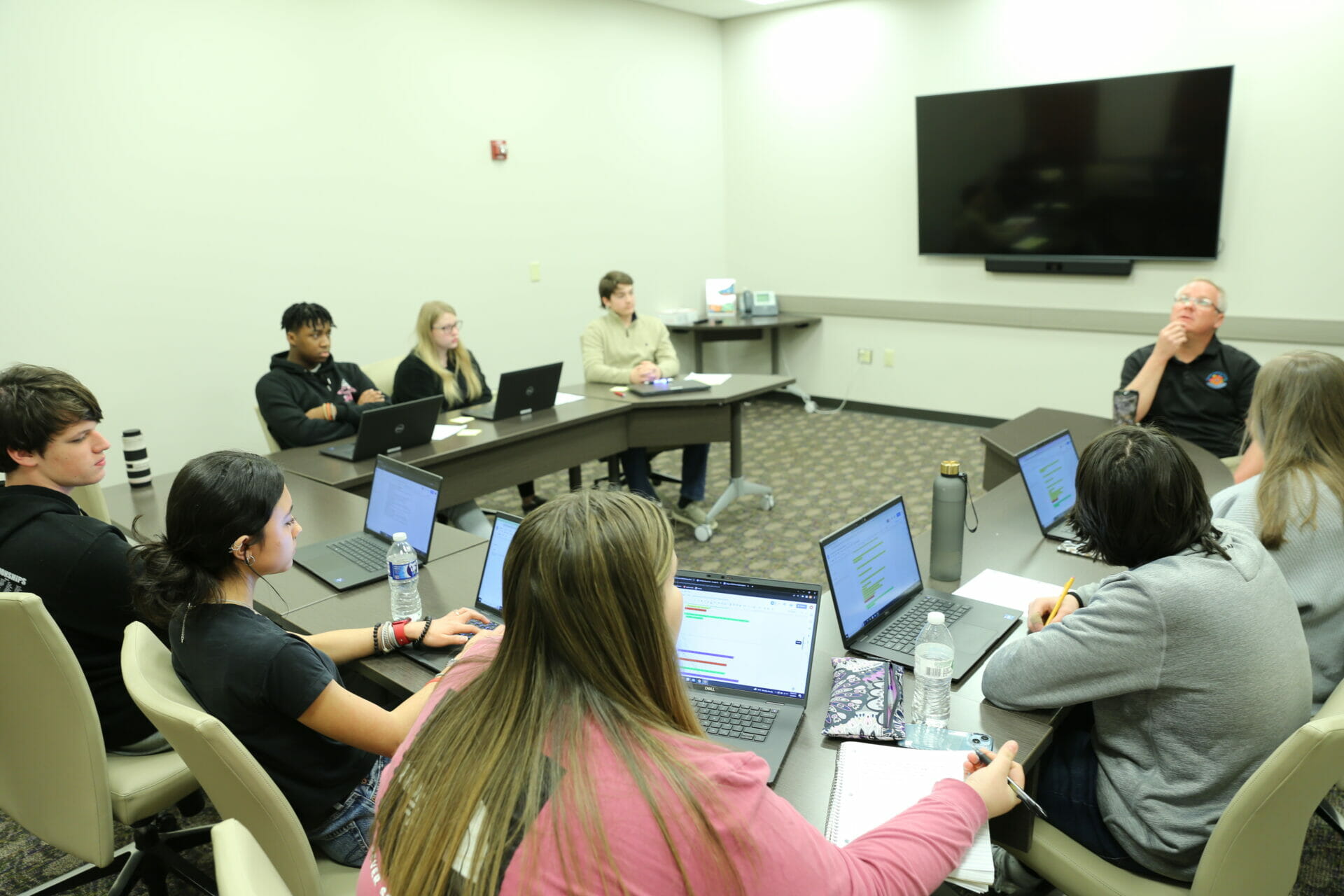
Adam Goebel, Executive Director of the Danville Science Center, meets with a group of students working to provide solutions for staffing difficulties at the museum, through the NOW teamship program.
“It built my problem-solving skills and helped me develop different tools to assist with the problem-solving process,” one student said in the completion survey.
“It allowed you to slow down and actually comprehend the problem instead of just solving it on the spot,” another student said in the completion survey.
Cora Wilson, an AET student who worked on a problem around worker attraction for Comfort Systems USA in the teamship program in 2022, said that participating helped her develop teamwork skills and stronger relationships with her team members.
“This experience allowed me a chance to make a real-world impact in my community and provides a basis for the problem-solving process I will have to go through as an engineer in my future career,” she said.
While the teamship experience is meant to prepare students for the workplace by providing collaboration and problem-solving skills, the program also provides major benefits for the businesses that participate. With just a five-hour time-commitment, businesses can gain fresh perspectives on difficult problems at no cost, all while helping develop future talent.
For this cohort of students, IALR partnered with organizations: the Danville Science Center, Dewberry and Kegerreis Digital Marketing.
Adam Goebel, Executive Director of the Danville Science Center, provided a complex and industry-wide problem to his team of students. In short, the students explored how to divert and respond to seasonal trends where about 90 percent of group visits come in a six-week period in the spring, which leads to staffing difficulties.
Students provided several possible solutions, a few of which were already being implemented (unbeknownst to the students) and a few of which were operationally or financially unfeasible. Goebel said there are no silver bullet solutions to this industry-wide issue, but he and his team are already exploring how to implement two of the ideas students presented.
“They did a good job thinking outside of the box,” Goebel said. “That’s what impressed me the most, was the fresh eyes and fresh perspective from which they looked at the problem.”
Leslie Mantiply, Associate and Project Manager with Dewberry, provided her group of students a complex problem about new enforceable Environmental Protection Agency regulations regarding treatment limits for PFAS – a chemical commonly found in waterproofing, and plastics known to have health effects. Mantiply had no expectations for student solutions since the concept was new to them but was thoroughly impressed with the comprehensive approach they took to understanding and addressing the issue.
“The two solutions provided are very viable and require community engagement and teamwork,” Mantiply said. “I think variations of the initiatives proposed will be seen as communities begin to address the treatment limits set for their waterworks.”
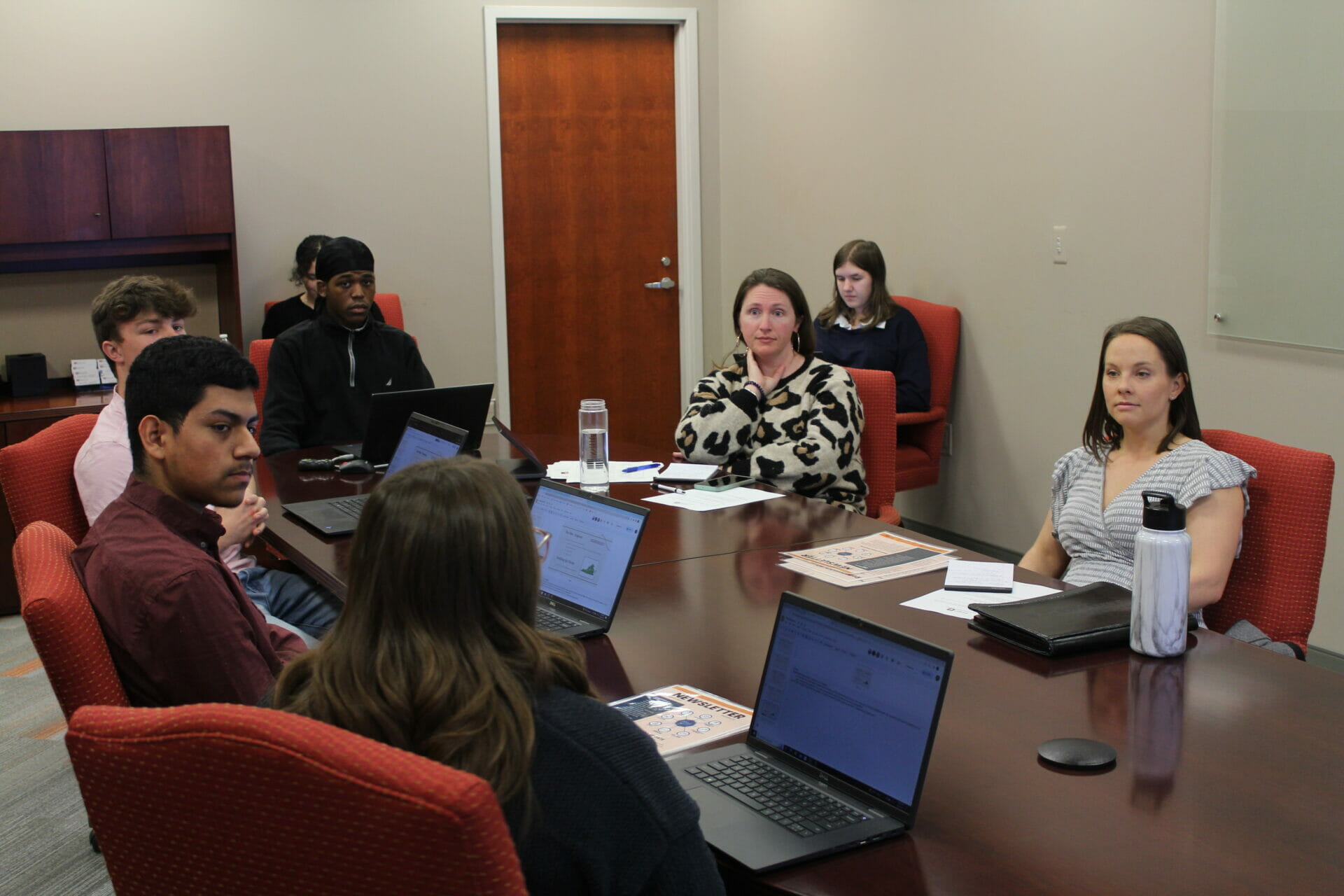
After a month of research, collaboration and brainstorming, AET students present their final proposed solutions to Dewberry as part of the NOW teamship program.
John Mauger and Larz Kegerreis with Kegerreis Digital Marketing tasked the students with exploring how to jumpstart the adoption of smog-eating billboards. (The proprietary technology allows billboards to absorb smog from the air around it. The board is fully compostable once it is taken down). The students broke into three groups and “attacked it from three different angles,” focusing on ways to initiate legislation and advocacy, consumer buy-in, and billboard company adoption.
“Thanks to this teamship program, we actually have a renewed optimism in being able to use this technology,” Mauger said. “The real answer is that it will probably be a combination of all of these solutions.”
After IALR and AET demonstrated the viability of the District C teamship program with students from AET, the framework is expanding across Southern Virginia. Several educators across the region have become certified coaches and began implementing the program in their classes and as extracurricular activities. Earlier in April a group of students from Chatham High School under the guidance of Tara Stafford completed the teamship program, solving a problem for the Danville Otterbots.
Several more teachers from Halifax, Brunswick and Lunenburg counties plan to or are in the process of obtaining the certification from District C, which requires 55 hours of training. The SOVA Innovation Hub is funding the professional development costs for these educators.
“If we really want to scale the program, it makes more sense to get educators to get trained as coaches so they can offer it at their schools,” Vernon said.
Even with the 55-hour certification process, Mettler said that the results are worth it – both for the educator and the students they will coach. “It is an incredible opportunity for personal and professional development. It is an incredible opportunity to make real improvement and give resources and skills to students. It’s authentic and it’s impactful.”
Educators who are interested in participating should reach out to Jessie Vernon.
In addition to training more educators that can implement this problem-solving teamship, IALR and District C are looking for additional businesses who would be willing to participate. With just a five-hour time commitment, businesses – regardless of size and business model – can benefit from the solutions provided all while providing a valuable growing experience for the students.
“The time investment was minimal and the impact the program had on students was great,” Mantiply said.
“I would do this program again in a heartbeat,” Goebel said.
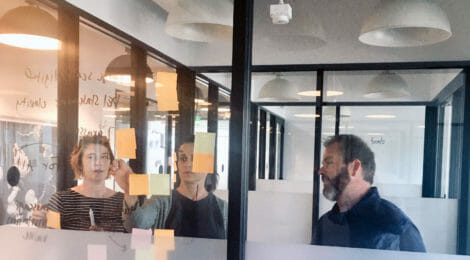
IALR, SOVA RISE, SOVA Innovation Hub and Longwood University support grant-funded teaching of District C Teamship Model
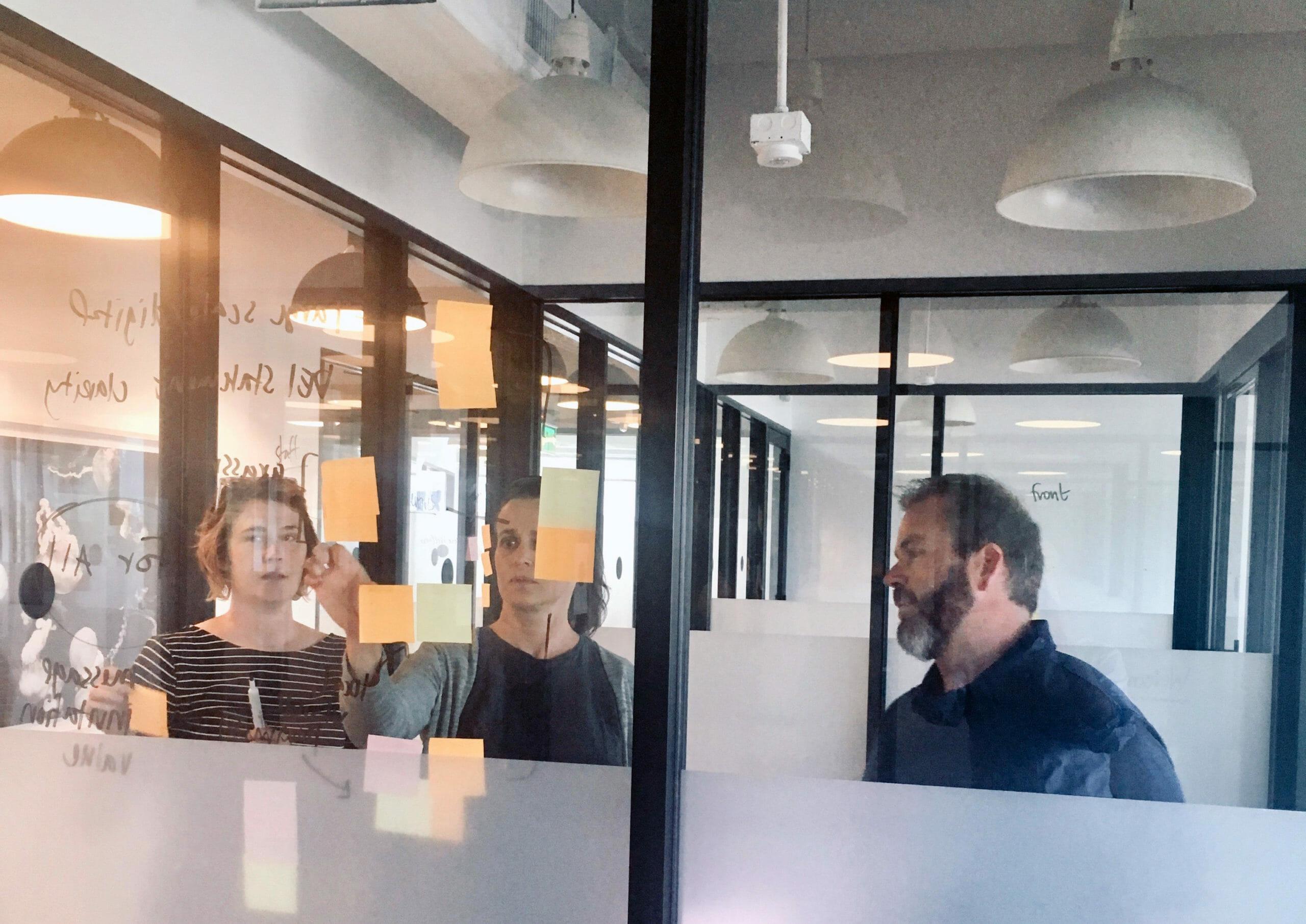
John Hatchett (right), coordinator and engineering instructor for the Academy for Engineering and Technology (AET), brainstorms with educators as part of the District C Coaching Institute, which teaches how to implement the Teamship model. Hatchett introduced the model—which pairs teams of students with local businesses to solve a real problem—to his AET juniors in 2020 as part of the Institute for Advanced Learning and Research’s Next generation Of Work (NOW) program.
The Institute for Advanced Learning and Research (IALR), District C and the SOVA RISE Collaborative (led by the SOVA Innovation Hub and Longwood University) are teaming up to recruit Southern Virginia educators for a cutting-edge coaching program. Sixteen educators from across GO Virginia Region 3 will be selected to join the 2022 Winter/Spring District C Coaching Institute where they will discover how to prepare students for the modern world of work with a unique, work-based learning model.
The District C Coaching Institute (supported by IALR and SOVA RISE) is a professional development experience that empowers educators to bring Teamship, a team-based internship model, back to their classroom. In Teamship, students use skills in critical thinking, collaboration, communication, creative thinking and citizenship (known as the five C’s expected by the Virginia Department of Education) to solve a real problem for a local business. Teamship may be executed as part of a class, bringing valuable work-based learning to students and building their social capital by connecting them with real companies rather than case studies.
IALR has been implementing the Teamship model through their Next generation Of Work (NOW) program since Spring 2020. “Our first cohort was done completely virtually with our Academy for Engineering and Technology juniors. Despite knowing that they wouldn’t be graded on their participation (due to the pandemic), EVERY student stayed engaged with their team and business partner’s problem and presented their final pitch,” said Jessie Vernon, Advanced Learning at IALR.
Through just four cohorts, 62 students have worked with nine business partners. “With just a five-hour commitment from participating businesses, the potential for each business to work with up to 12 students… not to mention the ROI for businesses as students work to solve major pain points… we feel very strongly this is an amazing work-based learning model for our region,” said Vernon.
The 2022 Winter/Spring District C Coaching Institute will equip regional educators with the skills and tools they need to implement the Teamship model at their school. Each educator selected will receive a grant to cover the cost of their professional development, and each educator’s school will receive a grant to cover the cost for the first year of their membership to District C. The application deadline for the coaching institute is Dec. 14. Educators and businesses interested in more information may contact jessie.vernon@ialr.org.
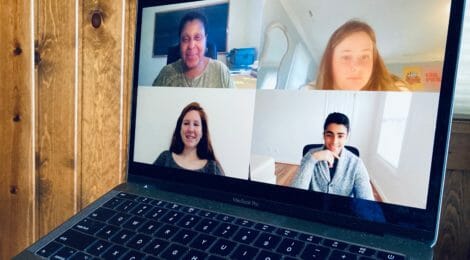
Program preps students for modern workforce while solving real employer problems
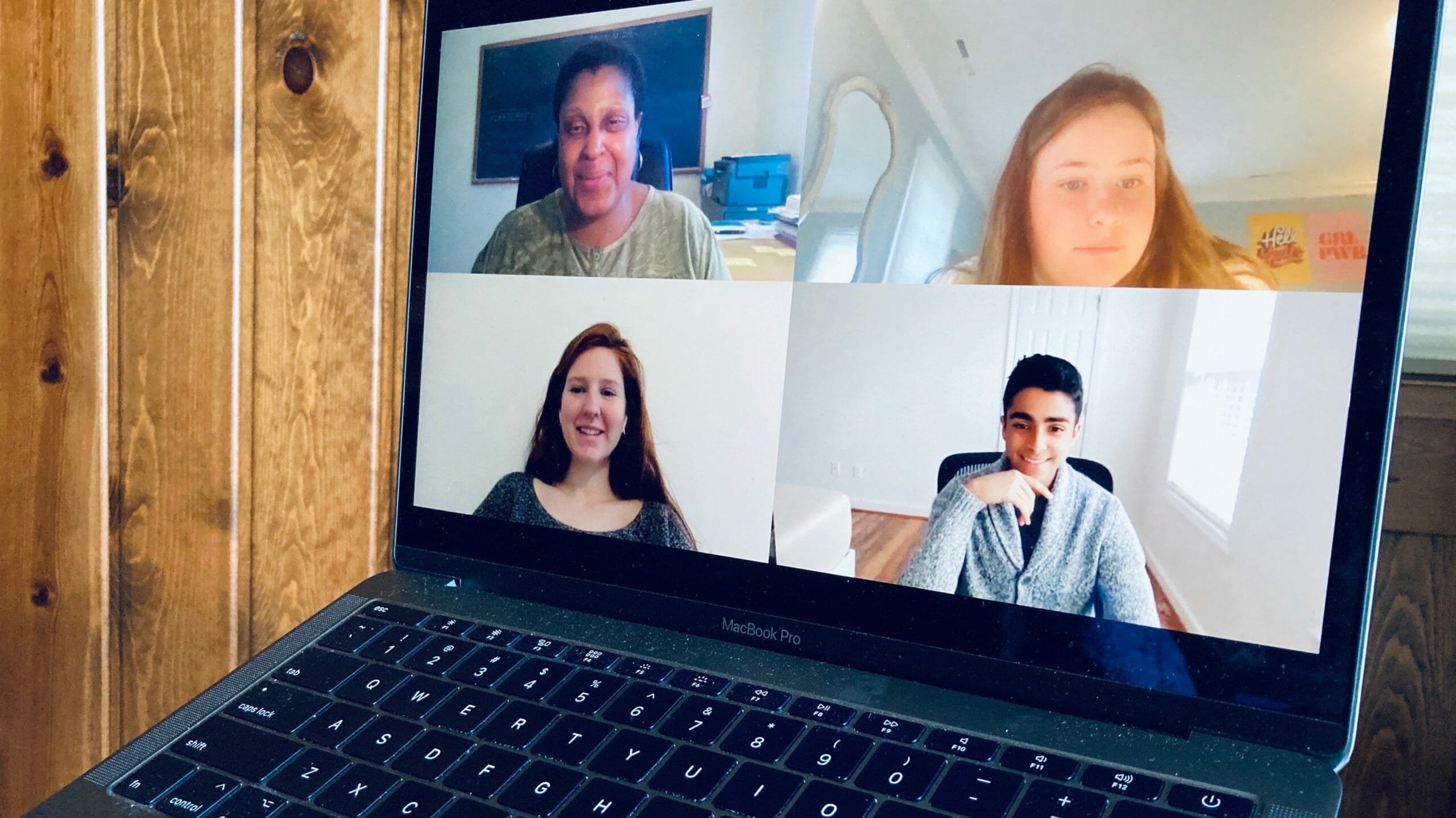
Photo by District C
The Institute for Advanced Learning and Research (IALR) is the first in Virginia to enter a regional partnership with Raleigh-based nonprofit District C, bringing an innovative work-based learning model to Southern Virginia and surrounding localities. The unique program will help fill the skills gap experienced by employers and will help meet the work-based learning needs of Virginia high school students.
District C’s proven model, covered by Forbes and Education Week, coaches diverse teams of students to solve real, complex problems for local businesses or organizations. District C recently partnered with the new Boost by Kaplan program, joining other well-known program partners Google and Myers-Briggs.
“The leadership of District C have amassed phenomenal educational experience over their careers, including work with Harvard and Kaplan,” said Dr. Julie Brown, Director of Advanced Learning at IALR. “Their unique learning model addresses the true needs of employers of the new economy – a need for workers with complex problem-solving, leadership and collaboration skills with the ability to work in diverse teams.”
As Education Week mentions in its feature story on District C, “so-called ‘soft skills’ are in high demand, but employer surveys consistently show that students are entering the workforce without them.” As technology exponentially improves and automates routine and manual tasks, employers place a deeper emphasis on hiring individuals with higher level thinking and decision-making skills.
“We are so excited to be joining the great work that is already going on at IALR and in Southern Virginia,” said Anne Jones, District C Co-Founder. “We can’t wait to see the value the District C Coaches and their students will bring to the community.”
IALR’s Next generation Of Work (NOW) program addresses the soft skills gap by using the District C model to create genuine, collaborative, problem-solving experiences for high school students. The program starts with coaching student teams on District C mindsets and tools before introducing them to a business partner with a real problem. For about three weeks, students research, brainstorm and develop their solution. Coaches guide them through the process, but the solutions and final pitches are 100 percent student-driven. The plans are shared with business partners before a virtual audience.
“Virginia has recently emphasized the importance of work-based learning, or WBL, and is endeavoring to increase the number of students participating in these experiences,” said Jessie Vernon, Program Coordinator at IALR, who leads the NOW program. “The District C model helps address many of the challenges of providing meaningful WBL on a large scale, and increasingly important, in a virtual setting. For a minimal time investment, the partnering business positively impacts anywhere from four to 12 students. The District C model is an amazing tool to add to our ‘WBL tool kit’ in Southern Virginia.”
To date, IALR has held two NOW cohorts virtually – one in the spring of 2020 for students of the Academy for Engineering and Technology (AET) and one over the summer open to any interested high school juniors, seniors or recent high school graduates. Four organizations have participated: Dan River Year AmeriCorps, Dewberry, Kyocera SGS Tech Hub and Tyton BioSciences; 33 students have completed the program; and three educators and IALR staff members have trained and become certified as District C Coaches. According to NOW survey results from business participants, all four partners indicate they have implemented or plan to implement at least part of the solutions students provided.
“The pleasure and honor of this project was all mine. It is inspiring to see young people critically think like that,” said Jason Wells, President of Kyocera SGS Tech Hub. “I found the time invested very worthwhile.”
IALR will continue to offer the NOW program to students throughout Southern Virginia and beyond with all activities online for the time-being. Additionally, IALR and District C hope to offer a Coaches Institute for educators in early 2021. Participating educators would receive training and become District C certified coaches so they can implement the model directly at their schools. Educators and administrators interested in the Coaches Institute should contact Jessie Vernon at jessie.vernon@ialr.org. IALR and District C will host a virtual information session at 3:30 p.m. on Nov. 5 for business and community members to learn more about how they can become involved. To register, visit bit.ly/NOWinfosession. For more information about NOW, visit ialr.org/now.
