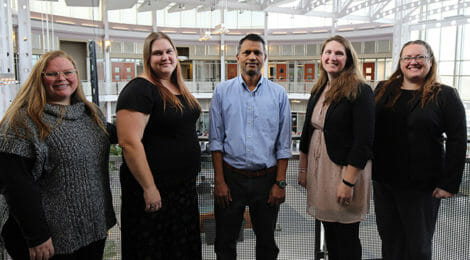
Local businesses and organizations across Southern Virginia are once again turning to high school students for fresh perspectives on complex workplace challenges through the Next generation Of Work (NOW) Teamship program.
Administered by IALR’s Advanced Learning division, the NOW program connects students with employers to solve real, open-ended challenges, preparing students for the realities of today’s evolving workplace while delivering tangible value to participating businesses and nonprofits.
“The NOW Teamship experience helps students learn to work across differences, navigate uncertainty and collaborate to deliver real value,” said Jessie Vernon, Director of Employer Engagement and Experiential Learning at IALR. “The solution is important, but the process is what stays with them long after the project ends.”
Real-World Learning Through Open-Ended Challenges
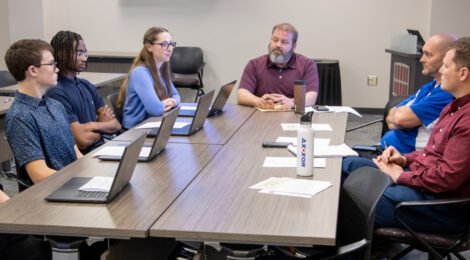
The foundation of Teamship by College Board is simple and intentionally flexible: a business or organization presents an open-ended challenge, and teams of students work collaboratively, with guidance from trained coaches, to clarify the problem, gather context and propose actionable solutions.
Rather than jumping directly to answers, students learn to interview stakeholders, conduct research and analyze data to understand the root of the problem fully. That emphasis on process reflects the realities of modern work, where ambiguity is common and solutions are rarely clear-cut.
In an economy that is increasingly influenced by artificial intelligence, Teamship equips students with important skills like critical thinking, collaboration, communication and adaptability.
Addressing Today’s Business and Community Needs
Students from the Academy for Engineering & Technology (AET) worked with a nonprofit environmental education organization and a regional manufacturer.
Teamship Benefits for Businesses CTA BAR
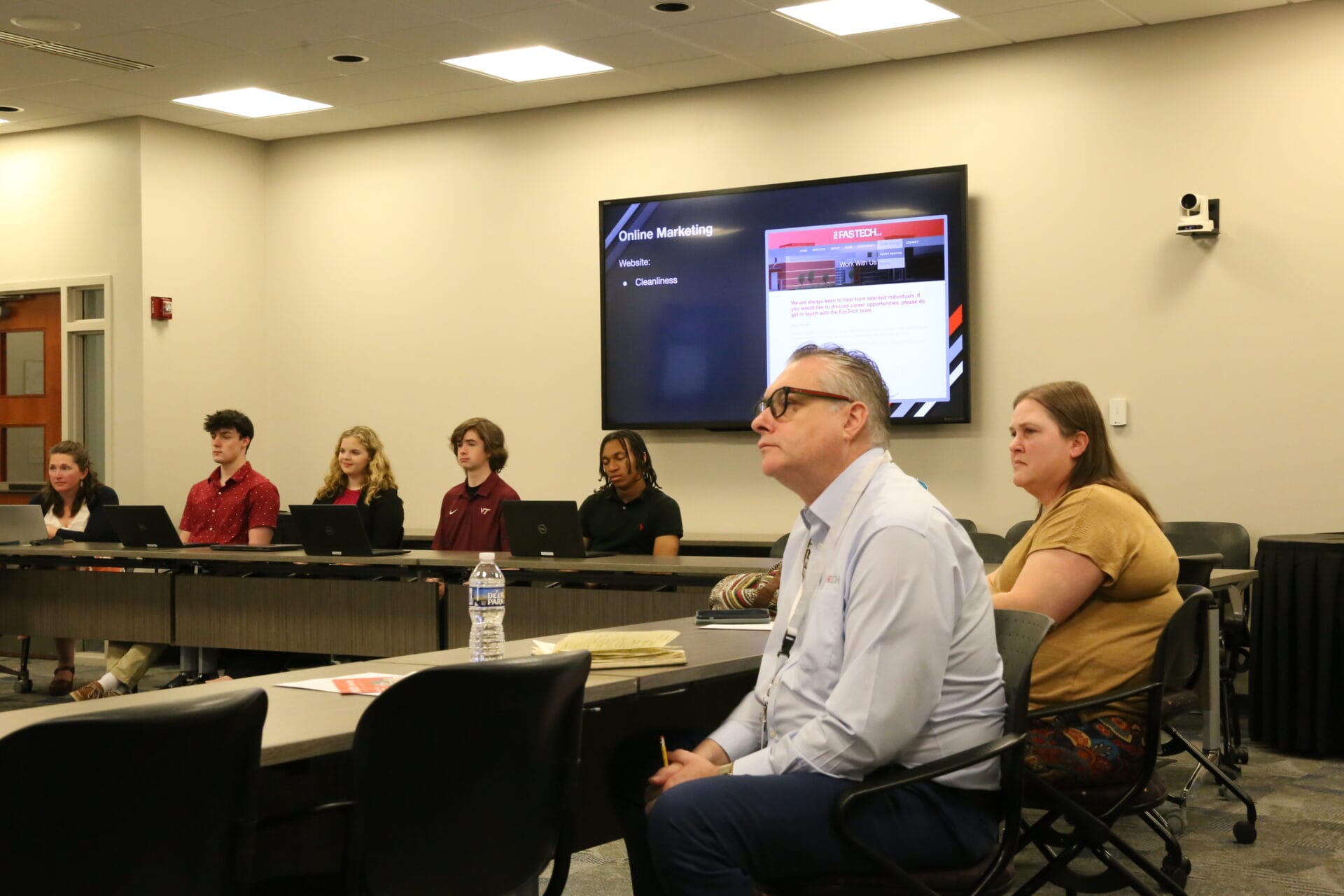
Krista Hodges, Director of Environmental Education for the Dan River Basin Association, challenged students to help streamline her team’s volunteer educator scheduling. As participation in programs has grown, coordinating dozens of volunteers, many with varying levels of comfort with technology, has become increasingly time-consuming.
“I asked the students to come up with solutions that would cut down on the amount of time I’m spending managing all this information and reduce errors from manual input,” Hodges said.
“I:\Communications\IALR PICTURES\Pictures 2026\NOW\IMG_7346.jpg” That’s Hodges
While Hodges initially worried students might propose overly technical or costly solutions, she said the teams exceeded her expectations by prioritizing usability, accessibility and cost.
“My expectations were exceeded as far as what I thought they were going to come up with,” she said. “They did a lot of research into realistic options, especially given the amount of time they had.”
Students presented multiple solutions, ranging from enhanced use of Microsoft Forms to evaluating user-friendly scheduling tools already being adopted by similar nonprofits. Hodges said she plans to implement one of the proposed approaches.
“It was definitely worth my time investment,” she said. “They offered solutions that I’m seriously considering.”
Fresh Eyes, Real Impact for Employers
Manufacturing firm Axxor asked students to help improve awareness and engagement around a financial wellness benefit available to employees.
Matthew Carragher of Axxor said the students approached the challenge with creativity and rigor.
“They exceeded our expectations, delivering well-researched solutions with a clear understanding of the problem and how to address it,” Carragher said.
“I:\Communications\IALR PICTURES\Pictures 2026\NOW\IMG_6732.jpg” that’s Carragher
Student teams proposed a three-part strategy focused on incentives, expanded education campaigns and improving overall awareness of the program.
“Yes, we plan to implement some of the ideas the students presented,” Carragher said. “The experience delivered a positive return on investment for our organization.”
Learning to Collaborate and Lead
In addition to producing solutions, the NOW Teamship experience emphasizes teamwork and shared leadership. Students rotate facilitation roles, design agendas and use structured tools to guide discussion and decision-making.
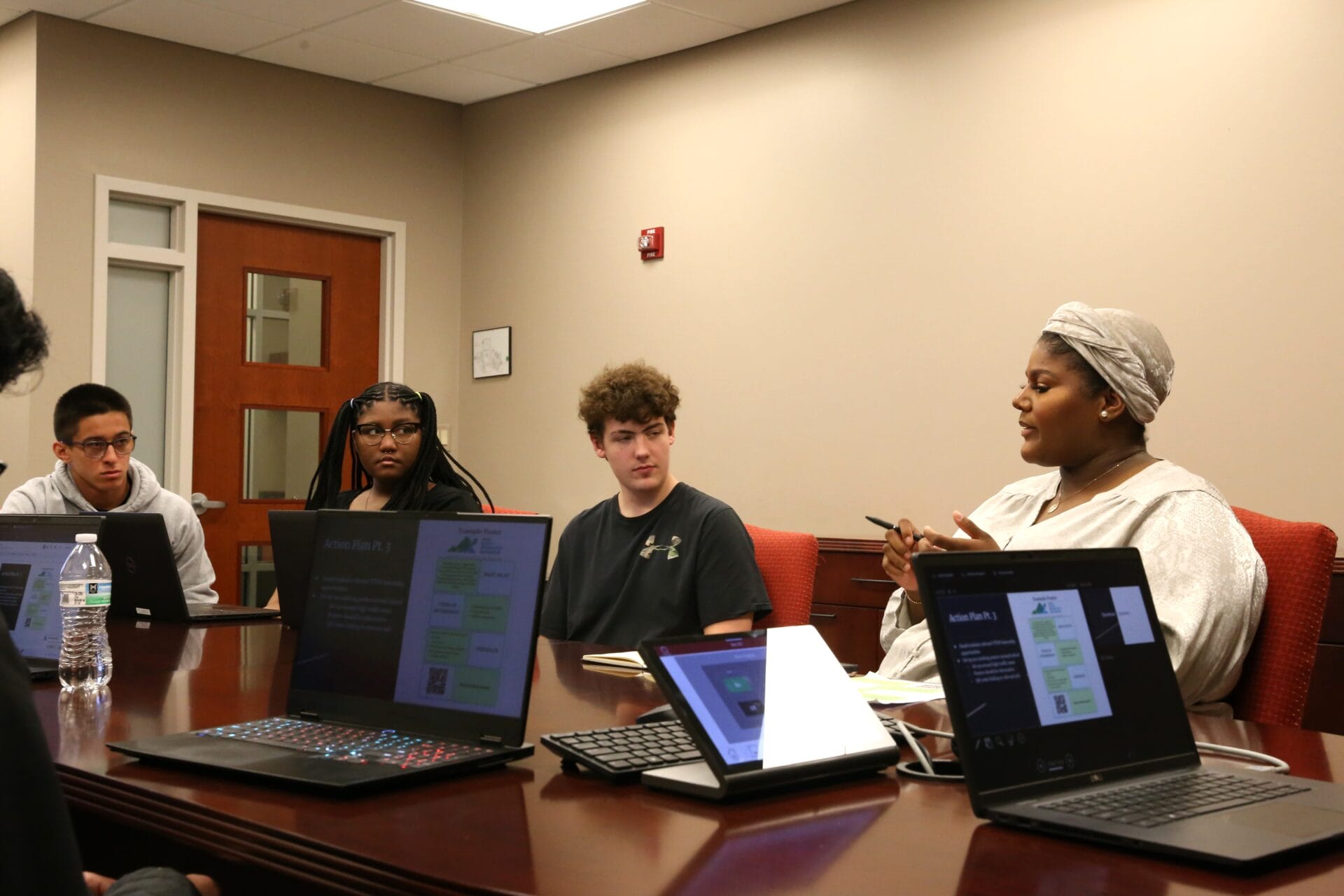
Hanna Daubert, a junior at Gretna High School, said the experience pushed her outside her comfort zone.
“I had never had any work-related experience trying to figure out problems and solutions for a company before,” Daubert said. “At first it was kind of scary, but breaking the timeline into chunks really helped.”
“I:\Communications\IALR PICTURES\Pictures 2026\NOW\IMG_7354.jpg” the girl here is Daubert.
Daubert said the team’s collaborative approach strengthened her confidence as a leader.
“I learned that I’m a better leader than I thought I was,” she said.
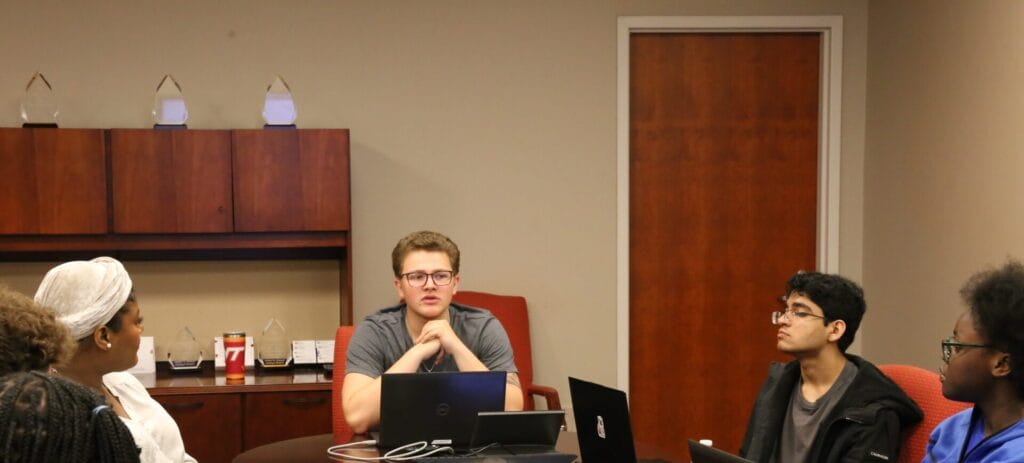
For Chatham High School student Colin Soyars, the biggest takeaway was learning to listen and build on others’ ideas.
“We collaborated really well and built off each other,” Soyars said. “I definitely learned how to work in a group and communicate better.”
“I:\Communications\IALR PICTURES\Pictures 2026\NOW\IMG_7336.jpg” the boy here is Soyars
That emphasis on collaboration is intentional, according to educators involved in the program.
“These problem-solving and collaboration skills aren’t specific to engineering,” said John Hatchett, Engineering Instructor and Program Coordinator for AET. “Students are learning how to slow down, listen to different perspectives and work through ambiguity. They’ll need these skills no matter where they go.”
Preparing Students for the Modern Workforce
As work continues to change, the NOW Teamship program reflects a broader shift in how students are prepared for careers. Today’s employers value the ability to navigate uncertainty, work across differences and solve open-ended problems. These skills can’t be learned solely through lectures.
“Work is changing, and students need opportunities to practice solving messy, complex problems with different people,” Vernon said. “NOW gives them those experiences in a real-world setting.”
NOW Teamship is a key part of IALR’s systematic approach to connecting students with careers and employers throughout Southern Virginia.
Organizations interested in participating in the NOW Teamship program during the 2026–2027 academic year can contact Jessie Vernon for more information.