The April 2026 edition of IALR at a Glance is packed with exciting news and updates! Learn more about…
- Register for Summer STEM Camps
- IALR Recognized as Top Employer for Interns
- Watch updates from IALR
- Much more!
Institute for Advanced Learning and Research
Driving Economic Transformation

The April 2026 edition of IALR at a Glance is packed with exciting news and updates! Learn more about…

The March 2026 edition of IALR at a Glance is packed with exciting news and updates! Learn more about…

In this special mini episode, IALR President Telly Tucker sits down with Casie Hansen, who recently graduated from the Non-Destructive Testing track of the Accelerated Training in Defense Manufacturing (ATDM). Casie shares how she discovered ATDM, what it was like to uproot her life and start over at 40 and how the program’s training and wraparound support helped her step confidently into a completely new career path.
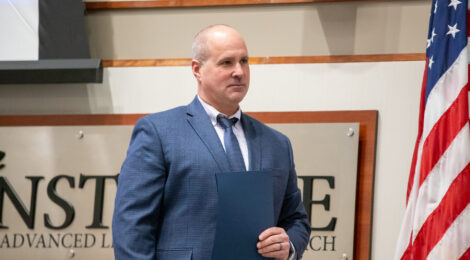
By Jason Wells, Executive Vice President of Manufacturing Advancement, IALR
The recent Southern Virginia Living Wage and Job Availability Study shows that more manufacturing workers are available than manufacturing job openings across GO Virginia Region 3.
At face value, that suggests a surplus of workers.
But that’s not what our team hears when talking with manufacturing companies across our region, whether it’s a metalworking shop in Halifax or a major defense supplier scaling production.
What I hear is: We can’t find enough people with the right skills.
So which is it? Are we long on manufacturing talent or short on it?
As is often the case in workforce development, the truth lives in the tension between the two.
And this tension is exactly why our region cannot simply focus on technical skills alone. Readiness also depends on communication, reliability, professionalism and work ethic — the difference between being job‑oriented and being truly career‑minded.
It’s not just about the number of workers. It’s about who they are, where they live and what they’re prepared to do.
The report’s regional snapshot captures job postings at a moment in time. But manufacturing doesn’t behave like some other sectors. A firm may have robust headcount on paper and still feel understaffed because:
Another dynamic is hiring itself: many employers continue using the same recruitment practices while expecting different results. Hiring needs to evolve just as manufacturing evolves, and too often, it hasn’t.
In other words, a surplus on a spreadsheet doesn’t always translate to a talent pool at the door.
And employers will tell you that directly. Many are balancing production deadlines with training gaps, or they’re promoting inexperienced technicians into advanced roles simply because there’s no one else in the pipeline.
That’s a skills‑alignment problem rather than a surplus problem.
GO Virginia Region 3 is large, stretching from Patrick County eastward toward the Richmond frontier. The study’s macro view smooths over significant variation.
Some localities genuinely have more manufacturing workers than openings. Others, especially those closest to emerging industrial sites, already feel tight.
This regional imbalance shows up in workforce conversations every week. A plant manager in one county may be turning away applicants. Another, 40 miles away, may be struggling to hire despite higher wages.
Without strong networks intentionally linking people to jobs, employers to training providers and communities to each other, surplus and shortage can exist side by side.
For manufacturers evaluating expansion or relocation, this alignment signals regional capability. They are not simply assessing today’s headcount; they are evaluating whether the region can mobilize talent, scale training and collaborate across boundaries when opportunities arise.
If we only plan for the present, we’re already behind.
Already, we know of two major manufacturing plants on their way to Southern Virginia. Microporous announced in November of 2024 that it will create a $1.35 billion battery separator manufacturing facility at the Southern Virginia Megasite at Berry Hill. And just this month, Avio USA Inc. announced a $500 million new solid rocket motor manufacturing facility to be located at the Southern Virginia Multimodal Park in Hurt.
Together, these two projects will create more than 3,000 jobs, with the vast majority in manufacturing.
These projects are fundamentally reshaping the demand curve in Southern Virginia. And they are not the only ones. Over the past several years, our region’s manufacturing ecosystem has steadily expanded in capability, technology and national visibility.
I am confident more announcements will come.
Today’s surplus could become tomorrow’s severe shortage.
In manufacturing, the lead time to develop talent is long. You don’t train a CNC machinist, quality technician or AM operator in a few weeks.
This is part of why employer conversations feel so different than the report’s topline numbers. Businesses are looking to prepare their workforce for future capabilities, production demands and contracts.
During conversations with industry partners, one theme comes up constantly: “We have applicants. We need contributors.”
Manufacturing requires technicians who understand not just how to run equipment, but how processes flow, how tolerances stack, how documentation supports quality and how automation integrates with upstream and downstream operations. Those capabilities don’t appear automatically in the workforce just because workers exist.
Skills gaps arise because:
As my team engages with manufacturers in the region and across the nation, we repeatedly hear those exact needs for employees who can contribute at a high level faster than ever before.
Across our campus, we have deliberately aligned our programs around the skills‑to‑production pipeline, from early-career exploration to advanced, hands‑on training to real‑world technology adoption.
Our Accelerated Training in Defense Manufacturing (ATDM) program takes what is traditionally a year and a half of focused training and condenses it into an intense, disciplined 16‑week experience. Graduates leave with foundational technical competency, hands‑on repetition under pressure, and a mindset oriented toward excellence and urgency.

This kind of talent pipeline directly addresses employers’ requests for speed, reliability and readiness.
We also know that readiness begins early. The Great Opportunity in Technology and Engineering Careers (GO TEC) program exposes middle schoolers to welding, machining, robotics and other pathways long before they step into high school CTE or dual‑enrollment programs.
The Integrated Machining Technology program, which is taught by Danville Community College and housed at IALR, gives emerging technicians the “third-year” experience where all the pieces finally come together.
And our partnership network ensures those pathways form a cohesive ladder, not a scattered series of steps.
If you zoom out, a pattern emerges.
Yes, the report shows a surplus of manufacturing workers today.
And yes, employers are sounding the alarm about skills gaps today.
But tomorrow’s picture is already taking shape:
New industrial employers are coming.
Existing employers are expanding.
Advanced manufacturing technologies are accelerating.
The region is being asked to produce more, faster and with greater precision.
The question isn’t whether we have enough people.
It’s whether we have enough prepared people in the right places, with the proper training, aligned to the right future.
And that brings me back to something I shared recently with our entire Manufacturing Advancement team:
“When the rate of change outside exceeds the rate of change inside, the end is near.” — Jack Welch
Manufacturing is living that reality every day. The pace of external change — new employers, new technologies, new federal expectations, new supply‑chain vulnerabilities — is accelerating. If our talent systems, training pipelines and regional partnerships don’t evolve at the same speed, we won’t just fall behind. We’ll miss the moment entirely.
Southern Virginia, however, is choosing a different path.
We are choosing to change faster.
To prepare sooner.
To build forward.
IALR’s mission has always been to serve as a forward-looking catalyst. And the work happening across our campus today, from ATDM to IMT and GO TEC, is positioning this region not only to meet the demands ahead, but to lead in ways few would have predicted a decade ago.
We’re not preparing for the workforce or the job count we have today.
We’re preparing for the workforce we will need tomorrow
Jason Wells is IALR’s Executive Vice President of Manufacturing Advancement. With decades of experience in the toolmaking industry, Wells now leads IALR’s manufacturing training and optimization efforts.


The February 2026 edition of IALR at a Glance is packed with exciting news and updates! Learn more about…



The Institute for Advanced Learning and Research (IALR) celebrated the graduation of the latest cohort of the Accelerated Training in Defense Manufacturing (ATDM) program on Dec. 19. The ceremony honored 42 adult learners who completed intensive training in additive manufacturing and welding — two critical skill sets for building and repairing components within the defense manufacturing sector.
Each completer finished at least 600 hours of hands-on instruction, preparing them for immediate employment within the maritime industrial base (MIB). These tracks equip students with the technical expertise to perform high-precision processes essential to national defense.
Robert McNulty, ATDM welding graduate, shared reflections on the journey through the program.
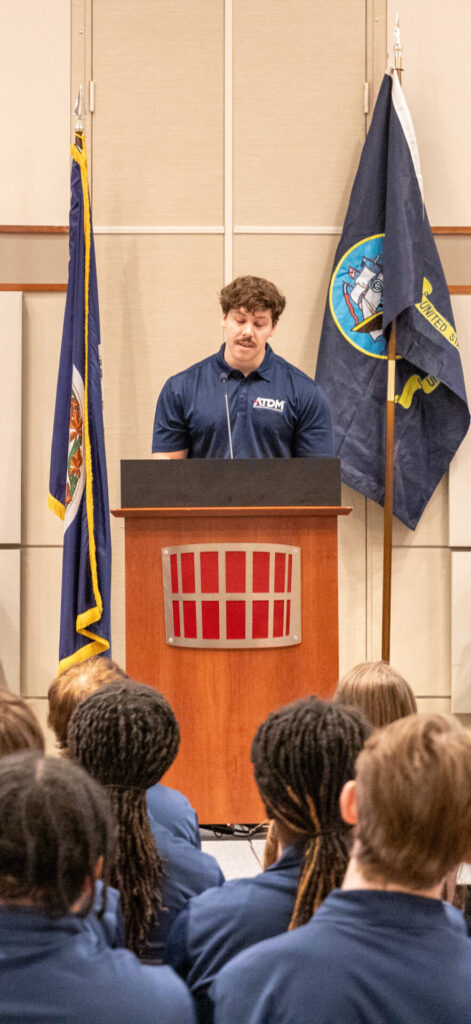
“To my fellow graduates, we are proof that we can rise and meet the expectations. The work we do will hold things together – literally. Ships, structures, systems and communities depend on what we create and join. Let’s take pride in our work, keep learning and never forget where we started.” – Robert McNulty, ATDM Welding Graduate
Retired Rear Admiral Tom Kearney, now working with The Spectrum Group, praised the graduates for their dedication and highlighted the significance of their achievement.
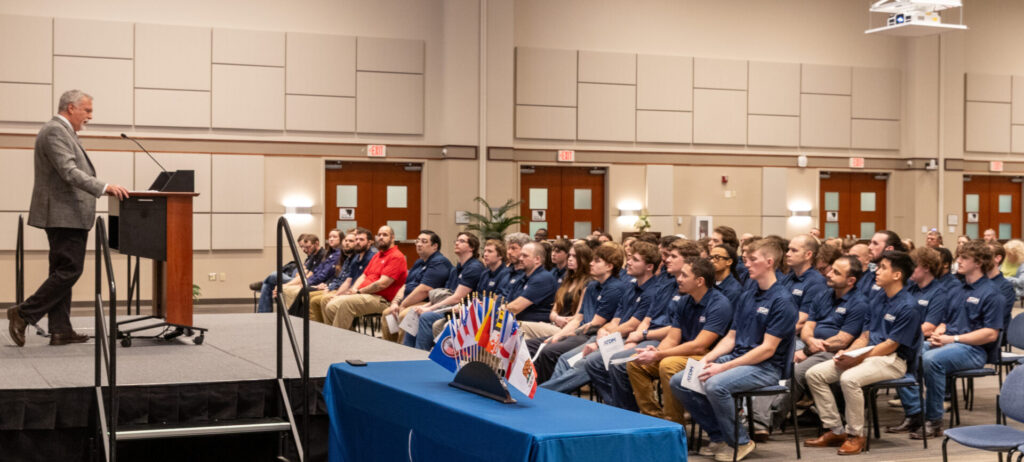
“Each of you is now part of something much bigger than yourselves. You are helping ensure that when our sailors go to sea, the ships will perform as designed, we will win the wars we fight, and they will come home. We trust you, and we need you, and we are counting on you. Congratulations to the graduates of ATDM, and fair winds and following seas.” – Retired Rear Admiral Tom Kearney, The Spectrum Group

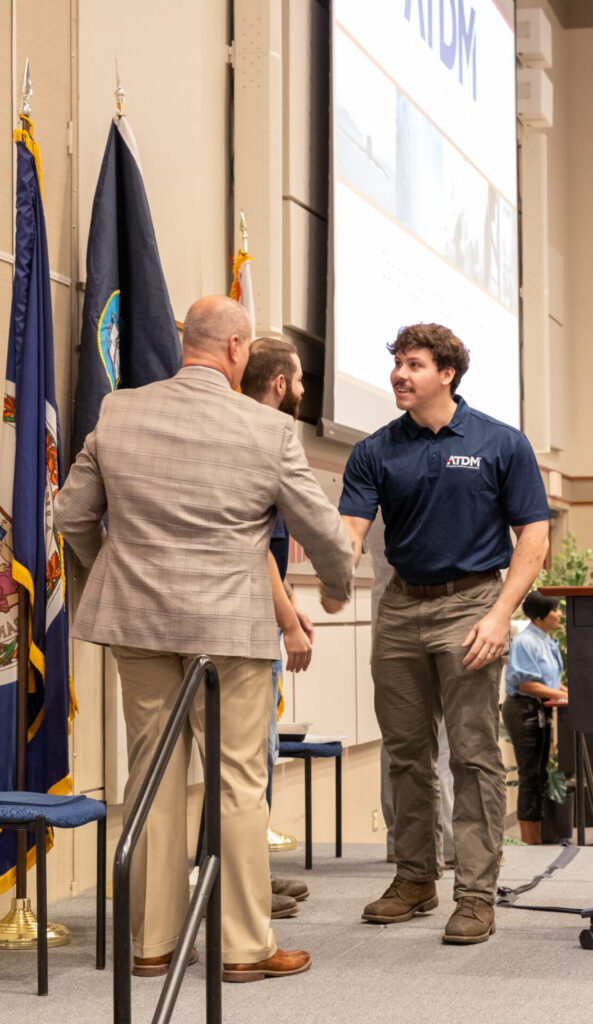
Participants in the ATDM program benefit from comprehensive scholarships covering tuition and furnished housing. This support enables individuals from diverse backgrounds, including transitioning service members, career changers and industry newcomers, to prepare for and find successful manufacturing careers.
With a goal of training 1,000 students annually, ATDM remains a cornerstone initiative in strengthening the U.S. defense manufacturing workforce. With more than 1,100 total completers to date, ATDM boasts an approximately 85% completion rate and, for completers, an 85% placement rate within 30 days of completing the program.
The Accelerated Training in Defense Manufacturing program provides focused, industry-driven training to equip participants with skills critical for defense manufacturing. This initiative is funded through the National Imperative for Industrial Skills by the Industrial Base Analysis and Sustainment Program Office within the Office of the Undersecretary of Defense for Acquisition and Sustainment.
The Institute for Advanced Learning and Research serves Virginia as a regional catalyst for economic transformation with applied research, advanced learning, manufacturing advancement, conference center services and economic development efforts. IALR’s major footprint focuses within Southern Virginia, including the counties of Patrick, Henry, Franklin, Pittsylvania, Halifax and Mecklenburg along with the cities of Martinsville and Danville. The organization houses and leads the ATDM program with the support of various partners.

The Institute for Advanced Learning and Research (IALR) celebrated the completion of the latest cohort of the Accelerated Training in Defense Manufacturing (ATDM) program on Dec. 12. The ceremony honored 58 adult learners who completed intensive training in CNC machining, non-destructive testing and additive manufacturing — three critical skill sets for building and repairing components within the defense manufacturing sector.
Each completer finished at least 600 hours of hands-on instruction, preparing them for immediate employment within the maritime industrial base (MIB). These tracks equip students with the technical expertise to perform high-precision processes essential to national defense.
Eli Noles, CNC machining student, shared reflections on the journey through the program.
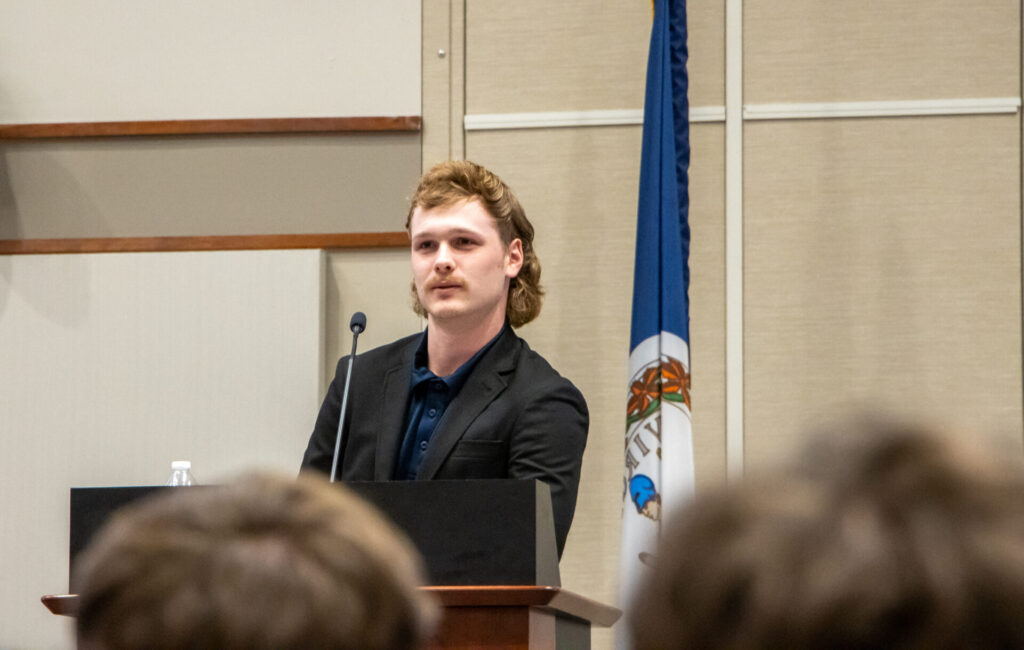
“Manufacturing isn’t just about programming, machining or quality checks. It’s about taking raw material, whether it’s metal or your own potential, and shaping it into something you can be proud of.” – Eli Noles, ATDM CNC Machining Student
Admiral James G. Foggo, U.S. Navy (Retired), Dean of the Center for Maritime Strategy at the Navy League of the United States, praised the graduates for their dedication and highlighted the significance of their achievement.
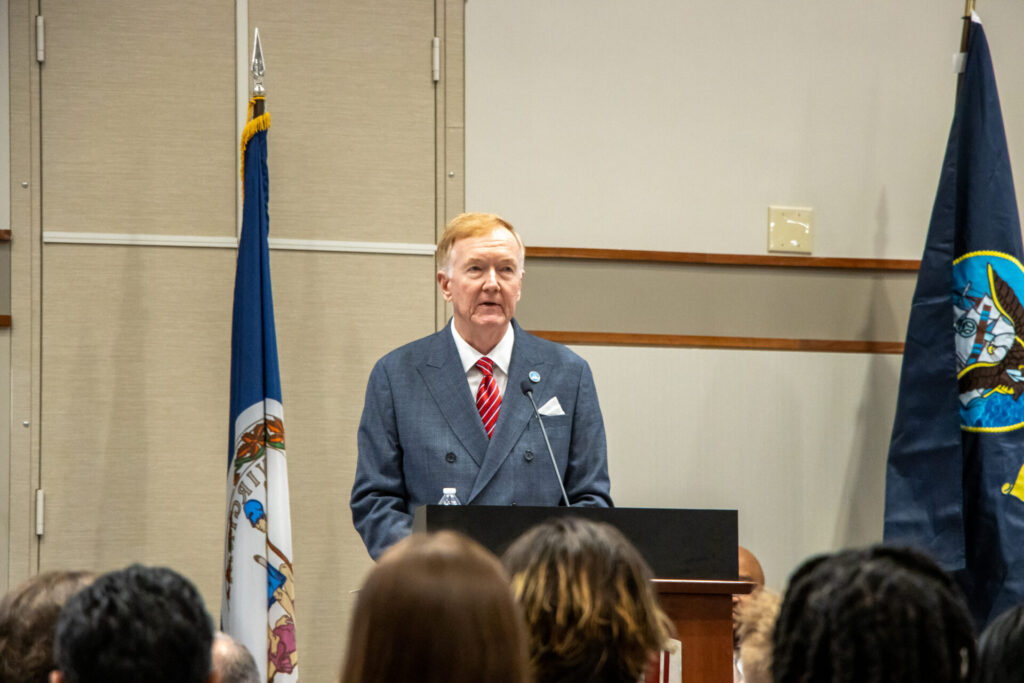
“You’re about to embark on a career where the highest standards of excellence are the norm… The safety of our most precious commodity — our American sailors — will soon be in your hands.” – Admiral James G. Foggo, U.S. Navy (retired), Navy League of the United States

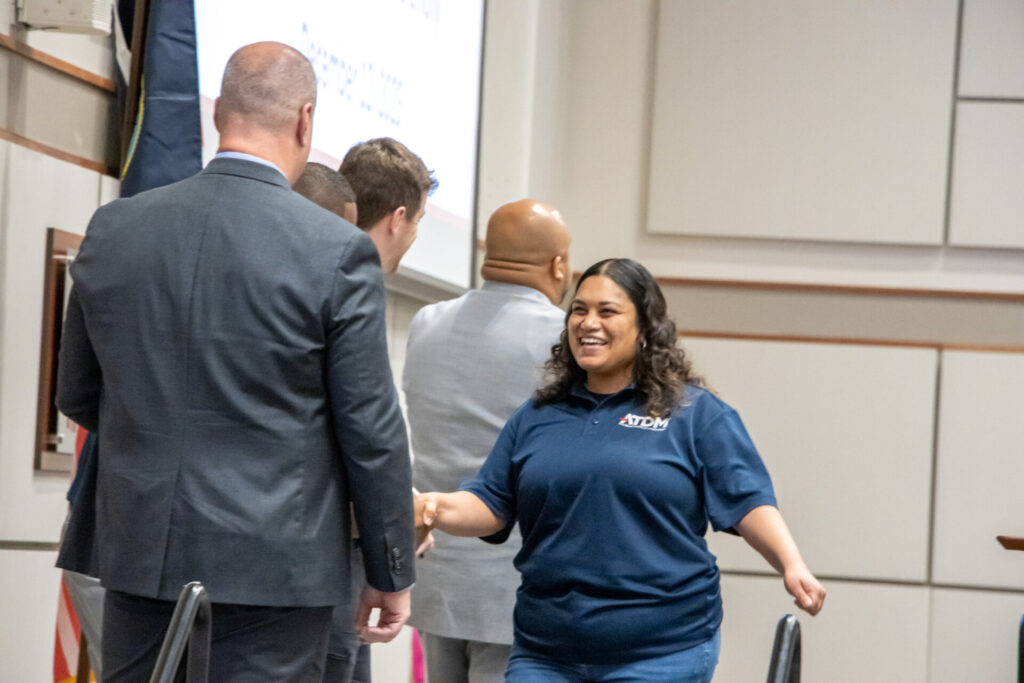
Participants in the ATDM program benefit from comprehensive scholarships covering tuition and furnished housing. This support enables individuals from diverse backgrounds, including transitioning service members, career changers and industry newcomers, to prepare for and find successful manufacturing careers.
With a goal of training 1,000 students annually, ATDM remains a cornerstone initiative in strengthening the U.S. defense manufacturing workforce. With more than 1,100 total completers to date, ATDM boasts an approximately 85% completion rate and, for completers, an 85% placement rate within 30 days of completing the program.
The Accelerated Training in Defense Manufacturing program provides focused, industry-driven training to equip participants with skills critical for defense manufacturing. This initiative is funded through the National Imperative for Industrial Skills by the Industrial Base Analysis and Sustainment Program Office within the Office of the Undersecretary of Defense for Acquisition and Sustainment.
The Institute for Advanced Learning and Research serves Virginia as a regional catalyst for economic transformation with applied research, advanced learning, manufacturing advancement, conference center services and economic development efforts. IALR’s major footprint focuses within Southern Virginia, including the counties of Patrick, Henry, Franklin, Pittsylvania, Halifax and Mecklenburg along with the cities of Martinsville and Danville. The organization houses and leads the ATDM program with the support of various partners.
The November 2025 edition of IALR at a Glance is packed with exciting news and updates! Learn more about…

This episode shifts the focus from student success stories to the broader impact of the Accelerated Training in Defense Manufacturing (ATDM) program on the maritime industrial base. Joined by Mike Villanueva of BAE Systems, Michael Ripich of ATF, and Justin Scarce from ATDM, the conversation explores how companies are leveraging ATDM graduates to fill vital roles in shipbuilding and defense manufacturing. From welding and NDT to CNC machining, the program’s accelerated, hands-on training is helping employers meet urgent workforce needs.
Hear firsthand accounts of how career fairs at ATDM differ from traditional hiring events, why companies are sending their own employees for upskilling and how ATDM is helping solve one of the nation’s most pressing challenges: building submarines and ships to protect national security.

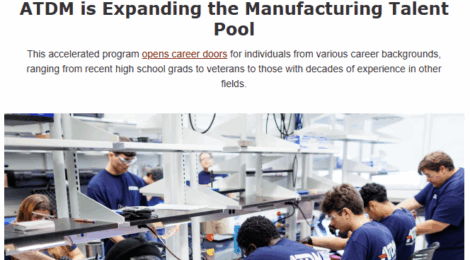
The November 2025 edition of IALR at a Glance is packed with exciting news and updates! Learn more about…
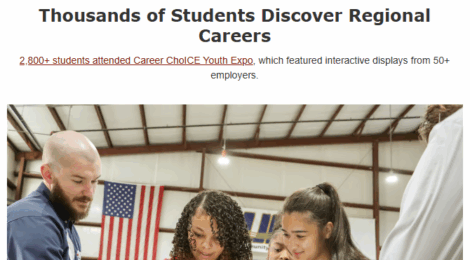
The October 2025 edition of IALR at a Glance is packed with exciting news and updates! Learn more about…
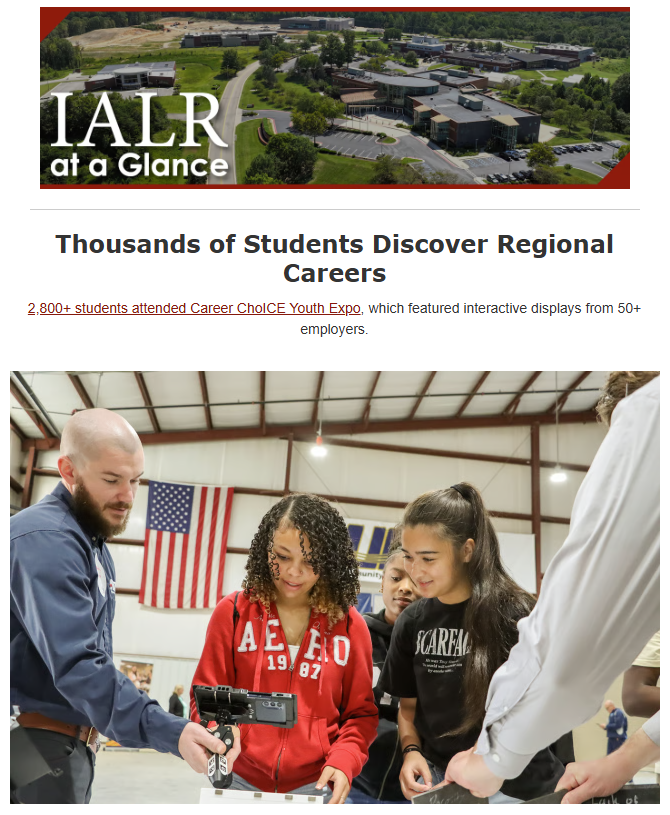
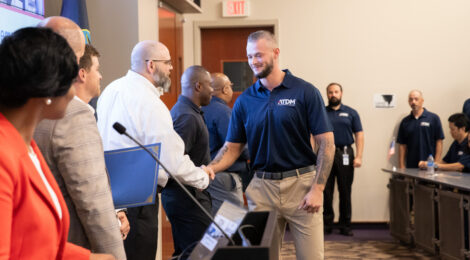
The Institute for Advanced Learning and Research (IALR) celebrated the completion of the 19th cohort of the Accelerated Training in Defense Manufacturing (ATDM) program on Oct. 7, 2025. The ceremony honored 20 adult learners who completed intensive training in Non-Destructive Testing (NDT), a critical skill set for ensuring the integrity and safety of components within the defense manufacturing sector.
Each completer finished more than 600 hours of hands-on instruction, earning industry-recognized credentials that prepare them for immediate employment within the Maritime Industrial Base (MIB). The NDT track equips students with specialized techniques to evaluate materials and structures without causing damage.
Student speaker Emery Harris reflected on the transformative nature of the program:
“I wanted a career that challenged me in new ways and gave me skills that really mattered. And that’s what brought me to ATDM,” Harris said. “ATDM has been more than just a training program. It’s been a launchpad. It’s given me the tools, the confidence and the direction that I was looking for.”
Jason Wells, Executive Vice President of Manufacturing Advancement, commended the graduates for their commitment and emphasized the broader impact of their achievement:
“This program is unlike anything else in the country. What these graduates have accomplished is extraordinary—not just in skill, but in resilience. Today, we don’t just recognize them as graduates; we honor them as skilled tradespeople whose work will quietly but powerfully shape the safety, strength and future of our nation. ATDM is more than training—it’s about restoring hope, building possibility and renewing the American dream.” — Jason Wells, Executive Vice President of Manufacturing Advancement
Graduates of the Non-Destructive Testing – 1st Shift
Participants in the ATDM program benefit from comprehensive scholarships covering tuition and housing. This support enables individuals from diverse backgrounds—including transitioning service members, career changers and industry newcomers—to thrive.
With a goal of training over 800 students annually, ATDM remains a cornerstone initiative in strengthening the U.S. defense manufacturing workforce.
The Accelerated Training in Defense Manufacturing program provides focused, industry-driven training to equip participants with skills critical for defense manufacturing. This initiative is funded through the National Imperative for Industrial Skills by the Industrial Base Analysis and Sustainment Program Office within the Office of the Undersecretary of Defense for Acquisition and Sustainment.
The Institute for Advanced Learning and Research serves Virginia as a regional catalyst for economic transformation with applied research, advanced learning, manufacturing advancement, conference center services and economic development efforts. IALR’s major footprint focuses within Southern Virginia, including the counties of Patrick, Henry, Franklin, Pittsylvania, Halifax and Mecklenburg along with the cities of Martinsville and Danville. The organization houses and leads the ATDM program with the support of various partners.
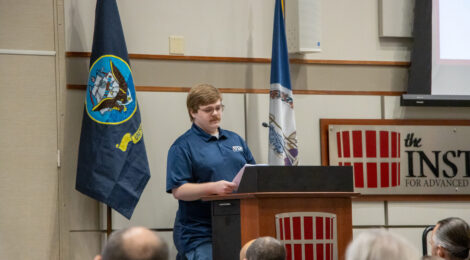
The Accelerated Training in Defense Manufacturing (ATDM) program is preparing the next generation of skilled workers for the U.S. Navy’s Maritime Industrial Base. With an 85% job placement rate and graduates from nearly every state, ATDM is creating real career opportunities. In this episode, recent graduates Dylan Carter and Angel Gallaher describe how the program equipped them with technical expertise and career-ready confidence.
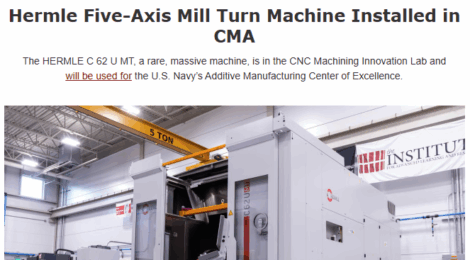
The September 2025 edition of IALR at a Glance is packed with exciting news and updates! Learn more about…

What is it like to be a woman teaching advanced manufacturing in a field where men make up the majority?
Hear it from three members of the Accelerated Training in Defense Manufacturing (ATDM) instructional team: welding instructor Makayla Baker, metrology instructor Holly Lyle and welding technician Autumn King. As the only women on a team of nearly 40 instructors and technicians, they share their career journeys, classroom experiences and what it means to mentor the next generation of manufacturing talent.
Through their stories, you’ll hear how ATDM’s fast-paced, 600-hour program equips students for life-changing careers in welding, metrology and more—and why representation matters in the skilled trades. This conversation highlights the impact of teaching, perseverance, and opportunity.
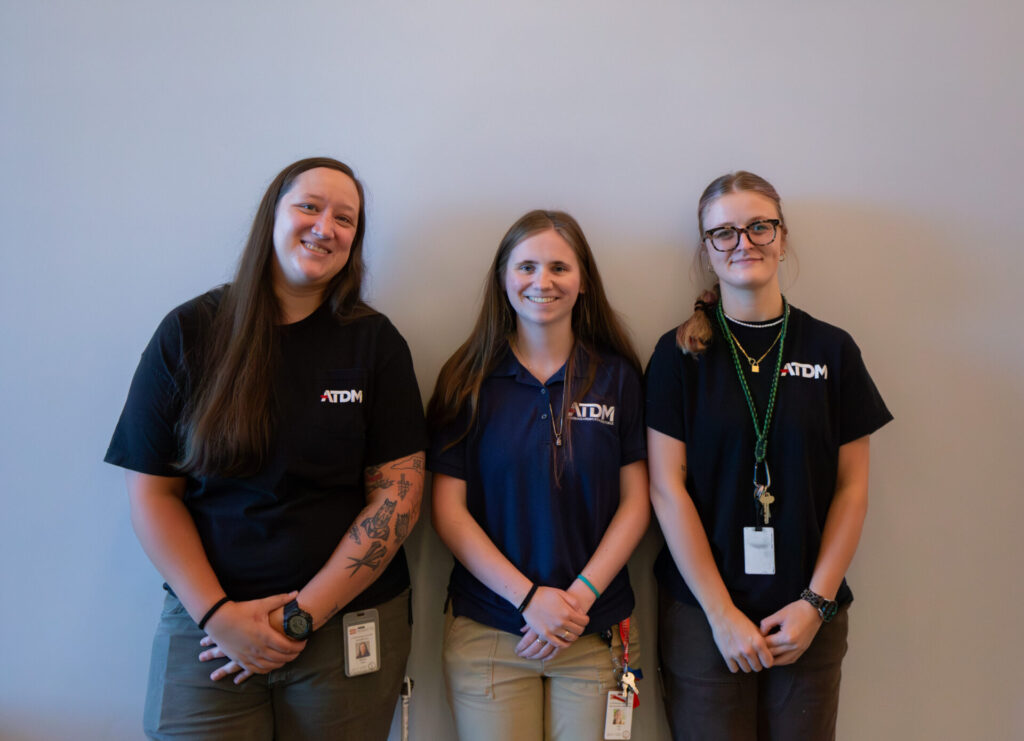
Welding instructor Makayla Baker, metrology instructor Holly Lyle and welding technician Autumn King
🎙️Topics Covered:
The August 2025 edition of IALR at a Glance is packed with exciting news and updates! Learn more about…

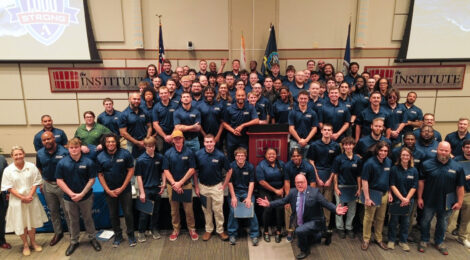
DANVILLE, Va. (July 31, 2025) – Accelerated Training in Defense Manufacturing (ATDM) recently celebrated its 1,000th program completer, highlighting the program’s continued success in building the defense workforce.
Glenn Claypool was recognized as the 1,000th program completer and joined fellow students in celebrating the cohort’s completion of the 16-week rigorous workforce training. Claypool discovered ATDM after completing a bachelor’s degree in business management and working in sales before deciding to pursue qualifications in non-destructive testing.
“ATDM has given me a second chance at having a fulfilling career that provides a true sense of purpose,” said Claypool. “It’s not just a job, it’s a path that has equipped me with skills that I’ll carry with me for the rest of my life.”
Created to support defense manufacturing initiatives across the United States and supply workers for the maritime industrial base, ATDM is well on its way toward its goal of 800-1,000 skilled tradespeople completing the program each year.
“Reaching 1,000 ATDM graduates bolsters a skilled workforce that our maritime industrial base needs urgently,” said Matt Sermon, direct reporting program manager of the Maritime Industrial Base Program. “ATDM graduates are contributing directly to building and sustaining our Fleet. As we scale this proven model nationwide, we’re helping our maritime industrial base develop the workforce needed to maintain maritime superiority for generations to come.”
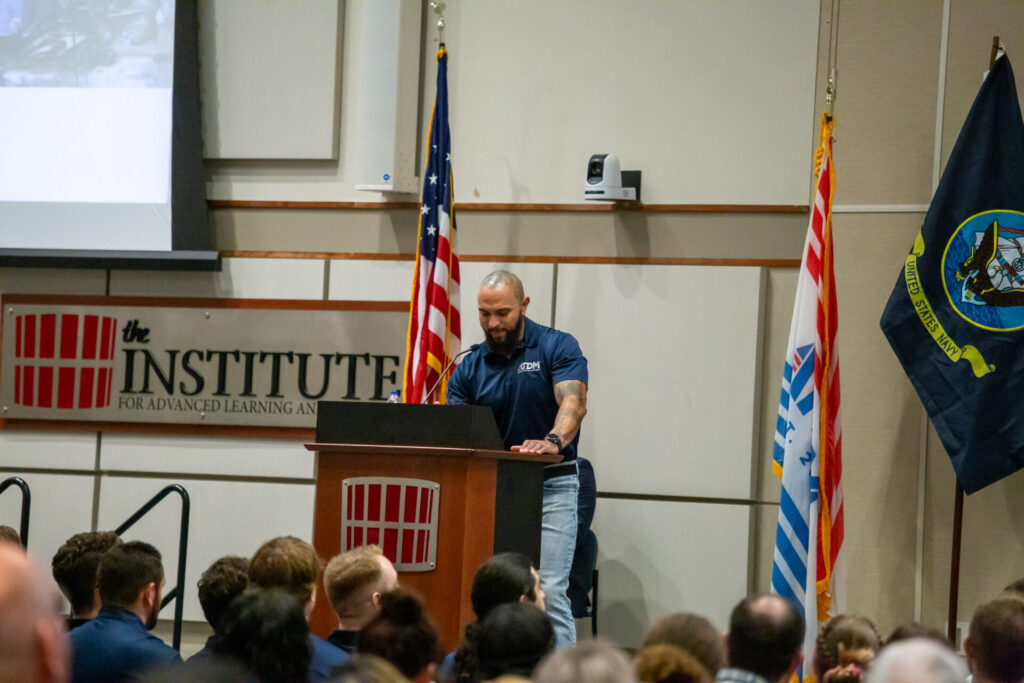
Will Kaisen, the student speaker for cohort 17, speaks during the ATDM Completion Ceremony.
Graduating students complete 600 hours of intensive, hands-on training over 16 weeks, earning certifications in one of five high-demand defense industry skilled trades. These are high-paying careers in additive manufacturing, CNC machining, non-destructive testing, quality control inspection (metrology) and welding.
“ATDM’s Maritime Training Center is a vital component of the work we do at IALR to support and pioneer new accelerated training methods that build the future workforce for defense, maritime and advanced manufacturing,” said Telly Tucker, president of the Institute for Advanced Learning and Research (IALR).
Congresswoman Jen Kiggans addressed the finishing cohort at their completion ceremony, highlighting her unique connection to ATDM’s purpose as a member of the House Armed Services Committee and the House Committee on Veterans’ Affairs, as well as being a Navy veteran herself and the wife of a Navy veteran.
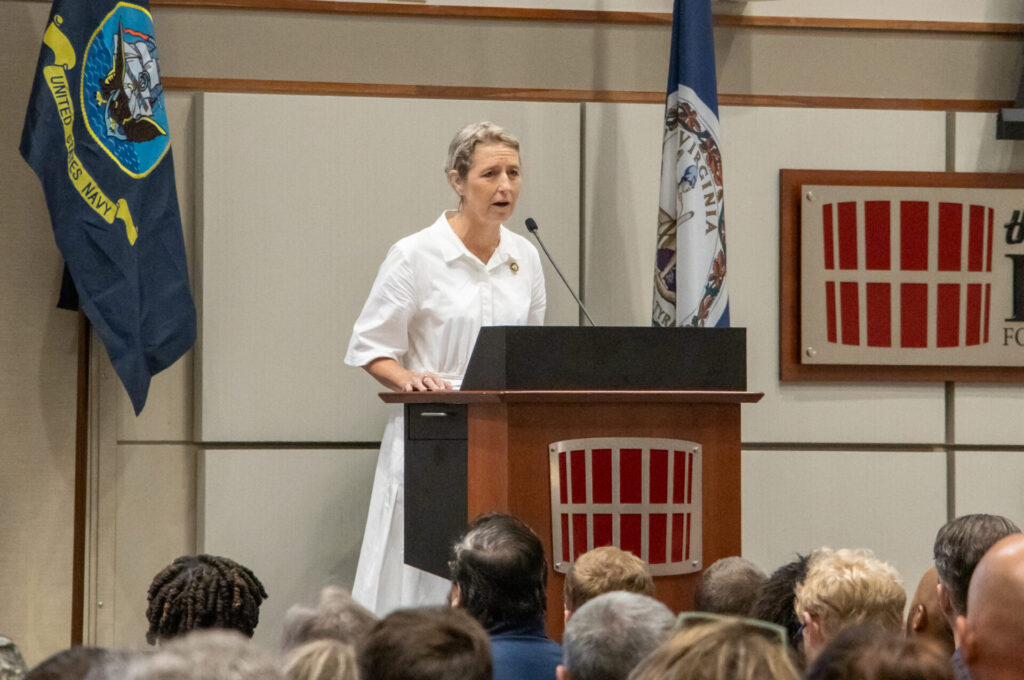
Congresswoman Jen Kiggans speaks during the completion ceremony for the 17th cohort of the Accelerated Training in Defense Manufacturing (ATDM).
“This year the ATDM program is celebrating another major milestone, its 1,000th graduate, and that number represents the 1,000 men and women trained with the specialized skills needed to rebuild American manufacturing and support our defense industrial base, and that’s something to be proud of,” said Congresswoman Kiggans. “Graduates of this program are not just entering a workforce; you are stepping into a mission. Whether you’re heading to shipyards, maritime manufacturing facilities or defense plants across the country – your work will directly impact our national security.”
A distinguishing feature of the ATDM program is that students are prepared for the workforce beyond technical training. ATDM staff assist with resume development, interview preparation and direct employer connections, leading to an 85% employment rate for completers within a month of finishing the program. ATDM partners with more than 200 employers across the United States for job placement as well as job training, a strong indicator of the program’s success.

“ATDM has been a tremendous asset to our workforce development efforts. The program consistently turns out graduates who are not just technically capable, but ready to contribute from day one,” said Kristi Rowe, people director at Keel. “One of our recent hires has already made a strong impression in his welding role—bringing precision, confidence, and a solid grasp of quality standards. What really stands out is how well ATDM’s training aligns with the real-world demands of our work. It makes the transition from training to the job smooth and effective. We’re excited about the future and look forward to continuing this successful partnership.”
“I’ve met people from a wide range of backgrounds, different cultures, life experiences, education levels and career paths, but the one thing we all share is that we came to ATDM looking for new skills and opportunities,” said Claypool.
###
About ATDM
Accelerated Training in Defense Manufacturing (ATDM) was created to teach the skills needed to increase military equipment production in the United States. The program is located at the Institute for Advanced Learning and Research in Danville, Virginia. Students at ATDM are trained in the skills needed to repair, upfit and build submarines, and these skills are transferable to other defense industry companies. Students earn the qualifications needed to secure great-paying, in-demand defense industry jobs in these skilled trades: Additive Manufacturing, CNC Machining, Non-Destructive Testing, Quality Control Inspection (also known as Metrology) and Welding. For additional information, visit https://atdm.org/.
About IALR
The Institute for Advanced Learning and Research serves Virginia as a regional catalyst for economic transformation with applied research, advanced learning, manufacturing advancement, conference center services and economic development efforts. IALR’s major footprint focuses within Southern Virginia, including the counties of Patrick, Henry, Franklin, Pittsylvania, Halifax and Mecklenburg, along with the cities of Martinsville and Danville.

