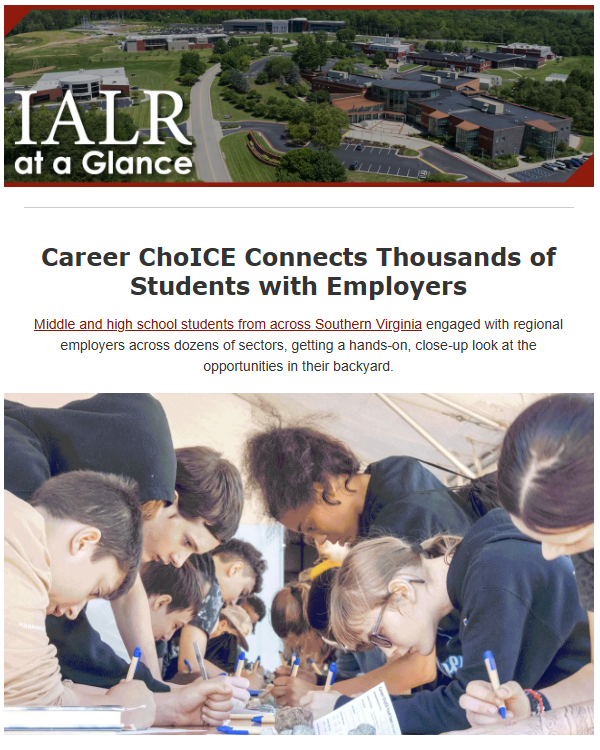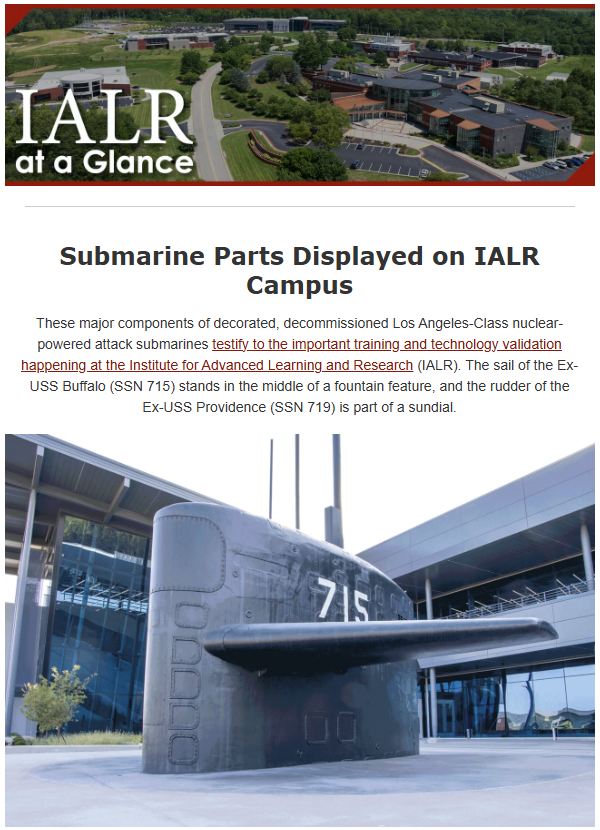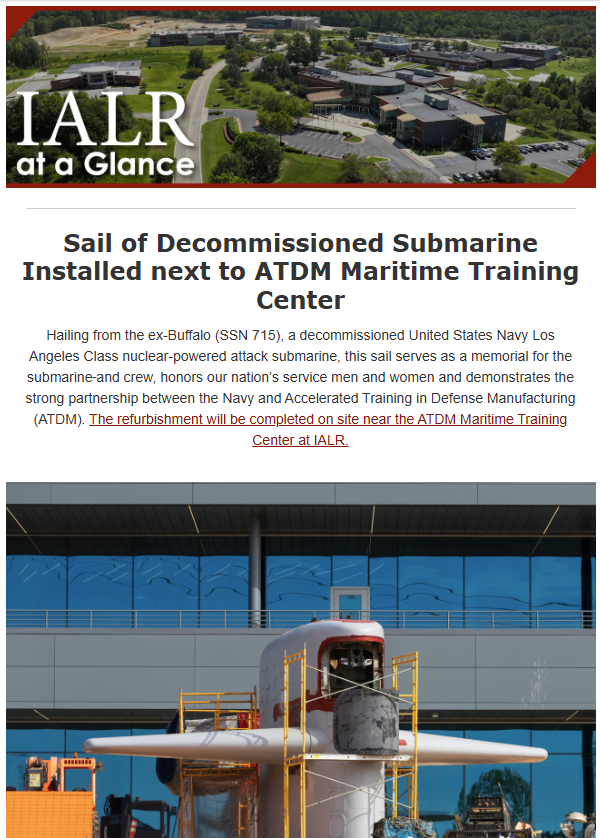
The August 2026 edition of IALR at a Glance is packed with exciting news and updates! Learn more about…
- Read and Listen to the Interns Summer of Impact
- Featured Opportunity: Get Involved in Career ChoICE Youth Expo
- Watch Updates from IALR
- Much More!
Institute for Advanced Learning and Research
Driving Economic Transformation
The August 2026 edition of IALR at a Glance is packed with exciting news and updates! Learn more about…
The July 2026 edition of IALR at a Glance is packed with exciting news and updates! Learn more about…
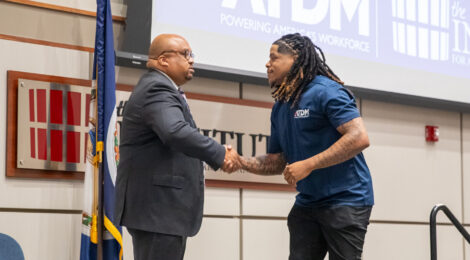
The Accelerated Training in Defense Manufacturing (ATDM) program at the Institute for Advanced Learning and Research (IALR) has promoted professional machinist and educator Wesley Cifers to serve in a newly reorganized role.
As of July 1, Cifers serves as Managing Director of ATDM – a 16-week training program at IALR designed to prepare civilians from across the nation for careers building the nation’s next-generation vessels in the submarine industrial base.
“I’m delighted to name Wesley Cifers as the new Managing Director of ATDM. His experience, technical acumen and maturity made him an ideal candidate to become the leader of this critical program here on the campus of IALR,” said Telly Tucker, President of IALR.
Cifers holds more than 15 industry certifications and brings a vast array of experience and knowledge in manufacturing environments to the role. His previous private sector experience, coupled with his time in instruction, curriculum development and program management at IALR, uniquely positioned Cifers to oversee ATDM. In his most recent role, Cifers managed two major additive manufacturing training programs for the U.S. Navy and led all workforce programs for the Center for Manufacturing Advancement (CMA) at IALR, after growing through various instructional ranks within ATDM.
“Wesley is a highly credentialed journeyman machinist who started his career with a leading supplier to the federal government prior to joining IALR five years ago and has since grown and moved into the instructional and training realm at various levels. His most recent position grew many of the valuable skills that Wesley will employ in this new role, including juggling numerous high-level stakeholders, managing federal contracts and ensuring quality instruction,” said Jason Wells, IALR’s Executive Vice President, Manufacturing Advancement. “Not only does Wesley possess a balanced and intimate knowledge of the ATDM program and its many facets, but he leads with superb professionalism and integrity, making him an excellent fit for this role.”
Since its inception in 2020, ATDM has graduated over 1,530 students from 47 states, Washington D.C., Australia, Puerto Rico and Guam. The program spans all three shifts and delivers accelerated, intensive training in five key skilled trade areas in high demand by defense manufacturers and critical to national defense, including Additive Manufacturing, CNC Machining, Non-Destructive Testing (NDT), Quality Control Inspection (Metrology) and Welding.
“I am grateful to work alongside an amazing team at IALR and eager to step into a new role in further support of ATDM to see where the future takes us. Over the last 5 years, I have held several roles with varying responsibility to the program, and I am excited to bring that combined experience into my new position,” said Cifers. “This is a unique program that has changed how our country views manufacturing training and I have witnessed that in real time. This transition is not something I take lightly, and I am looking forward to returning to the ATDM team to continue pushing forward.”
The Accelerated Training in Defense Manufacturing program provides focused, industry-driven training to equip participants with skills critical for defense manufacturing. This initiative is funded through the National Imperative for Industrial Skills by the Industrial Base Analysis and Sustainment Program Office within the Office of the Undersecretary of War for Acquisition and Sustainment.
The Institute for Advanced Learning and Research serves Virginia as a regional catalyst for economic transformation with applied research, advanced learning, manufacturing advancement, conference center services and economic development efforts. IALR’s major footprint focuses within Southern Virginia, including the counties of Patrick, Henry, Franklin, Pittsylvania, Halifax and Mecklenburg along with the cities of Martinsville and Danville. The organization houses and leads the ATDM program with the support of various partners.
By simply stepping into a lab or meeting an instructor, prospective students and their families could witness firsthand the important roles people play in defense manufacturing. They were getting a glimpse into what their own future could look like thanks to ATDM Discovery Day. Individuals interested in the Accelerated Training in Defense Manufacturing program at the Institute for Advanced Learning and Research saw themselves learning a range of in-demand skills and a future career by attending the event on June 9, 2026.
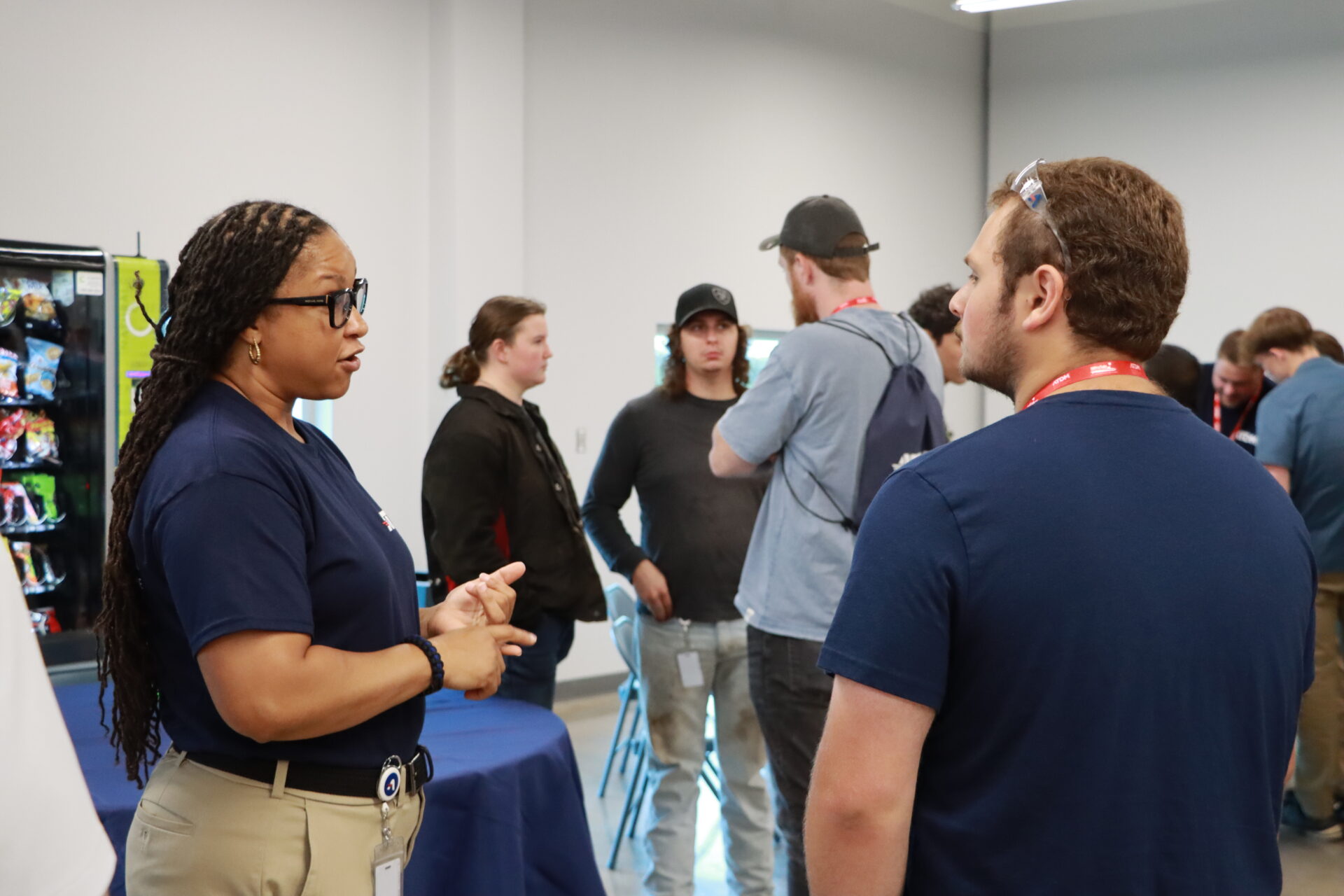
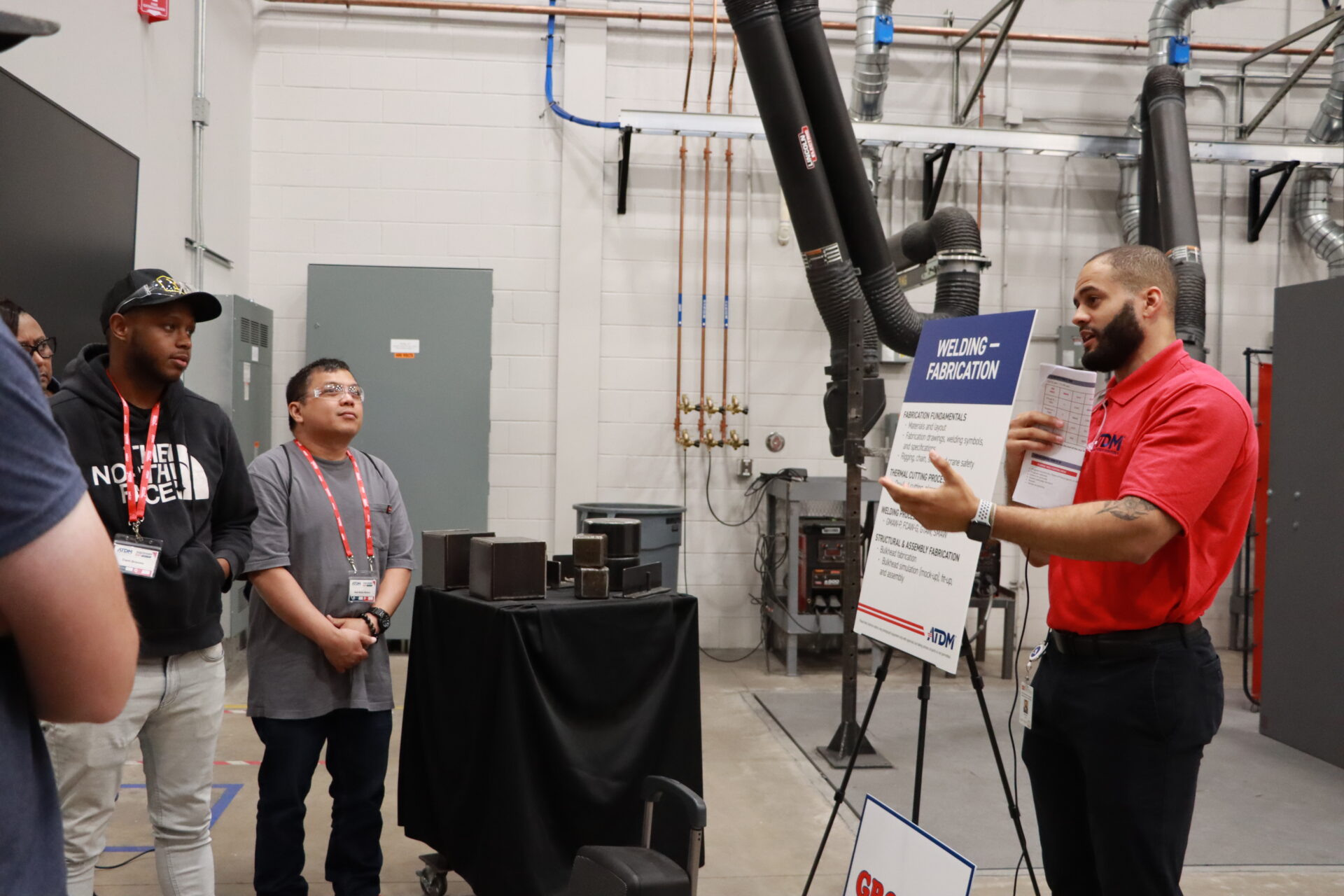
ATDM Discovery Day gave nearly 100 guests a look inside the ATDM program. These individuals included prospective students, counselors from various school divisions, representatives from U.S. Department of Veterans Affairs, workforce service organizations and at least one ATDM industry partner. Attendees got a firsthand look at the program itself, the training that comes with it and the workforce opportunities it creates within the submarine industrial base, the system of companies that contribute to the construction and sustainment of submarines. Discovery Day provided prospective students with an opportunity to ask questions and envision their future.
“I believe Discovery Day brought valuable attention to the ATDM program and highlighted the incredible opportunities available to prospective learners interested in the trades,” Makayla Baker, ATDM Welding Instructor, said. “Events like this play a vital role in inspiring individuals to pursue and advance careers in these high-demand fields.”
During the day, prospects and their guests were greeted by multiple members of the ATDM team, each speaker helping participants see how they can individually fit into the program and find a home within ATDM. Attendees learned about the skilled trades featured at ATDM and explored the training facilities at the ATDM Maritime Training Center – a modern 100,000-square-foot training facility opened across two phases in 2025 and 2026.

The ATDM training tracks:
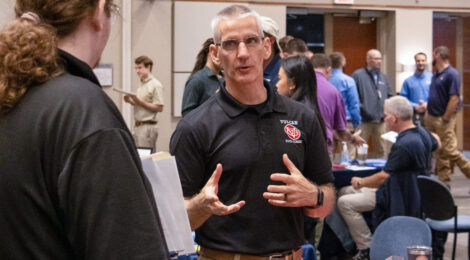
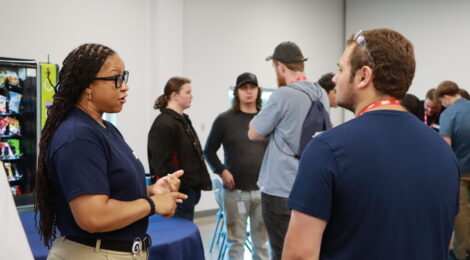
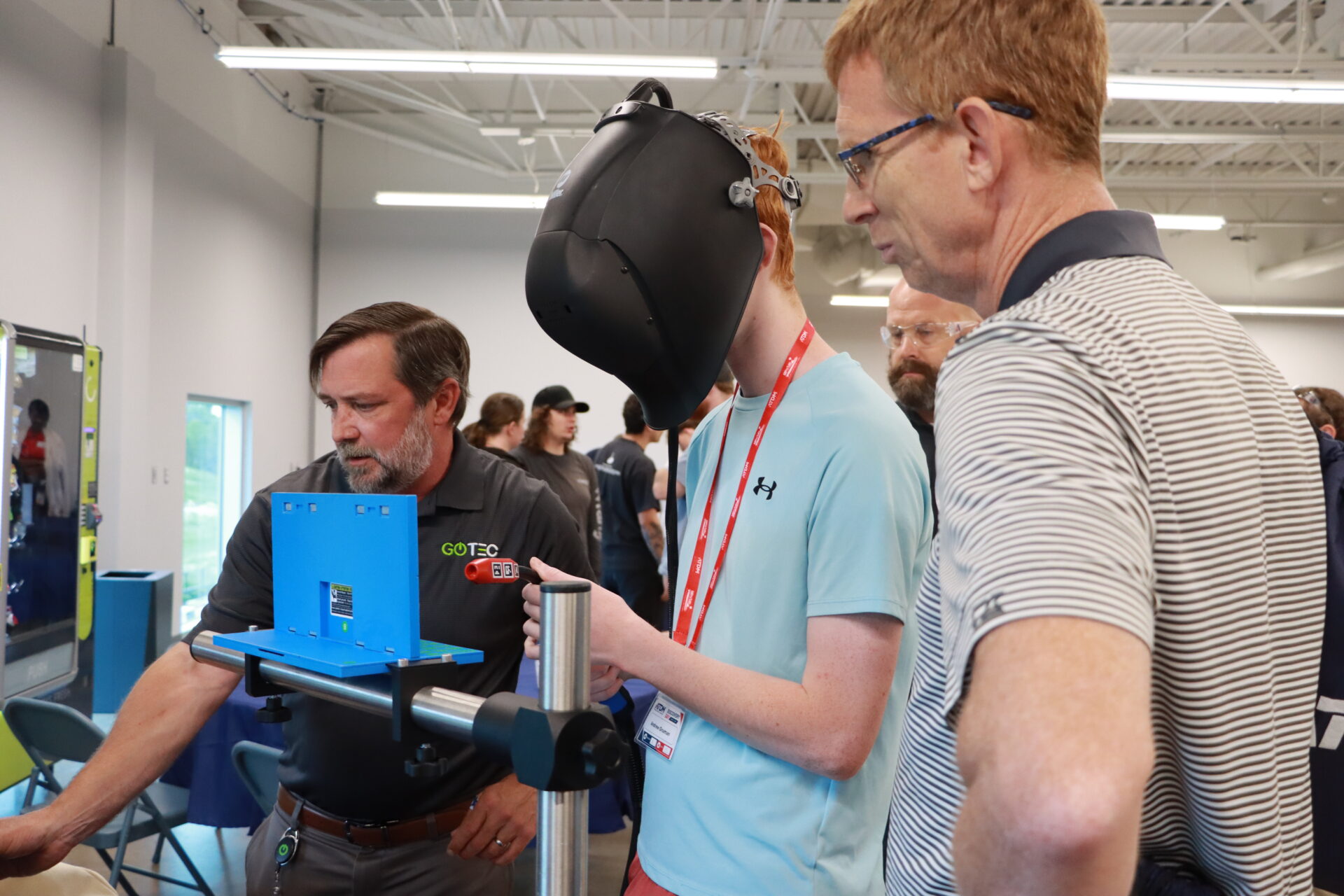
Prospective students and their guests also met instructors and current students at the ATDM Resource fair and connected with staff members to better understand career pathways for ATDM graduates. Another highlight included using the virtual welding equipment with Chris Griffith, IALR’s Great Opportunities in Technology and Engineering Careers (GO TEC®) Training Coordinator.
Before the day was over, attendees completed key steps in the application process and received guidance on what’s next.
The ATDM Model:

ATDM Discovery Day removed barriers, provided prospective students with clarity about the program and supported each of them in their next steps. The success of Discovery Day has opened the door to more events like this in the future, helping ATDM expand access to even more students and foster engagement.
“Every career journey starts with a first step. ATDM Discovery Day gives prospective students the chance to explore, ask questions and discover that a rewarding career in defense manufacturing may be closer than they ever imagined,” Joyce Culley, ATDM Director of Recruitment and Support Services, said.
The June 2026 edition of IALR at a Glance is packed with exciting news and updates! Learn more about…

Cedric and Ethan Bond
Cedric and Ethan Bond are brothers who took very different paths before finding the same destination: training through the Accelerated Training in Defense Manufacturing (ATDM) program and careers at Newport News Shipbuilding.
In this episode, they talk about career crossroads, the reality of hands-on training, and why building ships for the U.S. Navy feels personal—especially with a brother currently deployed at sea.
Explore hands-on training, meet instructors and see where your skills can take you.
ATDM Discovery Day is an open-house event designed to introduce ATDM (Accelerated Training in Defense Manufacturing)—a program committed to preparing individuals for high-demand careers in the defense manufacturing industry.
Not sure what’s next after high school or your current job? Discovery Day gives you a real look into hands-on careers that are in demand, high-paying and built for the future. This is your chance to explore, ask questions and see what your future could look like.
The May 2026 edition of IALR at a Glance is packed with exciting news and updates! Learn more about…
Recruiting skilled manufacturing talent is expensive, time-consuming, and unpredictable. But it doesn’t have to be.
Recorded during a recent career fair for the Accelerated Training in Defense Manufacturing (ATDM) program at IALR, this episode features Slade Gardner from Big Metal Additive, John Duncan from Penn United Technology and Ashley Webb from Vulcan Tool Company. They explain why they rely on ATDM to meet their workforce needs.
From reduced training risk to graduates who “hit the ground running,” these employers explain what makes ATDM different and why the program continues to deliver value to companies across the defense industrial base.
Whether you’re hiring one machinist or building a long-term talent pipeline, this is the employer story behind ATDM.
The April 2026 edition of IALR at a Glance is packed with exciting news and updates! Learn more about…
The March 2026 edition of IALR at a Glance is packed with exciting news and updates! Learn more about…
In this special mini episode, IALR President Telly Tucker sits down with Casie Hansen, who recently graduated from the Non-Destructive Testing track of the Accelerated Training in Defense Manufacturing (ATDM). Casie shares how she discovered ATDM, what it was like to uproot her life and start over at 40 and how the program’s training and wraparound support helped her step confidently into a completely new career path.
By Jason Wells, Executive Vice President of Manufacturing Advancement, IALR
The recent Southern Virginia Living Wage and Job Availability Study shows that more manufacturing workers are available than manufacturing job openings across GO Virginia Region 3.
At face value, that suggests a surplus of workers.
But that’s not what our team hears when talking with manufacturing companies across our region, whether it’s a metalworking shop in Halifax or a major defense supplier scaling production.
What I hear is: We can’t find enough people with the right skills.
So which is it? Are we long on manufacturing talent or short on it?
As is often the case in workforce development, the truth lives in the tension between the two.
And this tension is exactly why our region cannot simply focus on technical skills alone. Readiness also depends on communication, reliability, professionalism and work ethic — the difference between being job‑oriented and being truly career‑minded.
It’s not just about the number of workers. It’s about who they are, where they live and what they’re prepared to do.
Request the Southern Virginia Living Wage and Job Availability Study
The report’s regional snapshot captures job postings at a moment in time. But manufacturing doesn’t behave like some other sectors. A firm may have robust headcount on paper and still feel understaffed because:
Another dynamic is hiring itself: many employers continue using the same recruitment practices while expecting different results. Hiring needs to evolve just as manufacturing evolves, and too often, it hasn’t.
In other words, a surplus on a spreadsheet doesn’t always translate to a talent pool at the door.
And employers will tell you that directly. Many are balancing production deadlines with training gaps, or they’re promoting inexperienced technicians into advanced roles simply because there’s no one else in the pipeline.
That’s a skills‑alignment problem rather than a surplus problem.
Breaking Down the Wage and Job Study
GO Virginia Region 3 is large, stretching from Patrick County eastward toward the Richmond frontier. The study’s macro view smooths over significant variation.
Some localities genuinely have more manufacturing workers than openings. Others, especially those closest to emerging industrial sites, already feel tight.
This regional imbalance shows up in workforce conversations every week. A plant manager in one county may be turning away applicants. Another, 40 miles away, may be struggling to hire despite higher wages.
Without strong networks intentionally linking people to jobs, employers to training providers and communities to each other, surplus and shortage can exist side by side.
For manufacturers evaluating expansion or relocation, this alignment signals regional capability. They are not simply assessing today’s headcount; they are evaluating whether the region can mobilize talent, scale training and collaborate across boundaries when opportunities arise.
If we only plan for the present, we’re already behind.
Already, we know of two major manufacturing plants on their way to Southern Virginia. Microporous announced in November of 2024 that it will create a $1.35 billion battery separator manufacturing facility at the Southern Virginia Megasite at Berry Hill. And just this month, Avio USA Inc. announced a $500 million new solid rocket motor manufacturing facility to be located at the Southern Virginia Multimodal Park in Hurt.
Together, these two projects will create more than 3,000 jobs, with the vast majority in manufacturing.
These projects are fundamentally reshaping the demand curve in Southern Virginia. And they are not the only ones. Over the past several years, our region’s manufacturing ecosystem has steadily expanded in capability, technology and national visibility.
I am confident more announcements will come.
Today’s surplus could become tomorrow’s severe shortage.
In manufacturing, the lead time to develop talent is long. You don’t train a CNC machinist, quality technician or AM operator in a few weeks.
This is part of why employer conversations feel so different than the report’s topline numbers. Businesses are looking to prepare their workforce for future capabilities, production demands and contracts.
During conversations with industry partners, one theme comes up constantly: “We have applicants. We need contributors.”
Manufacturing requires technicians who understand not just how to run equipment, but how processes flow, how tolerances stack, how documentation supports quality and how automation integrates with upstream and downstream operations. Those capabilities don’t appear automatically in the workforce just because workers exist.
Skills gaps arise because:
As my team engages with manufacturers in the region and across the nation, we repeatedly hear those exact needs for employees who can contribute at a high level faster than ever before.
Across our campus, we have deliberately aligned our programs around the skills‑to‑production pipeline, from early-career exploration to advanced, hands‑on training to real‑world technology adoption.
Our Accelerated Training in Defense Manufacturing (ATDM) program takes what is traditionally a year and a half of focused training and condenses it into an intense, disciplined 16‑week experience. Graduates leave with foundational technical competency, hands‑on repetition under pressure, and a mindset oriented toward excellence and urgency.

This kind of talent pipeline directly addresses employers’ requests for speed, reliability and readiness.
We also know that readiness begins early. The Great Opportunity in Technology and Engineering Careers (GO TEC) program exposes middle schoolers to welding, machining, robotics and other pathways long before they step into high school CTE or dual‑enrollment programs.
The Integrated Machining Technology program, which is taught by Danville Community College and housed at IALR, gives emerging technicians the “third-year” experience where all the pieces finally come together.
And our partnership network ensures those pathways form a cohesive ladder, not a scattered series of steps.
If you zoom out, a pattern emerges.
Yes, the report shows a surplus of manufacturing workers today.
And yes, employers are sounding the alarm about skills gaps today.
But tomorrow’s picture is already taking shape:
New industrial employers are coming.
Existing employers are expanding.
Advanced manufacturing technologies are accelerating.
The region is being asked to produce more, faster and with greater precision.
The question isn’t whether we have enough people.
It’s whether we have enough prepared people in the right places, with the proper training, aligned to the right future.
And that brings me back to something I shared recently with our entire Manufacturing Advancement team:
“When the rate of change outside exceeds the rate of change inside, the end is near.” — Jack Welch
Manufacturing is living that reality every day. The pace of external change — new employers, new technologies, new federal expectations, new supply‑chain vulnerabilities — is accelerating. If our talent systems, training pipelines and regional partnerships don’t evolve at the same speed, we won’t just fall behind. We’ll miss the moment entirely.
Southern Virginia, however, is choosing a different path.
We are choosing to change faster.
To prepare sooner.
To build forward.
IALR’s mission has always been to serve as a forward-looking catalyst. And the work happening across our campus today, from ATDM to IMT and GO TEC, is positioning this region not only to meet the demands ahead, but to lead in ways few would have predicted a decade ago.
We’re not preparing for the workforce or the job count we have today.
We’re preparing for the workforce we will need tomorrow
Jason Wells is IALR’s Executive Vice President of Manufacturing Advancement. With decades of experience in the toolmaking industry, Wells now leads IALR’s manufacturing training and optimization efforts.
The February 2026 edition of IALR at a Glance is packed with exciting news and updates! Learn more about…
The Institute for Advanced Learning and Research (IALR) celebrated the graduation of the latest cohort of the Accelerated Training in Defense Manufacturing (ATDM) program on Dec. 19. The ceremony honored 42 adult learners who completed intensive training in additive manufacturing and welding — two critical skill sets for building and repairing components within the defense manufacturing sector.
Each completer finished at least 600 hours of hands-on instruction, preparing them for immediate employment within the maritime industrial base (MIB). These tracks equip students with the technical expertise to perform high-precision processes essential to national defense.
Robert McNulty, ATDM welding graduate, shared reflections on the journey through the program.

“To my fellow graduates, we are proof that we can rise and meet the expectations. The work we do will hold things together – literally. Ships, structures, systems and communities depend on what we create and join. Let’s take pride in our work, keep learning and never forget where we started.” – Robert McNulty, ATDM Welding Graduate
Retired Rear Admiral Tom Kearney, now working with The Spectrum Group, praised the graduates for their dedication and highlighted the significance of their achievement.

“Each of you is now part of something much bigger than yourselves. You are helping ensure that when our sailors go to sea, the ships will perform as designed, we will win the wars we fight, and they will come home. We trust you, and we need you, and we are counting on you. Congratulations to the graduates of ATDM, and fair winds and following seas.” – Retired Rear Admiral Tom Kearney, The Spectrum Group


Participants in the ATDM program benefit from comprehensive scholarships covering tuition and furnished housing. This support enables individuals from diverse backgrounds, including transitioning service members, career changers and industry newcomers, to prepare for and find successful manufacturing careers.
With a goal of training 1,000 students annually, ATDM remains a cornerstone initiative in strengthening the U.S. defense manufacturing workforce. With more than 1,100 total completers to date, ATDM boasts an approximately 85% completion rate and, for completers, an 85% placement rate within 30 days of completing the program.
The Accelerated Training in Defense Manufacturing program provides focused, industry-driven training to equip participants with skills critical for defense manufacturing. This initiative is funded through the National Imperative for Industrial Skills by the Industrial Base Analysis and Sustainment Program Office within the Office of the Undersecretary of Defense for Acquisition and Sustainment.
The Institute for Advanced Learning and Research serves Virginia as a regional catalyst for economic transformation with applied research, advanced learning, manufacturing advancement, conference center services and economic development efforts. IALR’s major footprint focuses within Southern Virginia, including the counties of Patrick, Henry, Franklin, Pittsylvania, Halifax and Mecklenburg along with the cities of Martinsville and Danville. The organization houses and leads the ATDM program with the support of various partners.
The Institute for Advanced Learning and Research (IALR) celebrated the completion of the latest cohort of the Accelerated Training in Defense Manufacturing (ATDM) program on Dec. 12. The ceremony honored 58 adult learners who completed intensive training in CNC machining, non-destructive testing and additive manufacturing — three critical skill sets for building and repairing components within the defense manufacturing sector.
Each completer finished at least 600 hours of hands-on instruction, preparing them for immediate employment within the maritime industrial base (MIB). These tracks equip students with the technical expertise to perform high-precision processes essential to national defense.
Eli Noles, CNC machining student, shared reflections on the journey through the program.

“Manufacturing isn’t just about programming, machining or quality checks. It’s about taking raw material, whether it’s metal or your own potential, and shaping it into something you can be proud of.” – Eli Noles, ATDM CNC Machining Student
Admiral James G. Foggo, U.S. Navy (Retired), Dean of the Center for Maritime Strategy at the Navy League of the United States, praised the graduates for their dedication and highlighted the significance of their achievement.

“You’re about to embark on a career where the highest standards of excellence are the norm… The safety of our most precious commodity — our American sailors — will soon be in your hands.” – Admiral James G. Foggo, U.S. Navy (retired), Navy League of the United States

Participants in the ATDM program benefit from comprehensive scholarships covering tuition and furnished housing. This support enables individuals from diverse backgrounds, including transitioning service members, career changers and industry newcomers, to prepare for and find successful manufacturing careers.
With a goal of training 1,000 students annually, ATDM remains a cornerstone initiative in strengthening the U.S. defense manufacturing workforce. With more than 1,100 total completers to date, ATDM boasts an approximately 85% completion rate and, for completers, an 85% placement rate within 30 days of completing the program.
The Accelerated Training in Defense Manufacturing program provides focused, industry-driven training to equip participants with skills critical for defense manufacturing. This initiative is funded through the National Imperative for Industrial Skills by the Industrial Base Analysis and Sustainment Program Office within the Office of the Undersecretary of Defense for Acquisition and Sustainment.
The Institute for Advanced Learning and Research serves Virginia as a regional catalyst for economic transformation with applied research, advanced learning, manufacturing advancement, conference center services and economic development efforts. IALR’s major footprint focuses within Southern Virginia, including the counties of Patrick, Henry, Franklin, Pittsylvania, Halifax and Mecklenburg along with the cities of Martinsville and Danville. The organization houses and leads the ATDM program with the support of various partners.